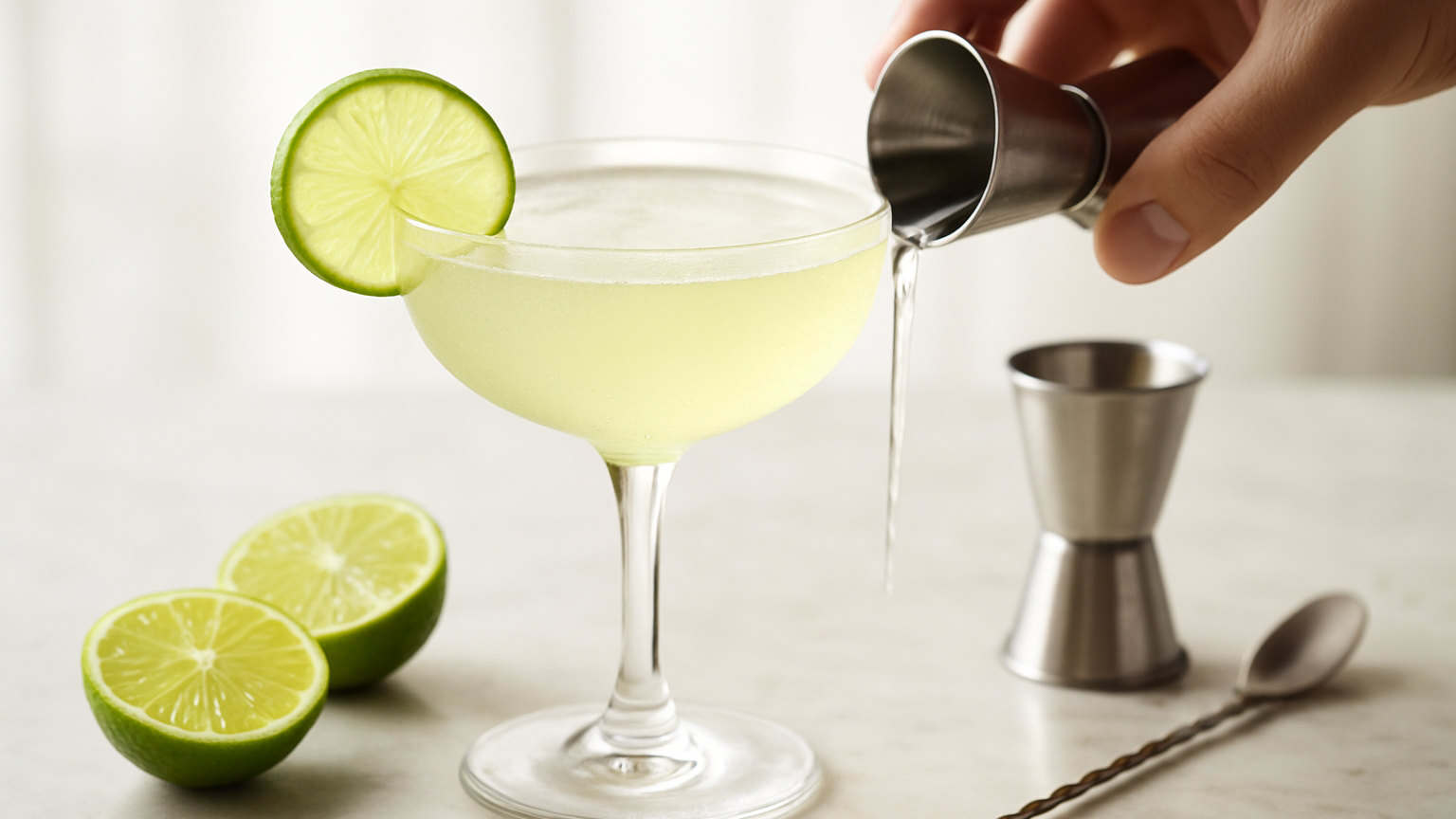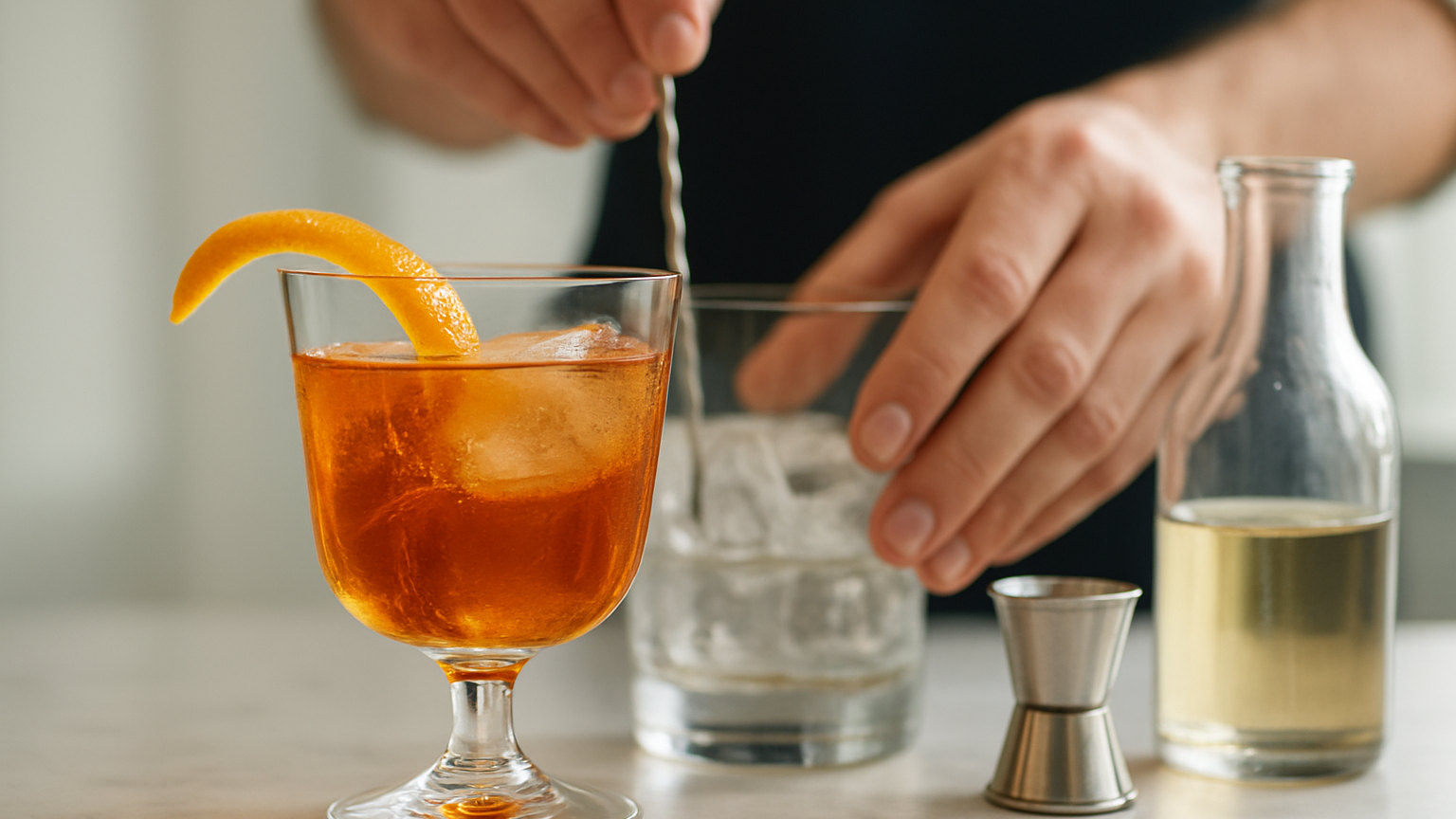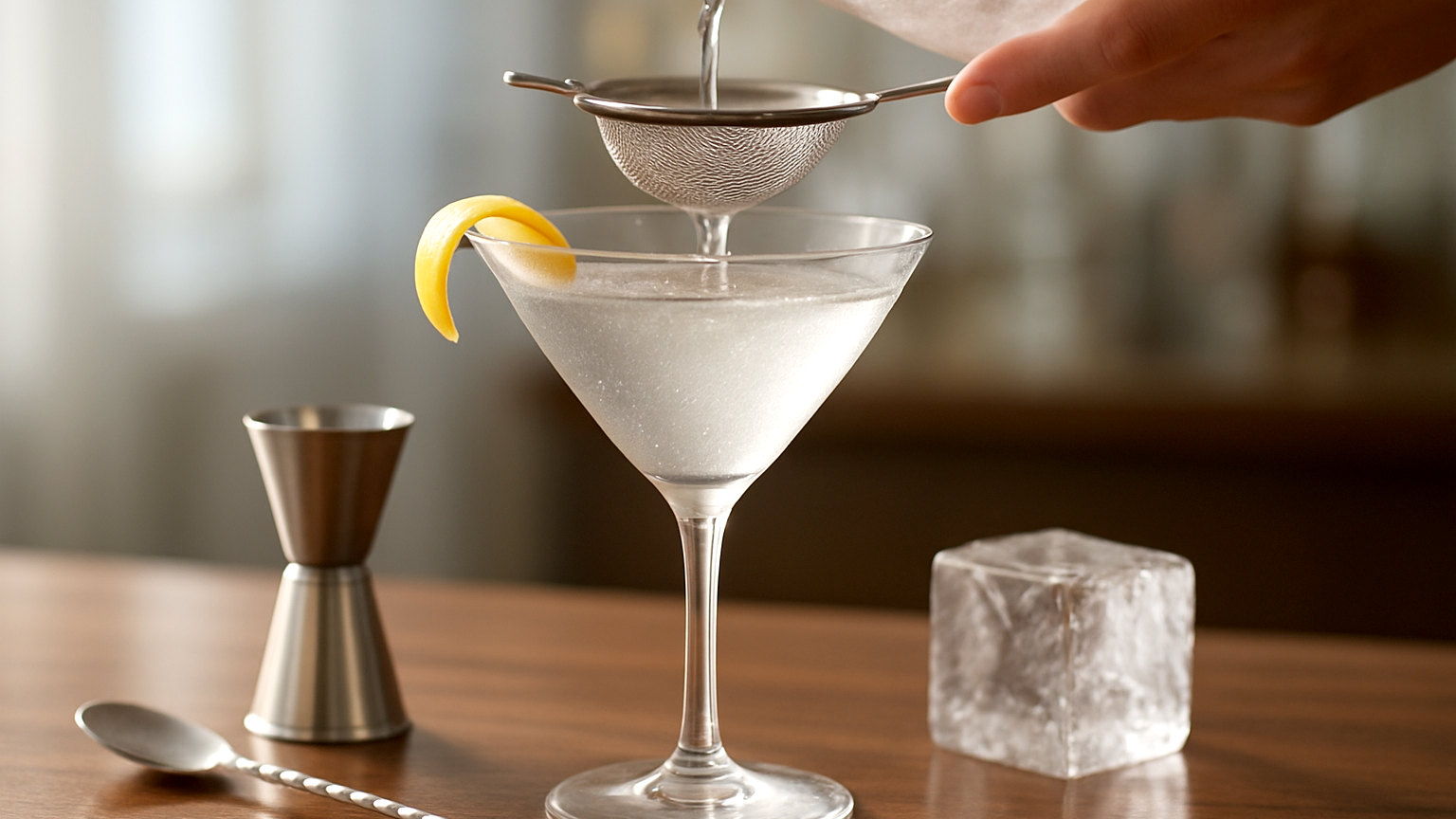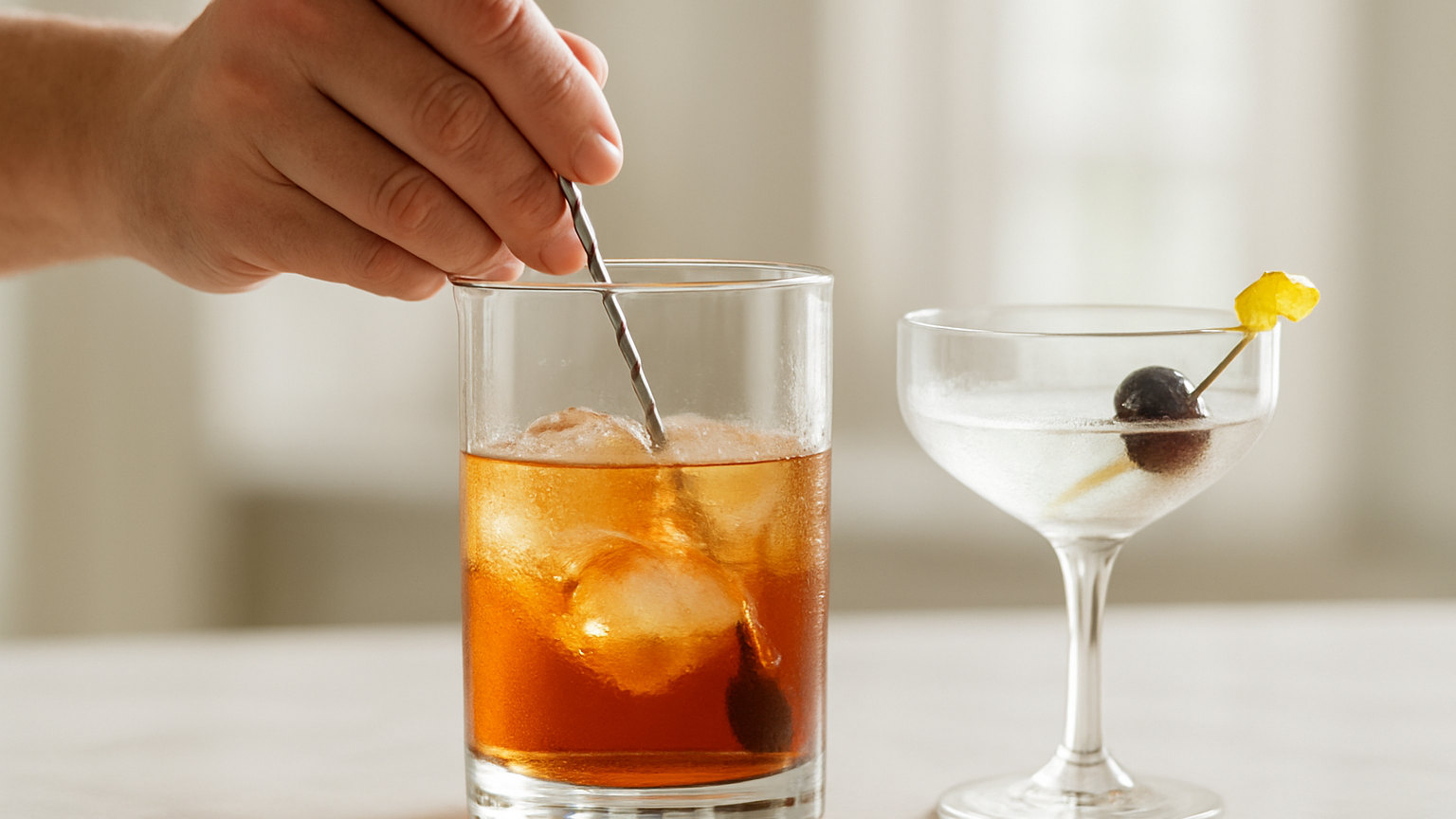
Stirring is the technique that looks like it has the least to it and is doing three things simultaneously: chilling, diluting and combining, with as little aeration as possible.
Setting up
Fill a mixing glass at least three quarters full with ice straight from the freezer, then add the ingredients.
A half-filled glass dilutes more rather than less, for the same reason a half-empty shaker does.
Large cubes are better than small ones, since they melt more slowly and give a longer window in which the drink is right.
A dedicated mixing glass is pleasant and unnecessary. A pint glass or a sturdy jug works perfectly well.
Holding the spoon
The spiral shaft is the entire point of a bar spoon.
Grip it between the middle and ring fingers, with the thumb and index finger providing control. The spiral turns against the fingertips, so the spoon rotates while your hand barely moves.
The back of the bowl should face the inside of the glass, so it slides against the wall rather than digging into the ice.
It feels awkward for the first few minutes, which is why many people give up and use a teaspoon, and it is worth persevering.
The motion
Rotate steadily rather than vigorously. The ice should turn as a mass, following the spoon around the glass.
Aggressive stirring chips the ice, which adds fragments and accelerates dilution unevenly.
The sound is a useful guide: smooth stirring is nearly silent, while clattering indicates the ice is being knocked about rather than rotated.
Thirty seconds is the usual figure, and it varies with ice temperature, quantity and how cold the ingredients were.
Judging when it is done
Frost on the outside of the mixing glass is the most reliable indicator. When it forms evenly and the glass is uncomfortable to hold, the drink is ready.
That signal is more useful than counting, since the conditions vary.
Tasting is permitted and sensible. Draw a little up a straw before straining.
Diagnosing the result
Under-stirred drinks taste harsh, hot and closed. This is the most commonly misdiagnosed fault in home bartending, and the instinct to add sugar produces something sweet and still harsh.
The fix is a longer stir or a few millilitres of water added directly.
Over-stirred drinks taste thin and flat, with the spirit washed out. The fix is next time, since water cannot be removed.
Straining
A julep strainer, the perforated spoon-shaped one, sits inside the mixing glass with the bowl facing down.
A Hawthorne works equally well, held against the rim.
Stirred drinks rarely need double straining, since the technique produces very few ice fragments.
Chilling the glass
Do it before you start rather than after.
Ten minutes in a freezer, or fill the serving glass with ice and water while you stir and discard it just before straining.
A perfectly stirred martini poured into a room-temperature coupe is warm before you are halfway down it.
The showmanship
Silent stirring, precise counts and elaborate wrist technique are enjoyable to watch and largely irrelevant to the result.
Cold ice, a full glass, steady rotation and enough time produces a properly made drink whether or not it looks impressive.
Building instead
Some stirred drinks are built directly in the serving glass over ice rather than stirred separately and strained.
A negroni or an old fashioned made this way dilutes continuously rather than reaching a fixed point, so it starts stronger and lengthens as you drink.
Both approaches are correct. Stirring separately gives more control over where the drink begins; building gives a drink that changes as it goes.
Equipment substitutes
A pint glass or a sturdy jug works as a mixing glass, and a long-handled spoon will stir adequately if you are careful not to chip the ice.
What has no good substitute is the spiral shaft of a proper bar spoon, which is what allows the smooth rotation. It costs a few pounds and is noticeably better.