Shaking looks straightforward and is done inadequately more often than any other bar technique. The usual fault is politeness.
Filling it
Add the ingredients first, then the ice, filling the shaker at least three quarters full.
A half-empty shaker dilutes more rather than less, since a small mass of ice against a larger volume of warmer liquid melts rapidly. A full shaker chills quickly and then holds.
Use ice straight from the freezer rather than cubes that have been sitting out, which are already wet and at zero degrees.
Standard cubes are ideal. Large ones move too little and crushed ice dilutes far too fast.
Sealing it
For a Boston shaker, place the smaller tin on top at a slight angle rather than straight down, and strike the top firmly with the heel of your hand.
The angle is the point. A straight seal is harder to break, and the slight offset creates one that holds under pressure and releases with a tap.
Lift the whole thing by the top tin to check it has sealed before you start.
For a cobbler shaker, press the lid and cap down firmly. They can seize when very cold, which is the design's main drawback.
The shake
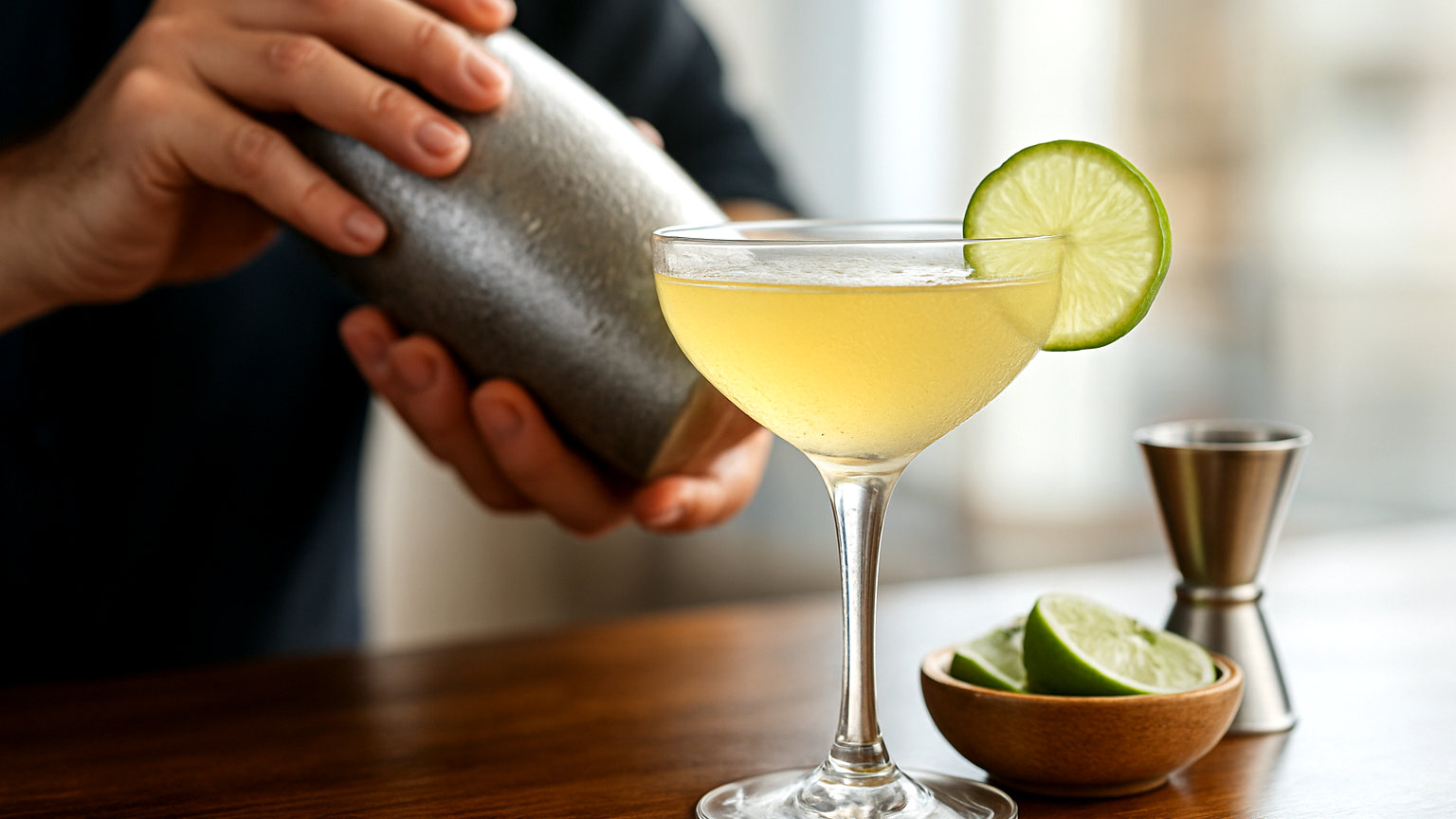
Hold both ends firmly, one hand on each, and shake over your shoulder rather than in front of your body.
Shake hard. This is where most home shaking fails: a gentle rattle chills the drink inadequately and provides perhaps half the dilution the recipe assumes.
The motion should be vigorous enough that the ice audibly hits both ends of the shaker.
Ten to fifteen seconds is the target. Longer adds dilution without further benefit.
The shaker should be uncomfortably cold to hold by the end, and frost should form on the outside. That is the signal rather than the count.
Opening it
Hold the shaker with the larger tin at the bottom, find where the two tins meet at their widest gap, and strike the rim of the larger tin firmly with the heel of your hand.
It should release immediately. If not, rotate slightly and try a different point.
Do not tap it on a worktop, which dents the rim and is how most shakers are ruined.
If a seal is genuinely stuck, warming the outer tin briefly under a hot tap will expand it enough to release.
Straining
Use a Hawthorne strainer held against the tin with your index finger on the tab, and pour in one steady movement.
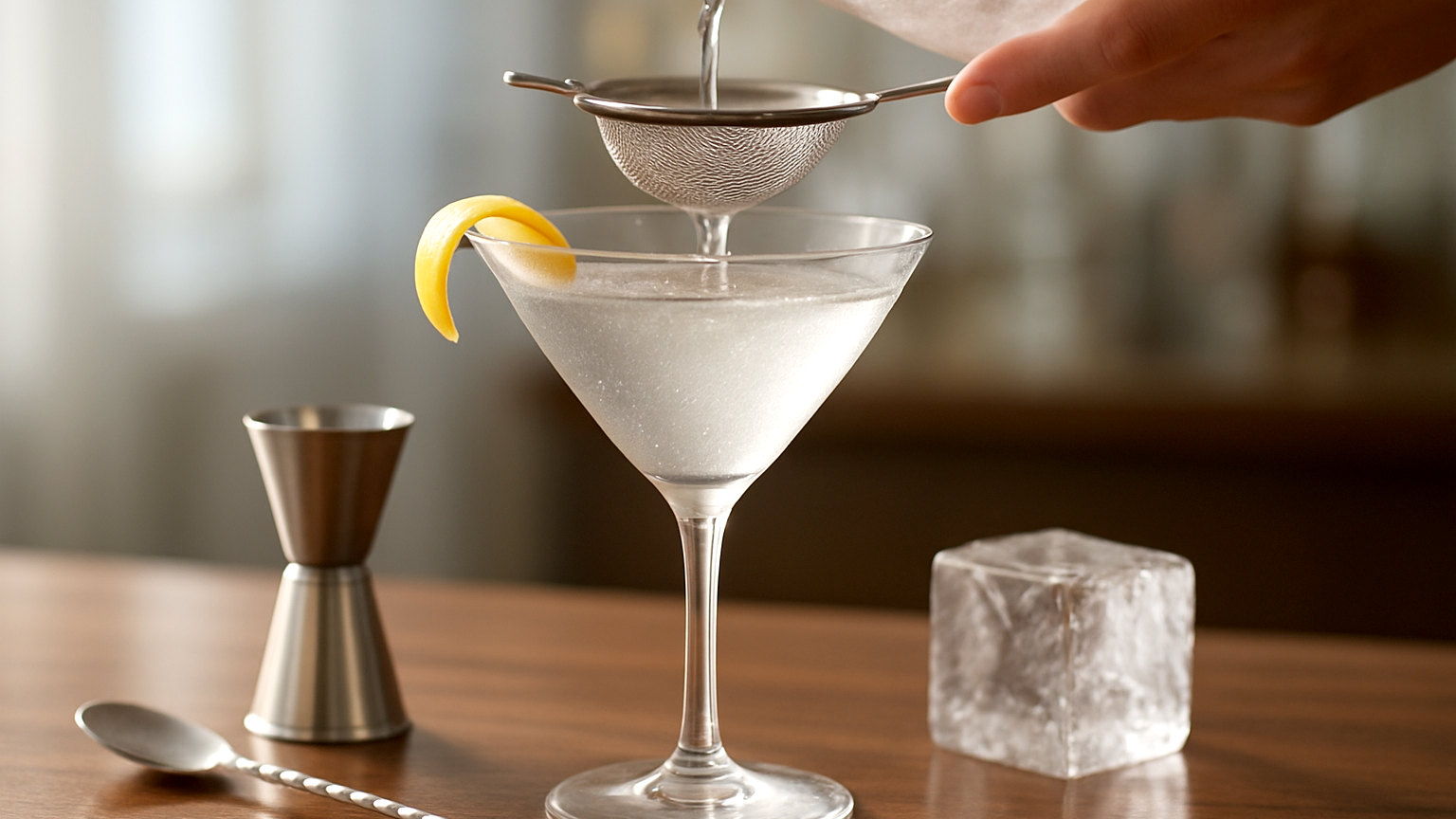
For anything served up, double strain through a fine sieve held over the glass. That catches ice shards and fruit fragments, and it makes a visible difference.
Do not scrape or tap the strainer for the last drops, which drags fine particles through.
Common errors
Not enough ice. Not shaking hard enough. Shaking for too long. Using wet ice. Leaving the drink standing on the ice before straining, which continues diluting it.
And failing to chill the serving glass, which undoes a well shaken drink within two minutes.
Two at once
A large Boston tin holds enough for two drinks comfortably, which halves the work.
Beyond two, the ratio of ice to liquid falls and the chilling becomes unreliable. Three is the practical limit.
Chill both glasses before you start, since straining into one cold glass and one warm one produces a noticeable difference between them.
Safety
A shaker under pressure can fail if the seal is poor, so check it holds before shaking and shake over your shoulder rather than towards anyone.
Never shake anything warm or carbonated. Warm liquid expands and carbonation builds pressure, and either can force the shaker open mid-shake.
Wet hands slip. Dry them before you start.
Cleaning up
Rinse immediately in cold water, particularly after egg or dairy, since hot water cooks protein onto the metal.
Store the tins separately rather than nested, which prevents them seizing together.
Never tap a shaker on a worktop to break the seal, which dents the rim and is how most shakers are ruined.