Ice comes in several formats and each is designed for a different dilution rate. Choosing the wrong one produces a drink that is either watery or under-diluted, and the choice matters more than whether the ice is clear.
The principle
Melting happens at the surface, so what governs the rate is the surface area relative to the volume of ice.
A large cube has less surface area for its mass than several small cubes of the same total weight, so it melts more slowly.
A sphere has the lowest surface area of any shape for a given volume, and therefore melts slowest of all.
Crushed ice has an enormous surface area, so it chills very fast and dilutes very fast, which is sometimes exactly what is wanted.
Large cubes and spheres
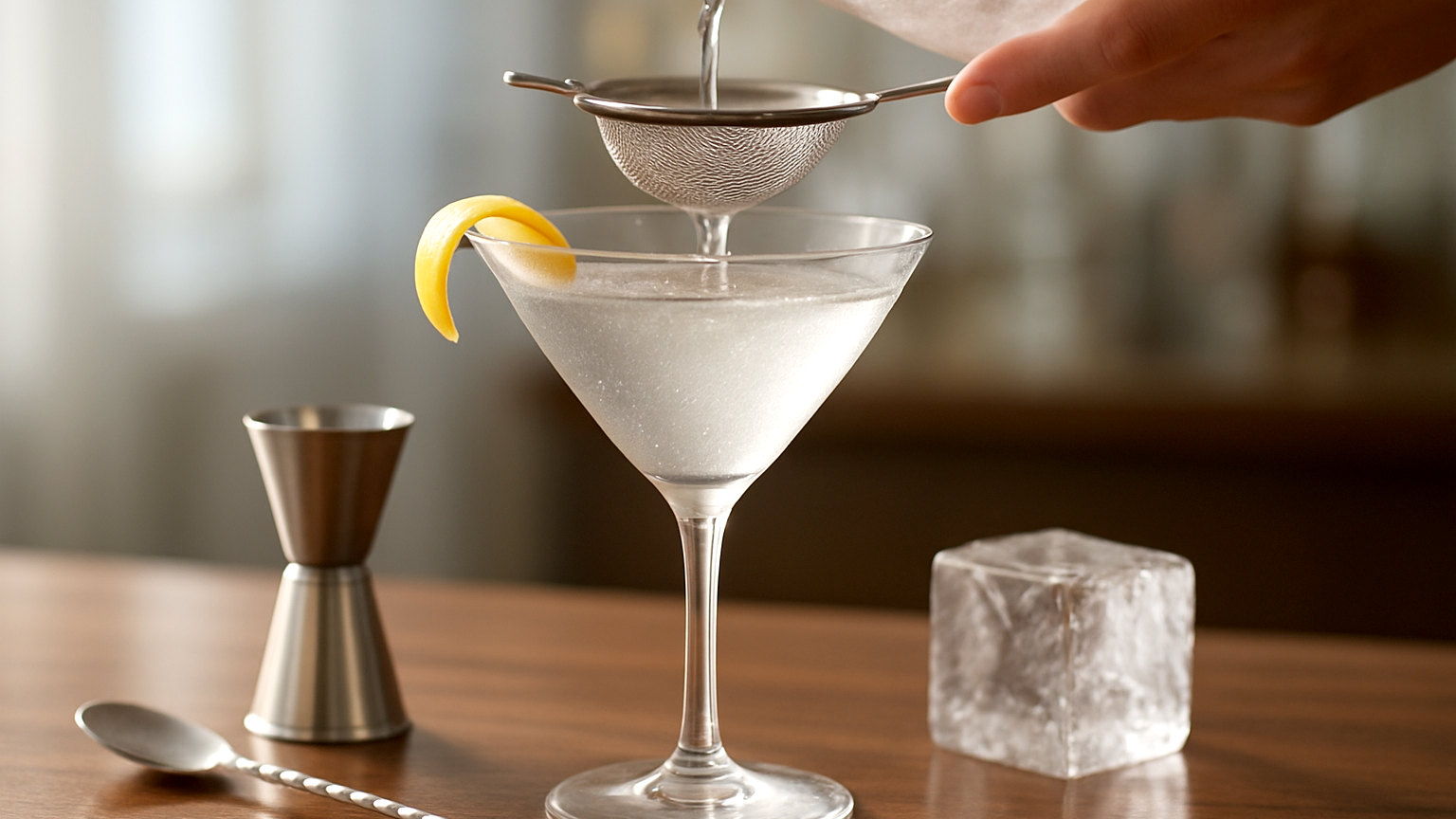
Around five centimetres, one per glass.
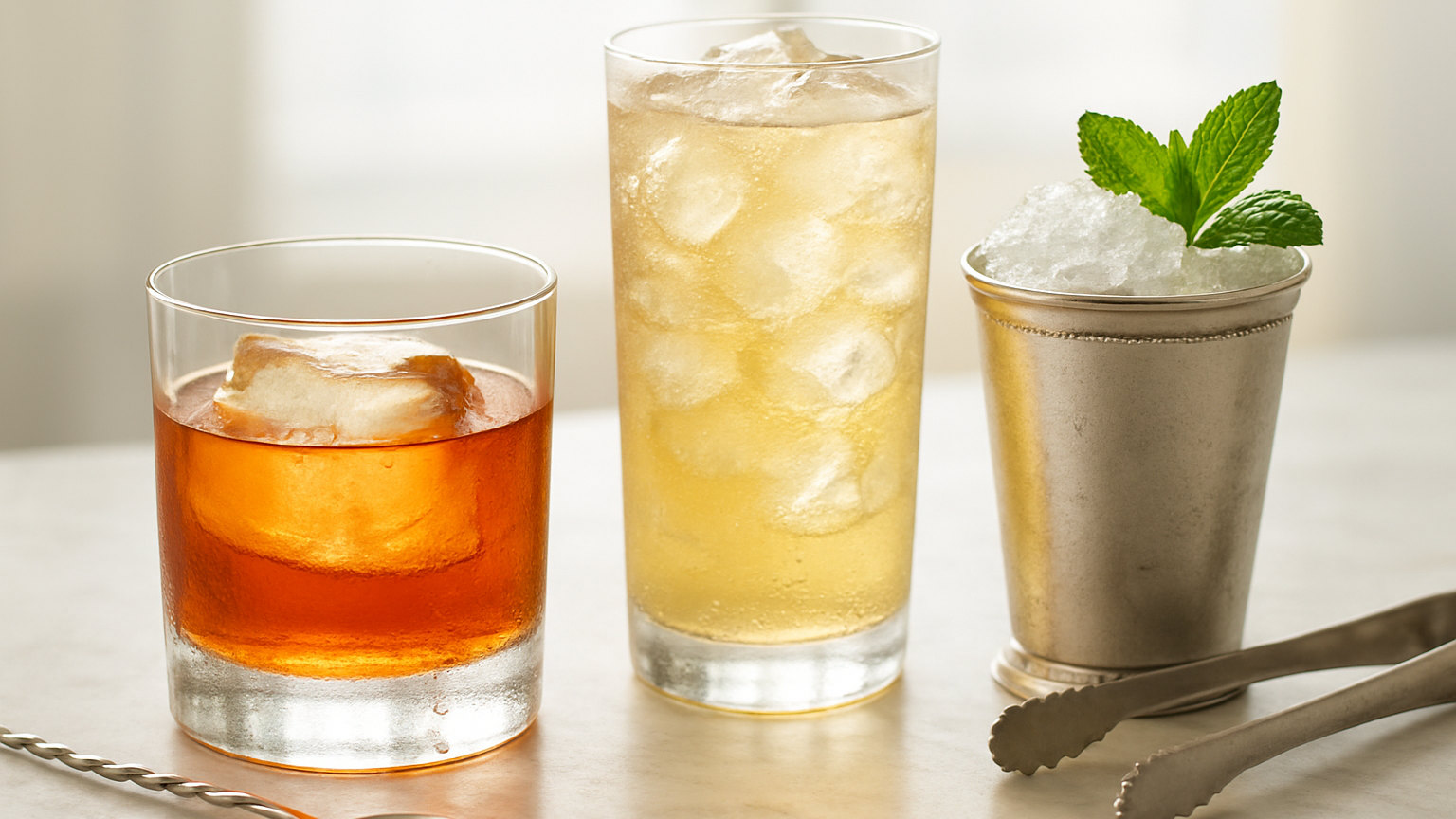
For spirit-forward drinks served over ice: old fashioneds, negronis, whisky, anything you intend to drink slowly.
The intention is to keep the drink cold while adding as little water as possible, since the dilution has already been achieved during stirring.
Spheres perform marginally better than cubes and are more awkward to make and to fit in a glass. The difference is small enough that cubes are the sensible default.
Standard cubes
The ordinary tray or bagged size, used in quantity.
For highballs, packed to fill the glass completely. The key point is quantity: a full glass melts more slowly than a half-empty one, since the whole drink chills quickly and then stays cold.
Also for shaking and stirring, where the ice is discarded afterwards and its only job is to chill and dilute efficiently.
Fill the shaker at least three quarters full for the same reason.
Crushed ice
For juleps, brambles, cobblers, swizzles and tiki drinks.
In these, continuous dilution is part of the design. The drink starts concentrated and becomes progressively longer and more refreshing as the ice melts, which is why a julep works in hot weather.
Crushed ice also packs densely, which holds a liqueur drizzle in suspension in a bramble and supports a garnish.
Make it by wrapping cubes in a clean tea towel and hitting them with a rolling pin. A Lewis bag, being canvas, absorbs the meltwater and produces drier crushed ice that packs better.
Collins spears
Long rectangular batons that fill a tall glass vertically.
They present less surface area than the equivalent volume of cubes and look considerably better in a highball, which is why serious bars use them.
Moulds are available. They are a refinement rather than a necessity, and a full glass of ordinary cubes achieves most of the same result.
Matching format to drink
Ask what the ice is meant to do.
If the drink is already diluted and needs only to stay cold: one large cube.
If the drink is long and needs to stay cold throughout: a full glass of standard cubes.
If the drink is meant to lengthen and soften as you go: crushed.
If the ice will be discarded: whatever you have, in quantity.
The common errors
Three cubes in a highball, which produces a watery drink within minutes.
Crushed ice in a spirit-forward drink, which dilutes it to nothing.
A half-filled shaker, which dilutes more rather than less.
And reusing ice from a previous drink, which has already partially melted and will behave unpredictably.
What to own
A silicone mould producing large cubes, and a bag or tray of standard cubes.
A tea towel and a rolling pin covers crushed ice.
That is the complete requirement and costs a few pounds.
Ice in a shaker
Worth a separate note, since the ice used for shaking is discarded and its only job is efficiency.
Standard cubes straight from the freezer are ideal: cold enough to chill quickly, small enough to move freely, and plentiful.
Fill the shaker at least three quarters full. A half-empty shaker produces a warmer, more diluted drink, which is the opposite of what most people expect.