Ice is a food. It goes into a glass and is consumed, and unlike most things it receives no heat treatment along the way. It is also handled more casually than almost anything else in a domestic kitchen.
Use a scoop
The single most important practice.
Hands transfer bacteria directly to something that will be consumed without any further processing. This is the reason commercial kitchens require a scoop and it applies equally at home.
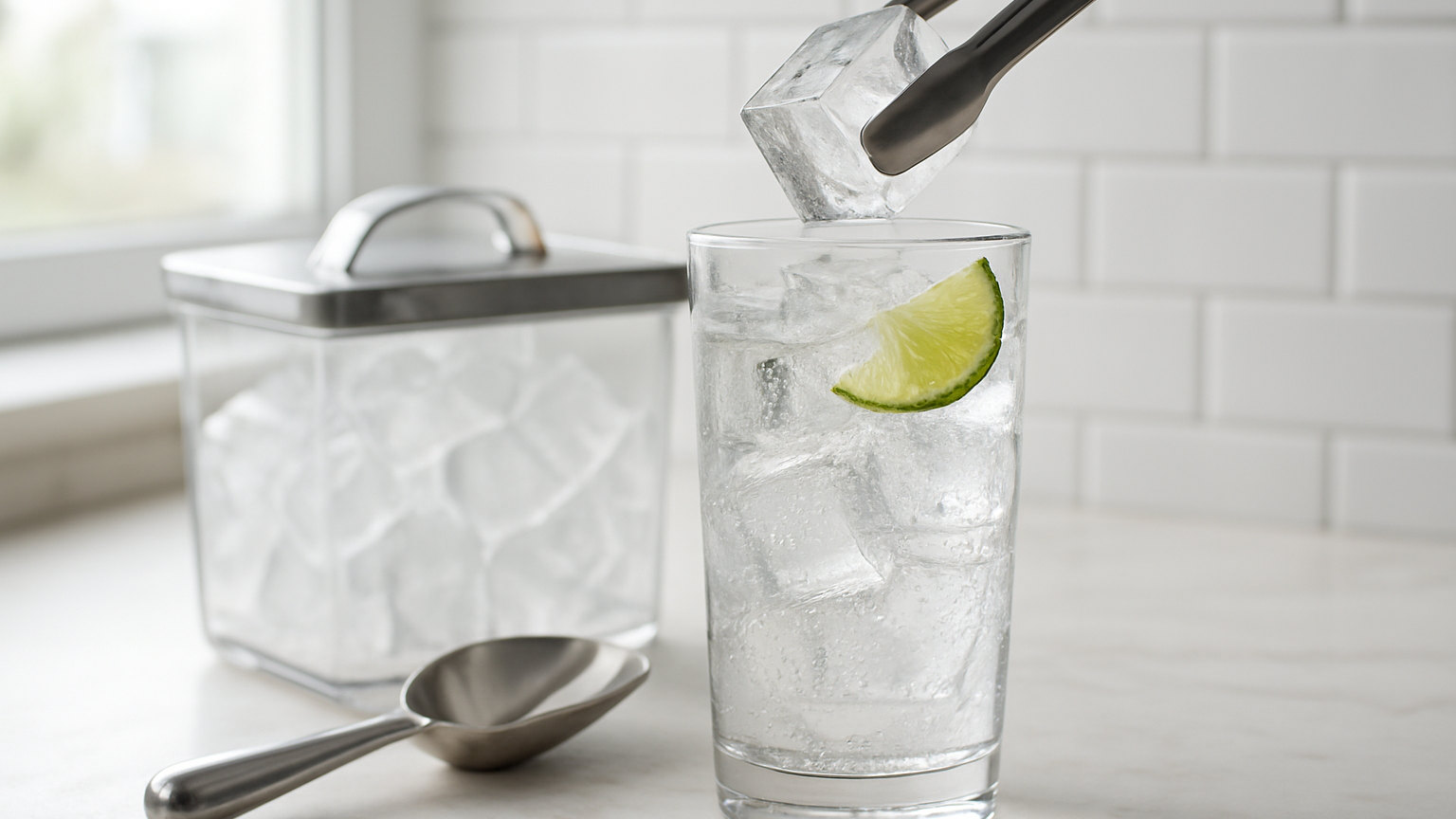
A dedicated scoop, kept clean and stored outside the ice, is the standard arrangement. Tongs work for individual large cubes.
Do not store the scoop buried in the ice, since the handle is then in contact with what will be served.
Never scoop with a glass
Two reasons, and both matter.
The first is hygiene: the outside of a glass has been handled and may have been on a table.
The second is safety. Glass chips against ice, and a chip in a container of ice is effectively invisible. It ends up in a drink.
This is why commercial premises prohibit it outright, and it is a genuine hazard rather than an overcautious rule.
If a glass breaks in or near an ice container, the entire container must be emptied, cleaned and refilled. There is no way to be confident of finding the fragments.
Storage
A sealed bag or a covered container, in the freezer.
This addresses both flavour and hygiene: it keeps freezer odours out and keeps everything else out too.
An open tray in a freezer sits beneath whatever is above it, and anything that drips will end up in the ice.
Keep raw meat and fish below ice rather than above it, which is the standard arrangement in any fridge or freezer and is frequently ignored.
Cleaning ice equipment
Trays and moulds should be washed regularly, since they develop films and absorb odours over time.
Silicone moulds in particular hold smells and benefit from an occasional wash in hot water with a little bicarbonate of soda.
Rinse thoroughly, since detergent residue transfers directly into the ice and then into the drink.
Dry completely before refilling.
Ice buckets at a party
The situation where hygiene most often goes wrong.
Provide a scoop and put it somewhere obvious, since without one people will use their hands or a glass.
Keep the drinking ice separate from any ice used to chill bottles in water, which is no longer suitable for glasses once it has been in a tub with bottle necks in it.
Refresh it rather than topping up melted ice, since a bucket of partly melted ice that has been sitting out is warm water with ice in it.
Bought ice
Bagged ice is produced under food hygiene requirements and is generally fine.
Check the bag is intact, keep it sealed, and treat an opened bag as you would any other food.
Once tipped into a bucket it is subject to the same handling considerations as any other ice.
Water quality
Ice made from drinking water is as safe as the water.
Freezing does not sterilise. Organisms are not reliably killed by freezing, so ice made from unsafe water remains unsafe.
This matters mainly when travelling in places where tap water is not recommended for drinking, where ice should be treated with the same caution as the water it came from.
The summary
Scoop, don't grab. Never use a glass. Keep it covered. Wash the moulds. Keep drinking ice separate from chilling ice.
All of it is straightforward, and none of it costs anything.
A note on ice machines
For anyone with a domestic ice maker, the same principles apply.
The bin should be emptied and cleaned periodically, since ice sitting in it accumulates whatever the freezer air contains, and the water line and filter need attention according to the manufacturer's instructions.
In a rented or shared kitchen
Where a freezer is shared, a sealed container matters more rather than less, since you have no control over what else is in there.