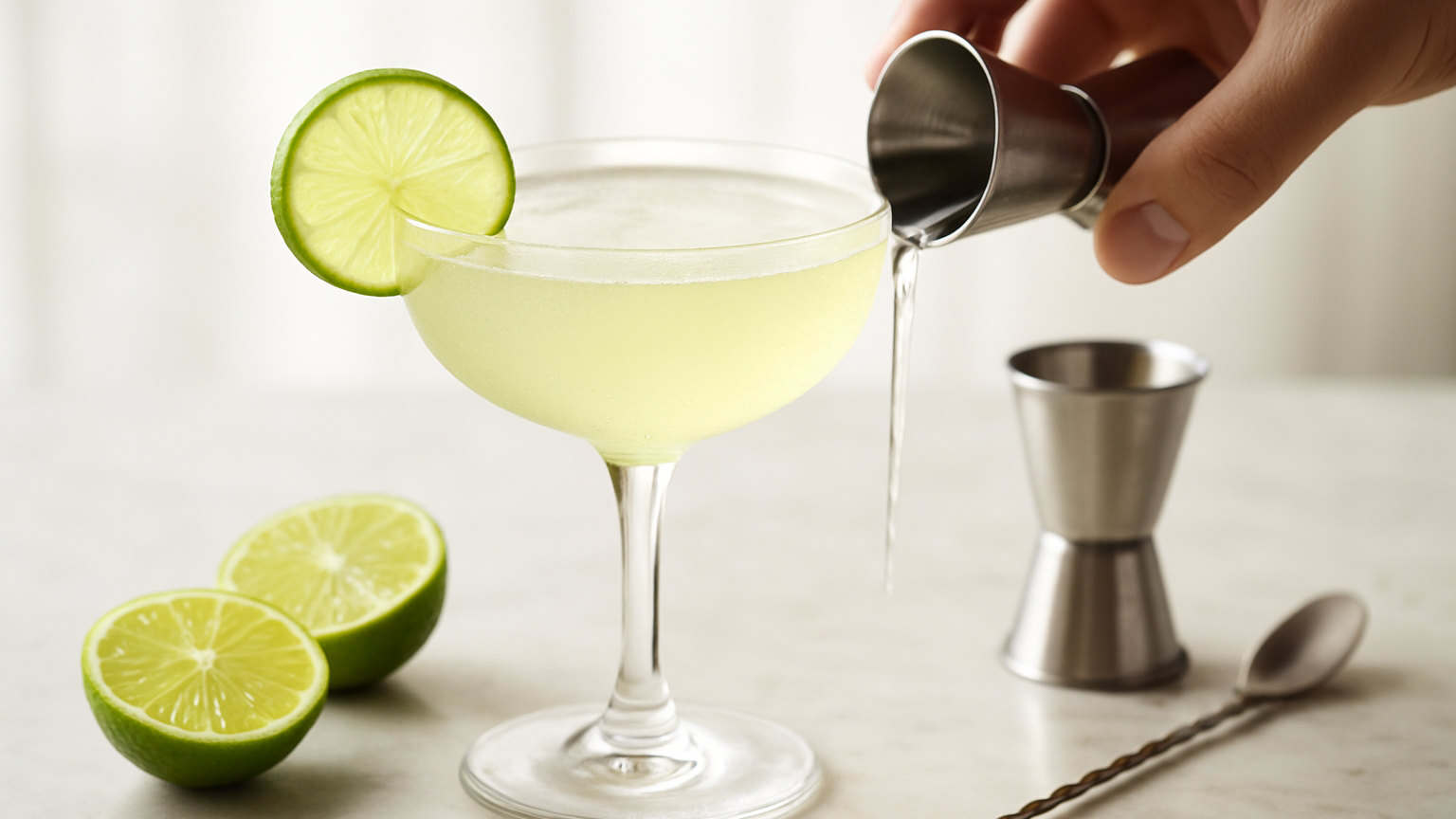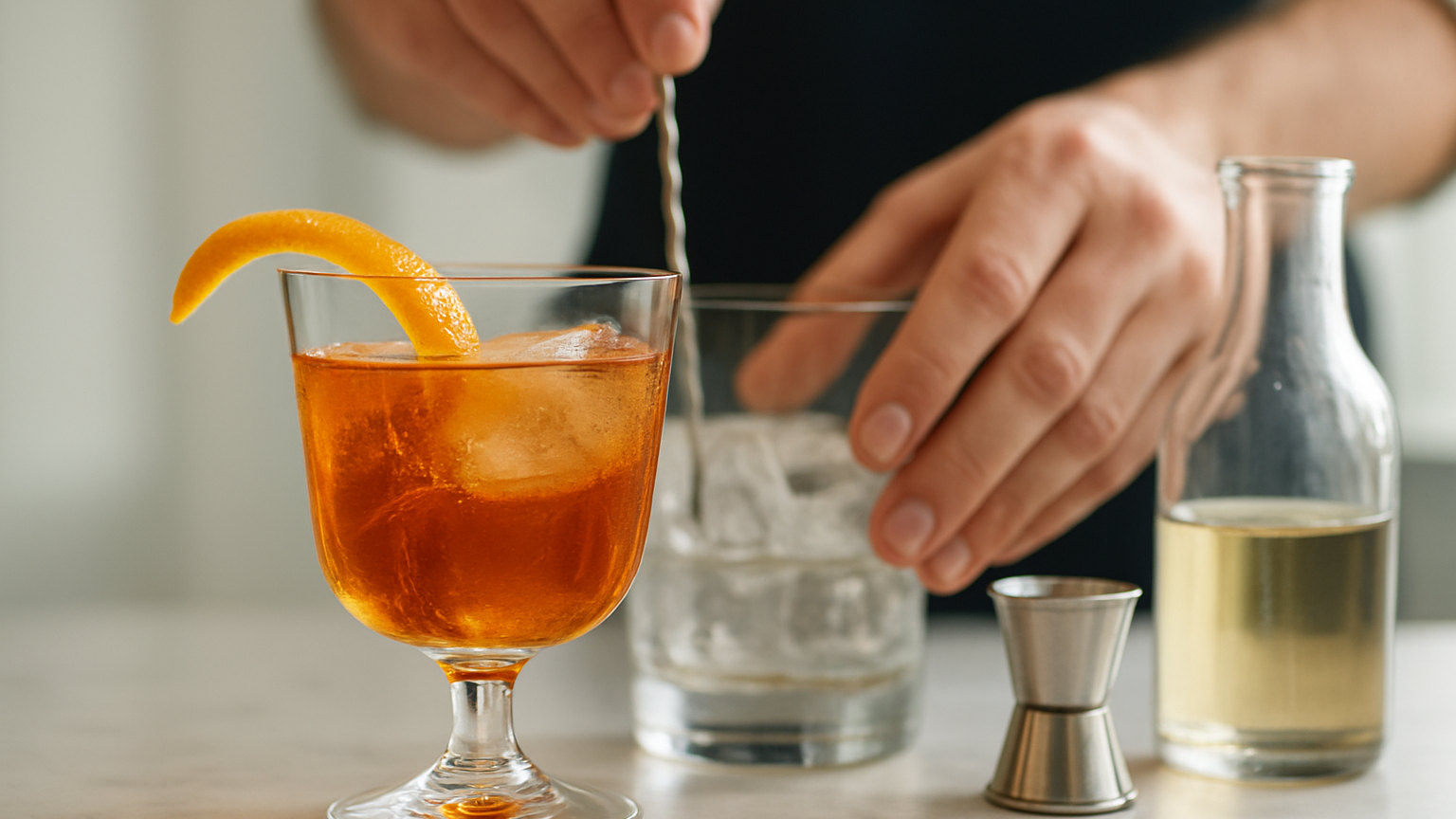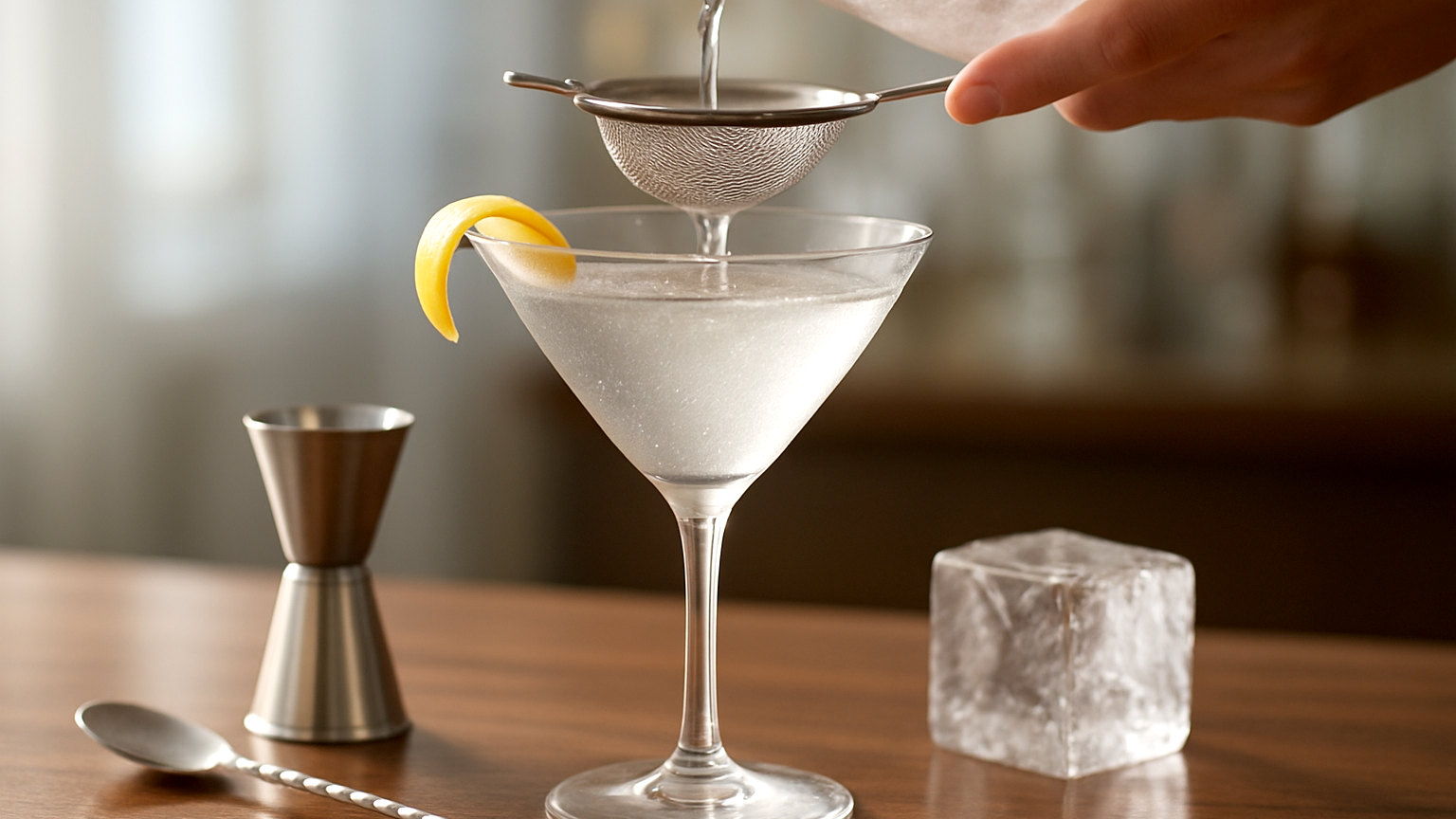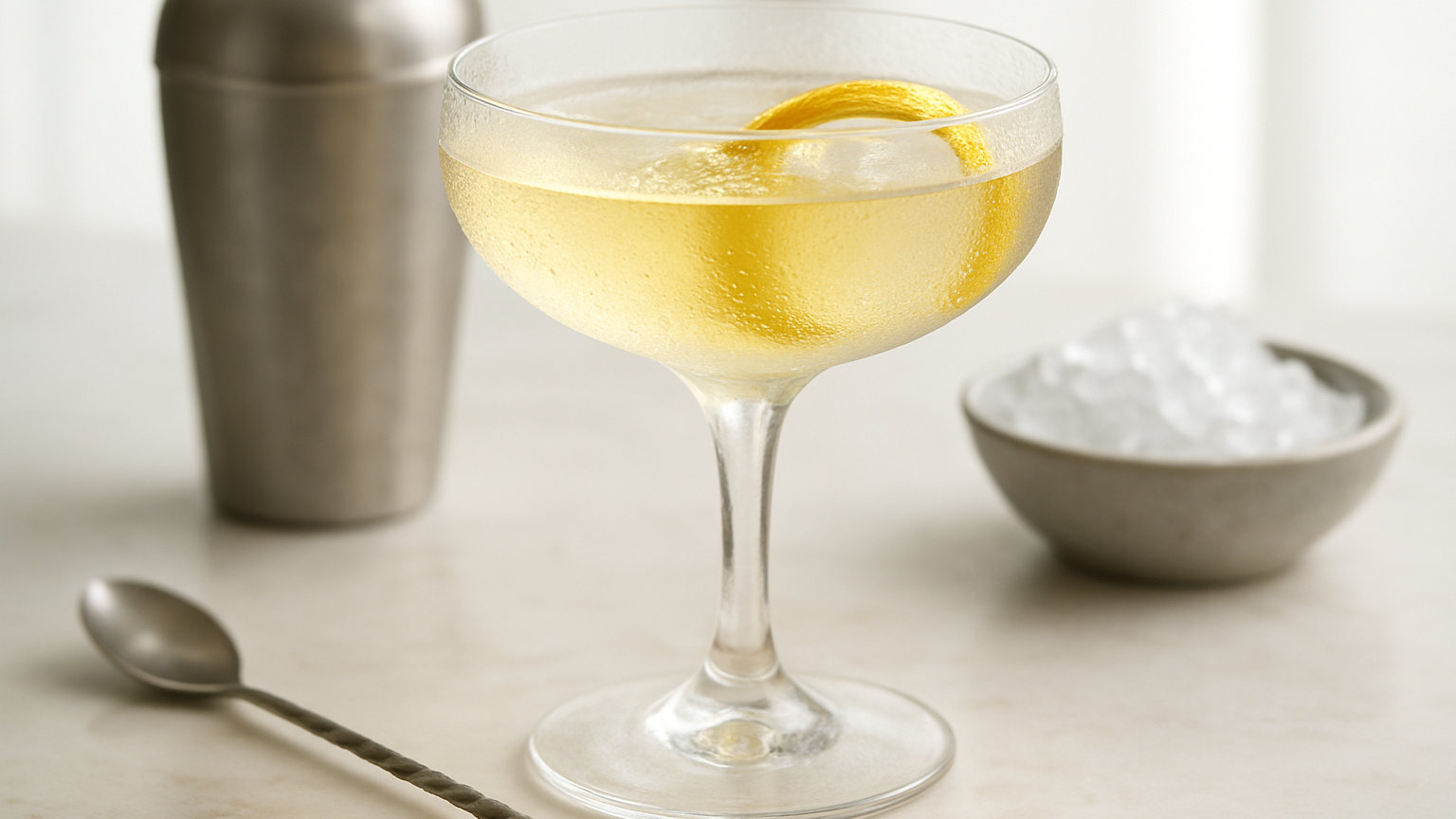
Frost on the outside of a glass is condensation from the air freezing on a very cold surface. It looks impressive and it is also a reliable signal that the drink inside has reached temperature.
The two routes
Frost can be produced from the inside or the outside, and the two are different techniques for different purposes.
From the inside: packing a glass with crushed ice and agitating it, whether by stirring, churning or swizzling, chills the glass rapidly through contact and produces frost within seconds.
From the outside: placing a glass in a freezer for ten minutes or more chills it so that condensation forms when it is brought out into a warm room.
The first is part of making the drink. The second is preparation.
Frost as a signal
This is the useful part.
When making a julep or a swizzle, frost forming on the outside of the vessel tells you the drink is properly chilled and adequately diluted, which is more reliable than counting seconds.
The same applies to a mixing glass when stirring. When the outside frosts evenly and the glass is uncomfortable to hold, the drink is ready.
Learning to read that is more useful than any timing rule, since ice temperature, ingredient temperature and room temperature all vary.
Why metal frosts better
Metal conducts heat far more efficiently than glass, so a metal vessel reaches a low temperature much faster and frosts more readily.
This is why julep cups are traditionally silver or pewter, and why the frost on one is part of the presentation.
Holding a metal cup by the rim or the base rather than the body keeps the frost intact, which is the practical reason for the convention rather than an affectation.
A copper mug frosts for the same reason, which is a genuine part of why a Moscow mule is served in one.
Frappé
The term describes a drink served over crushed or shaved ice, packed and mounded in the glass.
An absinthe frappé and a mint julep are both examples, and the technique produces a very cold, progressively diluting drink.
It is not the same as a blended frozen drink, which is a separate thing made in a blender.
The freezer method
For anything served without ice, meaning stirred cocktails served up.
Ten minutes in a freezer is enough, and glasses can be kept there indefinitely.
Store them in a bag or covered, since a glass in an open freezer picks up odours which the drink will carry.
Handle by the stem or the base, since a warm hand around the bowl undoes it in seconds.
When a frozen glass is a mistake
Worth flagging, since frosting is not universally desirable.
For beer, a frozen glass is actively bad. Ice crystals inside melt into the beer and dilute it, and the extreme cold suppresses the hop and malt aroma the beer was made for.
It suits a mass market lager on a hot day and works directly against anything with character.
For aromatic cocktails, an extremely cold glass suppresses volatiles further than intended. Chilled rather than frozen is the better choice.
Sugar and salt frosting
A different meaning of the word, referring to a coated rim.
Rub a citrus wedge around the outside of the rim only, then roll the outside in salt or sugar.
Coating the inside means the crystals fall into the drink, which becomes progressively saltier or sweeter as you go.
Half the rim is a courtesy, since it lets the drinker choose.
Room temperature matters
Frost forms from moisture in the air, so it appears readily in a humid room and barely at all in a dry cold one.
A glass that refuses to frost is not necessarily insufficiently cold, and touching it is a more reliable test than looking at it.
Metal or glass
Metal frosts faster and more visibly. Glass frosts more slowly and lets you see the drink, which is a genuine trade rather than one being better.