
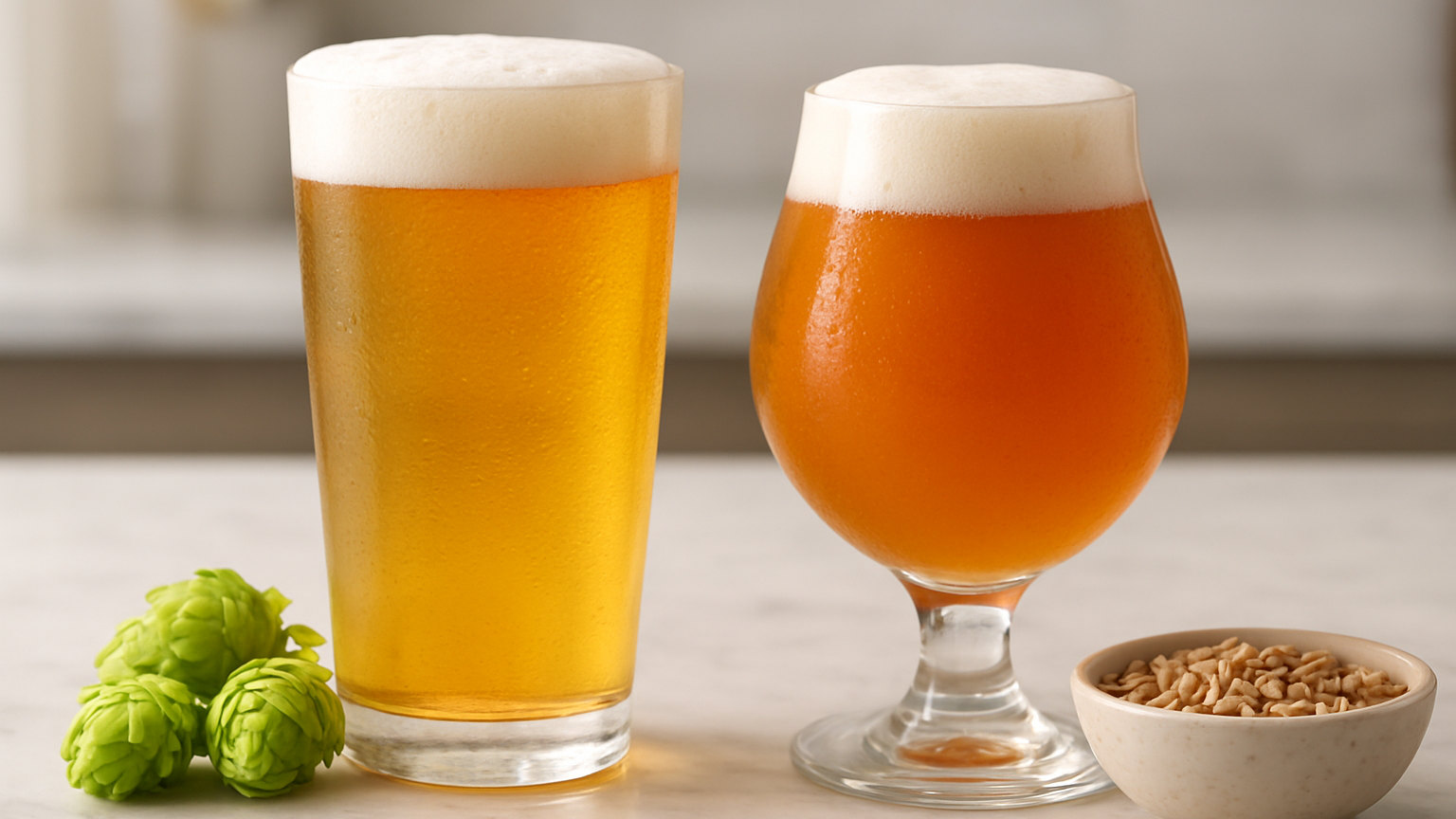
Beer has accumulated more glass shapes than any other drink: pints, tulips, weizen glasses, steins, stanges, snifters, goblets and more. Most exist because a particular region drank a particular beer that way.
What genuinely functions
Three features do real work.
A bowl that narrows towards the rim concentrates aroma, which matters enormously for hop-forward beer and hardly at all for a mass market lager.
A shape that supports a head keeps foam in play, and since foam traps and releases aromatic compounds, that affects what you smell throughout the drink.
Nucleation points, usually a laser-etched pattern on the base, give dissolved carbon dioxide somewhere to form bubbles. Without them a smooth glass produces very few, and the head collapses.
Everything else is tradition and presentation.
The shapes worth knowing
The nonic pint, with the bulge near the top, is the British standard. It stacks safely and does nothing for aroma.
The tulip, wider at the bowl and narrowing at the rim, is the most useful shape in beer and suits IPA, Belgian ales, strong stouts and anything aromatic.
The weizen glass is tall and flaring, designed for the enormous head a wheat beer produces. Nothing else holds it properly.
The pilsner glass is tall and tapered, showing off clarity and carbonation.
The stange is a narrow cylinder for kölsch, served in small measures and replaced frequently. The snifter suits barley wine and imperial stout, where a small measure and a wide bowl let you warm the beer in your hand.
Lined and brim measures
A brim-measure pint glass holds exactly 568 millilitres filled to the very top, leaving no room for a head.
A lined glass holds more, with a line marking the pint and space above it for foam.
Lined glasses resolve the long-running argument about short measures entirely, and they allow a proper head at the same time. It is a wonder they are not universal.
Nucleation
The etched pattern on the base of many modern beer glasses is not decoration.
Carbon dioxide needs a site to form a bubble, and a smooth glass provides very few, so the gas stays dissolved and the head dies. An etched base produces a steady stream of bubbles that maintains the head and carries aroma upwards.
It works, and it means the beer goes flat slightly faster, which is a reasonable trade.
What to own
Two shapes cover everything.
A tulip of around 400 millilitres handles IPA, pale ale, stout, porter, Belgian ales and anything strong or aromatic.
A pint glass, ideally nucleated and lined, handles lager, bitter, mild and anything drunk in volume.
A weizen glass is the only third shape with a genuine functional argument, since nothing else holds a wheat beer's head.
The thing that matters more
A beer-clean glass, meaning one with no residue of any kind on the inside surface.
Fats and detergent destroy head retention and dull aroma. A glass washed with ordinary washing-up liquid and rinsed inadequately, or dried with a tea towel that has been near fabric conditioner, produces a beer that looks flat and smells of very little.
The test: pour and look at the inside of the glass. Bubbles clinging to the sides in patches means residue. Foam collapsing within a minute means something is coating the surface.
Wash beer glasses separately with minimal detergent, rinse thoroughly in hot water, air dry inverted and store upright.
Frozen glasses
A glass straight from a freezer suits a mass market lager on a hot day and works against anything with aroma.
Ice crystals inside melt into the beer and dilute it, and the extreme cold suppresses the hop and malt character you paid for.
For a good beer, a cool glass rather than a frozen one is the better choice.
Where to buy them
Catering suppliers sell the same glassware pubs use, in sensible sizes, at low prices and in quantity.
It is durable, well designed and considerably cheaper than the equivalent from a homeware shop, and it is worth knowing about for anyone buying more than a few.


