
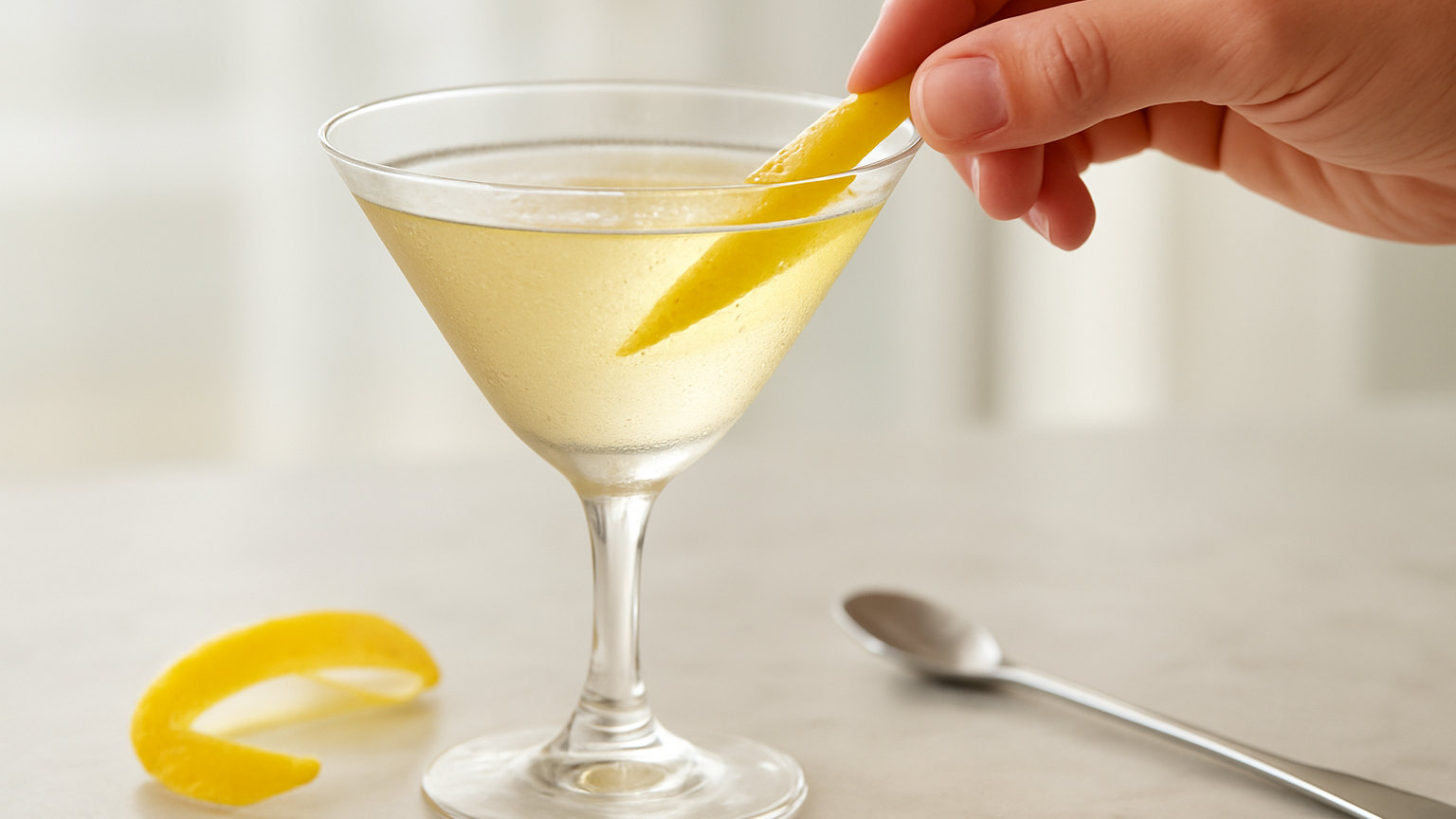
Garnishes are treated as the least important part of a drink and are frequently the part doing the most work per unit of effort. The distinction that matters is between garnishes that contribute something and garnishes that sit there.
Aroma is the main job
Most of what we experience as flavour arrives through the nose rather than the tongue.
A garnish sits at the rim of the glass, directly under the nose as you drink, which places it in the best possible position to deliver aroma.
That is why a citrus twist expressed over a drink changes it noticeably while the same peel dropped in without squeezing does almost nothing.
The oil from a lemon peel is intensely aromatic and contributes essentially no flavour to the liquid. It is working entirely on the nose.
The functional garnishes
Citrus peel, expressed so the oils land on the surface. This is the most useful garnish there is and the one most often done wrong.
Herb sprigs, particularly mint, which should be slapped between the palms to release the oils and positioned so they sit under the nose.
Olives and cocktail onions, which contribute salt and brine to the drink itself as they sit in it.
A salted rim, which changes every mouthful.
Bitters dropped on a foam, which deliver aroma directly without affecting the liquid.
Freshly grated nutmeg or a dusting of spice, which is almost entirely aromatic.
The garnishes that flavour the drink
A smaller category, where the garnish continues contributing as the drink sits.
A cocktail cherry, which is eaten at the end and is the last thing tasted, making it worth spending on.
A cucumber slice or a strawberry, which slowly releases into the liquid.
A citrus wedge intended to be squeezed, which is functional rather than decorative and should be squeezed rather than perched.
The purely decorative
Fruit that neither flavours nor perfumes: a wheel of orange balanced on a rim, a fan of apple, most of what appears in photographs.
Umbrellas, plastic sticks and edible flowers with no scent.
Elaborate constructions that have to be removed before you can drink.
None of this is wrong. A drink that looks considered is enjoyed more, and presentation genuinely affects perception. It is simply worth knowing that it is doing that job rather than a sensory one.
The test
Ask whether the garnish would be missed if it were removed.
Take a drink with a twist, smell it, remove the peel and smell it again. The difference is obvious.
Do the same with an orange wheel and there will be no difference at all.
That distinguishes the two categories more reliably than any list.
When garnishes go wrong
When they get in the way of drinking, which the more elaborate constructions frequently do.
When they add something unwanted: a wedge of lime dropped into a delicate drink, or a mint sprig in something that does not want it.
When they damage the drink. Citrus oil and fruit both destroy foam, which is the technical objection to a lemon wedge in a wheat beer.
And when they are stale, since a dried-out peel or a tired herb sprig contributes nothing and looks worse than nothing.
The practical position
For most drinks at home, one functional garnish is worth doing and takes ten seconds.
An expressed citrus peel improves almost any spirit-forward drink. A slapped mint sprig improves anything it belongs in. A grating of nutmeg finishes a punch or a flip.
Everything beyond that is presentation, which is worth doing when you are serving other people and worth skipping on a Tuesday.
Where the aroma actually reaches you
Worth understanding, since it explains why placement matters.
Aromatic compounds evaporate from the garnish and the drink's surface into the space between the liquid and your nose. That space is the reason a glass should not be filled to the brim.
A garnish sitting at the rim is in the best position of anything on the drink, which is why a slapped mint sprig tucked beside a straw does more than the same sprig lying flat on the surface.


