Herbs are the second most useful garnish after citrus peel, and they are handled destructively more often than anything else on a bar.
Where the aroma is
On the surface of the leaf, in glands that rupture with gentle pressure.
Inside the leaf is chlorophyll and a range of bitter compounds, which is what you release by grinding it.
So the technique is to break the surface without tearing the structure, and anything more vigorous makes the drink worse rather than more herbal.
Slapping
The correct technique and it takes a second.
Place the sprig on the palm of one hand and strike it once, firmly, with the other.
The impact ruptures the surface glands and releases a burst of aroma you can smell immediately.
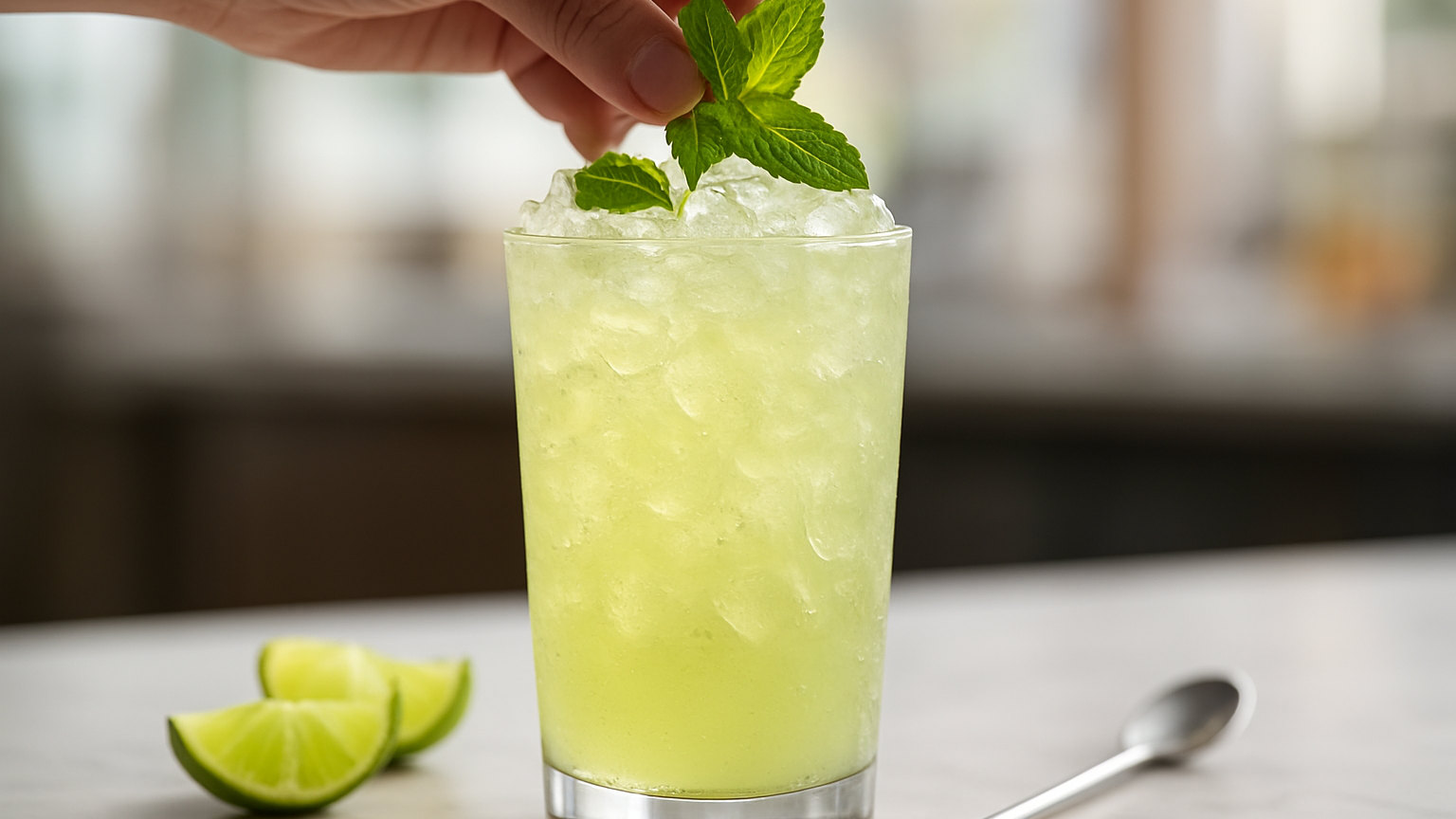
Then place it in the drink, positioned so it sits near the nose rather than lying flat.
Doing this rather than simply dropping the sprig in makes a substantial difference and costs nothing.
Muddling, and when not to
For drinks where the herb is an ingredient rather than a garnish, such as a mojito or a julep, the mint is pressed in the glass.
Gently. Two or three light presses against the side of the vessel with a muddler or the back of a spoon.
Grinding tears the leaf structure and releases chlorophyll and bitter compounds, producing a grassy, vegetal flavour that dominates the drink.
If a mint drink tastes of lawn clippings, this is why.
Which herbs
Mint is the standard, and spearmint rather than peppermint. Peppermint contains considerably more menthol and produces a drink that tastes faintly medicinal.
Basil suits gin and tomato-based drinks, and it bruises easily so needs a light hand.
Rosemary is robust, resinous and assertive, suiting whisky, gin and anything with dark fruit. A sprig can be briefly toasted or smoked for a stronger effect.
Thyme is gentler than rosemary and suits similar drinks.
Sage is savoury and works with apple and whisky.
Coriander, dill and shiso all have uses and are considerably less common.
Choosing and keeping them
Buy the freshest available and use the tender upper leaves for garnish, saving the tougher lower ones for syrup.
Store a bunch stems-down in a glass of water in the fridge, covered loosely with a bag, where it keeps for several days.
Do not wash it until you use it, since damp herbs deteriorate faster.
Growing mint is worth considering if you have anywhere at all, since it is vigorous to the point of being invasive and a single plant supplies more than most households need. Keep it in a pot rather than a bed for that reason.
Positioning
The garnish should sit where you will smell it.
A mint sprig tucked in beside a straw so it sits under the nose does its job. The same sprig lying flat on the surface does considerably less.
For a julep, the traditional arrangement is a generous bunch mounded above the ice with a short straw, so the drinker's nose is in the mint with every sip.
Other aromatic garnishes
Freshly grated nutmeg over a punch, a flip or an eggnog, which is almost entirely aromatic and traditional for good reason.
A dusting of cinnamon or cocoa on a foam.
A pinch of ground spice, which is best grated to order since pre-ground spice loses its aroma quickly.
What to avoid
Herbs that have wilted or blackened, which contribute nothing and look worse than nothing.
Very large sprigs that get in the way of drinking.
And using an herb because it looks appropriate rather than because it belongs. A rosemary sprig in a delicate drink is an intrusion rather than a flourish.
Smoked herbs
Briefly lighting a rosemary or thyme sprig and blowing it out, then placing it on the drink, produces a smoke aroma that sits above the glass.
It works and it is theatre more than technique, since the contribution to the liquid is negligible.
Do it away from anything flammable and never over an open bottle, and be aware that a smouldering sprig continues producing smoke on the table.