
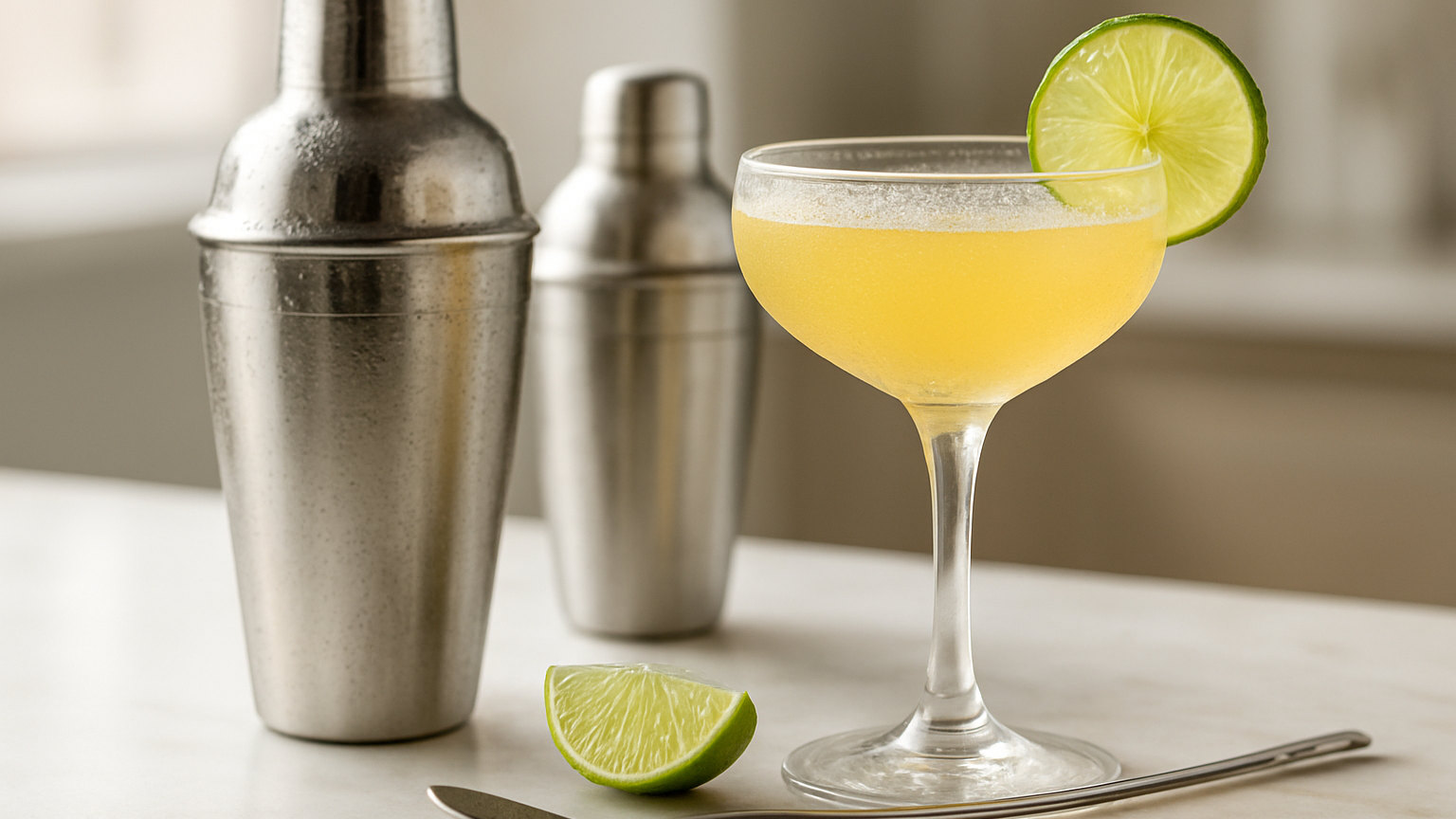
There are three shaker designs in common use and only one real decision, which is between the two tins of a Boston and the three-piece cobbler.
The Boston shaker
Two vessels that seal against each other: traditionally a metal tin and a pint glass, now more commonly two tins of different sizes, which is called tin on tin.
The advantages are capacity, speed and durability. Two tins chill faster than glass, they cannot break, and the larger volume allows two drinks at once.
The disadvantage is that it requires a separate strainer and a small amount of technique to seal and open.
This is what almost every bar uses, and it is the better long-term choice.
The cobbler shaker
Three pieces: a base, a lid with a built-in strainer, and a small cap over the strainer.
The advantage is simplicity. Everything is contained, no separate strainer is needed, and there is no technique to learn.
The disadvantages are real. The cap can seize when the metal contracts in the cold, which is infuriating mid-service. The built-in strainer clogs with fruit or herb fragments. And the capacity is smaller.
For occasional use it is perfectly adequate and it is the friendlier option for a beginner.
The Parisian shaker
A two-piece design, elegant and less common, sealing metal to metal with a shaped lid.
It looks considerably better than either and seals less reliably, which is why bars do not use it.
Sealing a Boston
Fill the larger tin with ingredients and ice. Place the smaller tin on top at a slight angle rather than straight down, and strike the top firmly with the heel of your hand.
The angle is the point. A straight seal is harder to break, and the slight offset creates a seal that holds under pressure and releases with a tap.
Lift the whole thing by the smaller tin to check it has sealed before shaking.
Breaking the seal
Hold the shaker with the larger tin at the bottom, find the point where the two tins meet at their widest gap, and strike the rim of the larger tin firmly with the heel of your hand.
It should release immediately. If it does not, rotate slightly and try again at a different point.
Do not tap it on a worktop, which dents the tin and is how most shakers get ruined.
How to shake
Fill the shaker properly with ice, at least three quarters full. A half-empty shaker dilutes more rather than less, for the same reason a half-iced glass does.
Hold both ends firmly and shake hard, over your shoulder rather than in front of you, for ten to fifteen seconds.
Genuine effort is required. A polite rattle produces an under-chilled, under-diluted drink, and this is the single most common failure in home shaking.
For egg white, dry shake without ice first to build the foam, then add ice and shake again.
Looking after it
Rinse immediately after use, particularly after anything with egg or dairy, using cold water first. Hot water cooks protein onto the metal.
Stainless steel is the sensible material. Avoid anything plated or coated, which chips.
Dry it properly and store the pieces separately rather than nested, which prevents them seizing together.
What to buy
A tin-on-tin Boston set with a 900 millilitre and a 500 millilitre tin, plus a Hawthorne strainer and a small sieve.
The whole set costs very little and will outlast any boxed kit.
Shaking two drinks at once
A large Boston tin holds enough for two drinks comfortably, which halves the work when serving several people.
Beyond two, the ratio of ice to liquid falls and the chilling becomes unreliable, so three is the practical limit and two is better.
Chill both glasses before you start, since straining two drinks into one cold glass and one warm one produces a noticeable difference.
Materials
Stainless steel throughout. Avoid anything plated, coated or coloured, which chips and wears.
Weighted tins feel better in the hand and cost slightly more, which is a matter of preference rather than performance.


