A bar spoon looks like an ordinary long spoon with an unnecessary twist in the handle. The twist is the entire point, and a drink stirred with a teaspoon is measurably worse.
What the spiral does
The spiral allows the shaft to rotate smoothly between your fingers while the bowl travels around the inside of the glass.
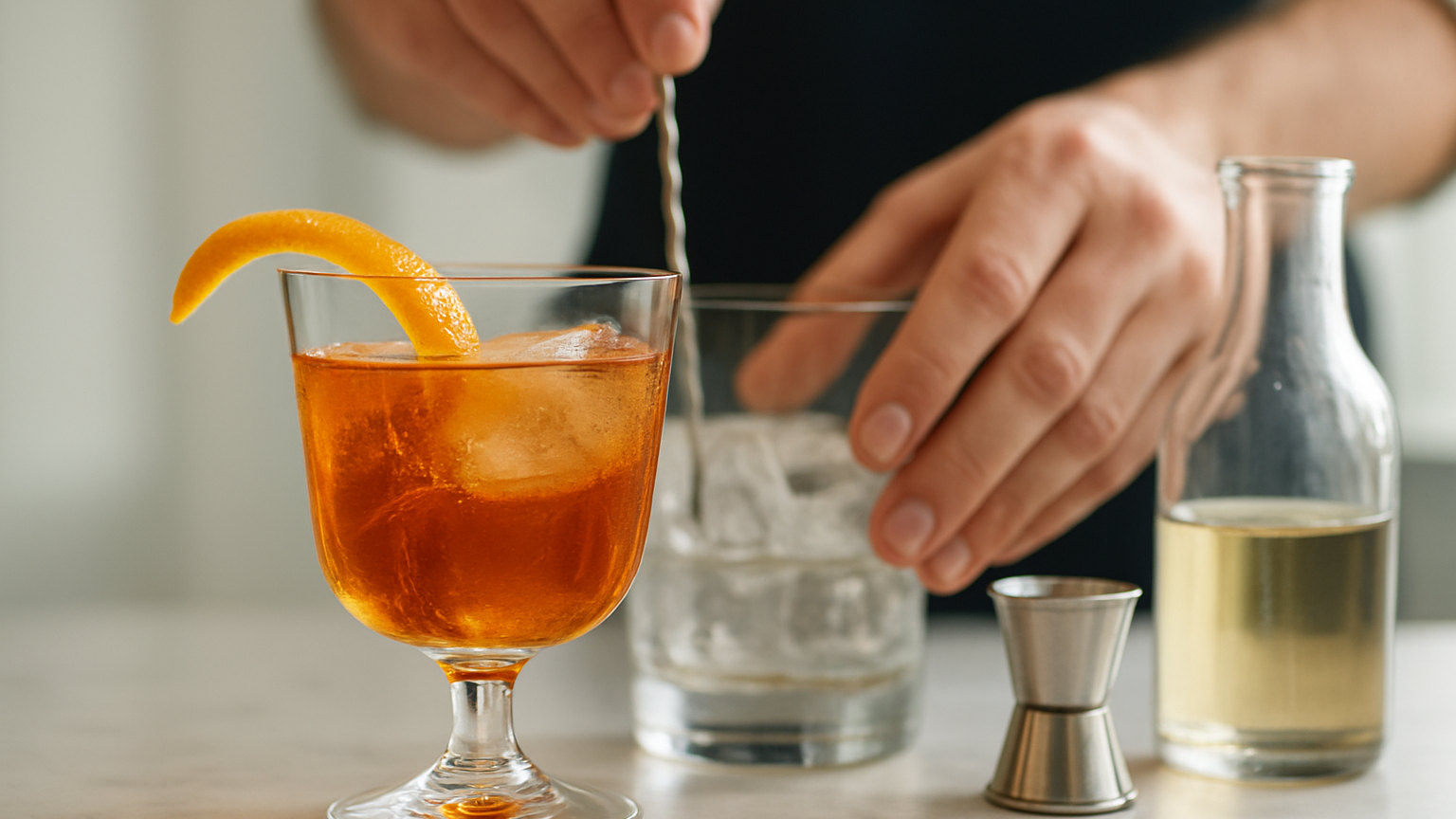
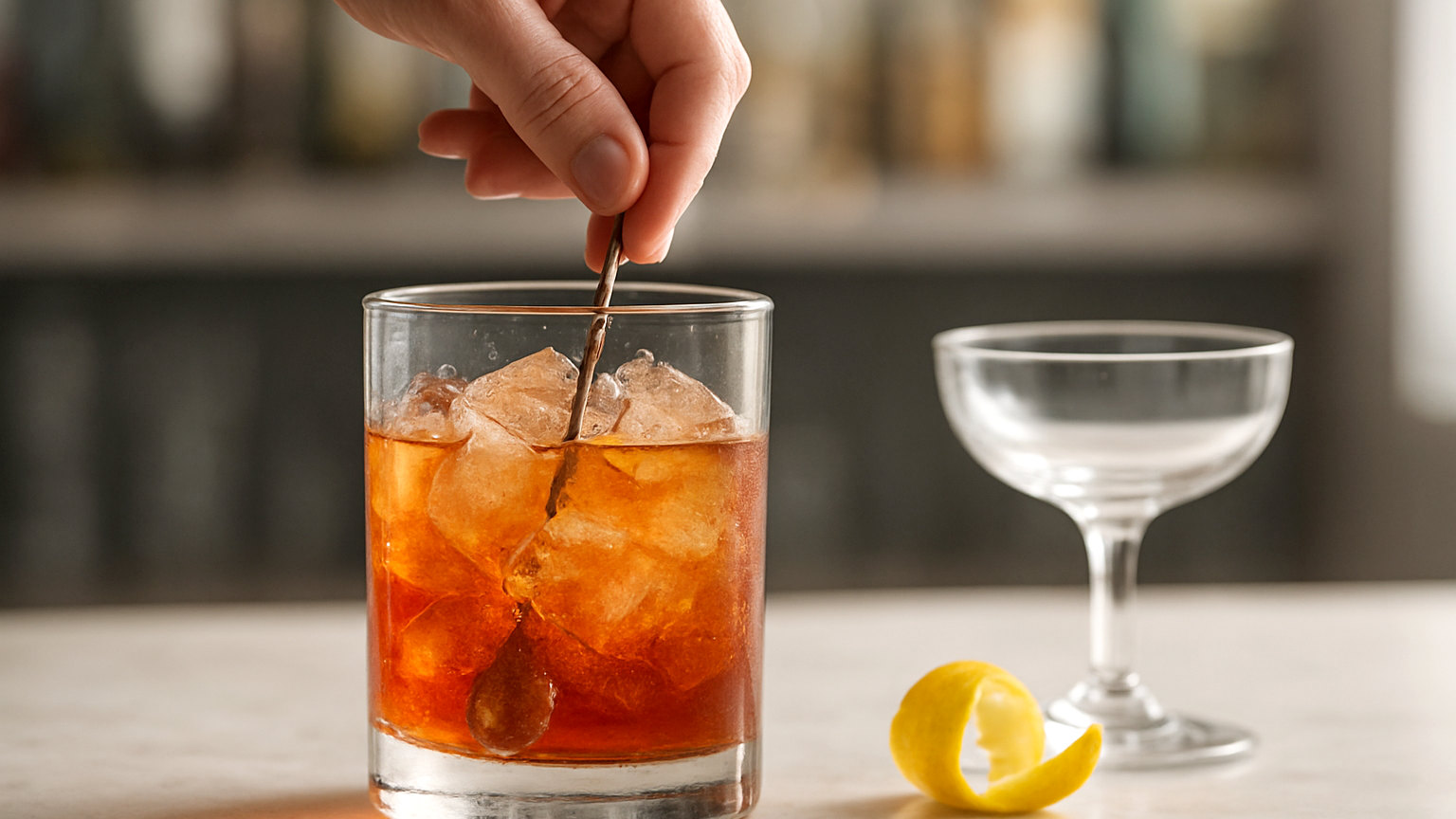
Held between the thumb, index and middle fingers, the spiral turns against the fingertips, so the spoon can be rotated continuously without the hand moving much at all.
The result is that the ice rotates as a mass rather than being pushed around and chipped. Chipped ice adds fragments and accelerates dilution unevenly, which is why aggressive stirring with a straight spoon produces a worse drink.
How to hold it
Grip the shaft between the middle and ring fingers, with the thumb and index finger providing control.
The back of the spoon should face the inside of the glass, so it slides against the wall rather than digging into the ice.
Rotate steadily. The hand barely moves; the spoon does the work.
It takes a few minutes to learn and feels awkward at first, which is why a good many people give up and use a teaspoon.
The other end
Bar spoons come with several different terminations and each has a purpose.
A flat disc, sometimes called a muddler end, is used for gently pressing herbs or crushing a sugar cube. It is not a substitute for a proper muddler.
A trident or fork end is for retrieving olives and cherries from a jar.
A teardrop or weighted end is purely for balance, which makes the spoon feel better in the hand and is a genuine consideration.
Layering and floating
The other job a bar spoon does uniquely well.
To float a liquid on top of a drink, hold the spoon just above the surface with the back facing up, and pour slowly over it. The liquid spreads across the spoon's surface and settles gently rather than plunging through.
This is how a New York sour gets its wine layer and a penicillin its peated float, and it works because density differences hold if the liquid is not disturbed on arrival.
Sugar content is the main determinant of density: sweeter liquids sink, drier ones float.
As a measure
A bar spoon is roughly 5 millilitres, equivalent to a teaspoon, and a great many recipes specify quantities in barspoons.
This varies by design, so it is worth checking yours against a measuring spoon once. Some hold noticeably less.
Where a recipe calls for a teaspoon of syrup or liqueur, the bar spoon is the intended tool.
Choosing one
Length matters. A spoon of around 30 centimetres suits most mixing glasses; a shorter one is awkward in a tall vessel.
Stainless steel, and avoid anything plated, which wears.
A pronounced spiral is better than a shallow one, since it is what your fingers grip.
Weighted ends feel considerably better than unweighted, and the difference is noticeable within a few drinks.
What it does not do
It is not a muddler. Pressing mint firmly with a bar spoon is correct for a julep; crushing fruit with it is not, and it will bend.
It is not a whisk. Anything requiring aeration should be shaken.
And it is not for scooping ice, which will scratch it and is what tongs or a scoop are for.
Substitutes
A long-handled iced tea spoon or a chopstick will stir a drink adequately if you are careful not to chip the ice.
Neither has the spiral, so the hand has to do the work the spoon should be doing, and the ice gets knocked about more.
For occasional use it is fine. If you make stirred drinks regularly, a proper bar spoon costs a few pounds and is noticeably better.
Length
Around thirty centimetres suits most mixing glasses and reaches the bottom of a tall glass comfortably.
Anything shorter is awkward in a large vessel, and anything much longer is unwieldy.