
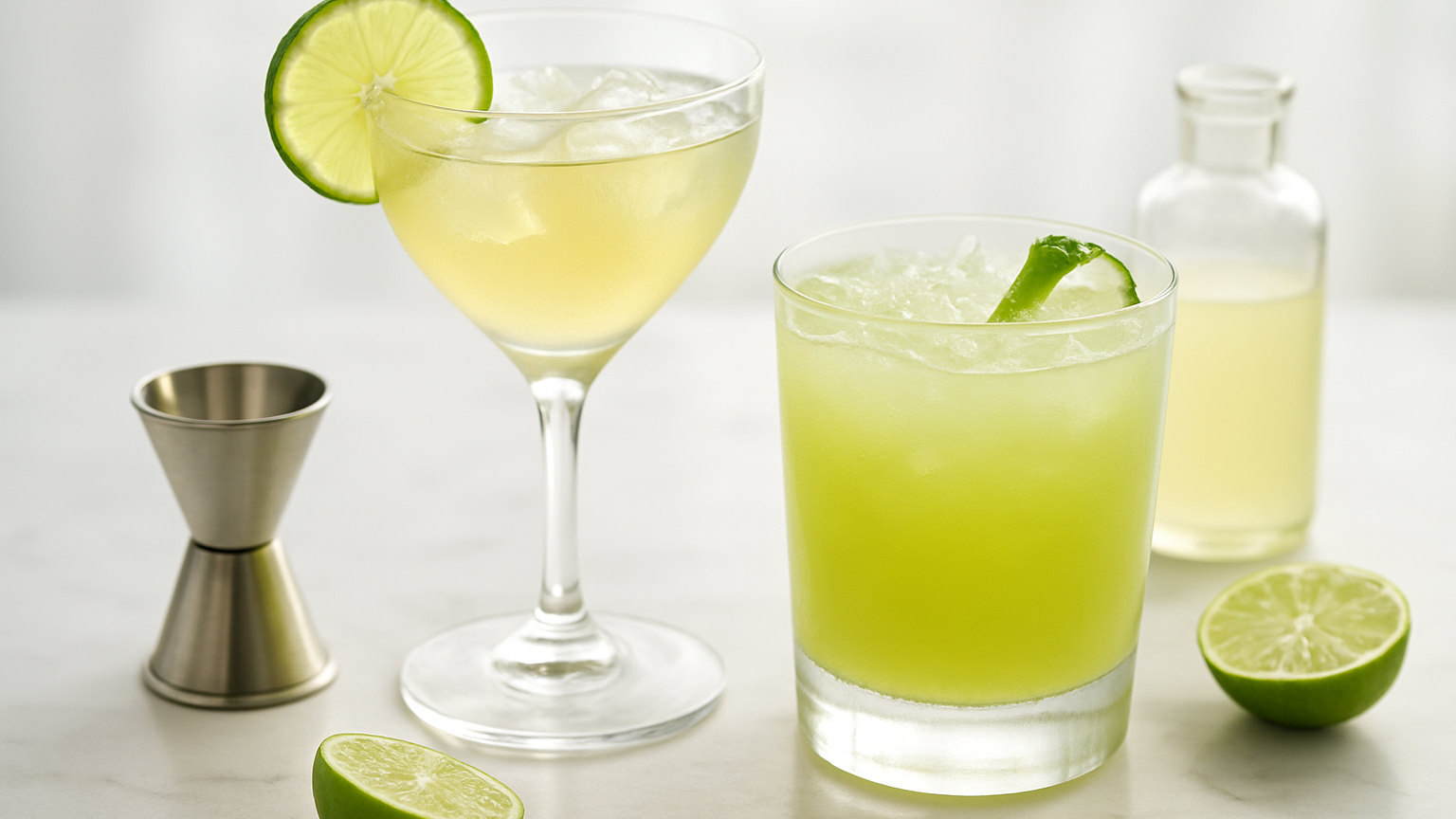
A gimlet is gin and lime. The disagreement is about which kind of lime, and the two answers produce drinks that share very little beyond a name.
The two versions
The traditional recipe uses sweetened lime cordial: equal parts gin and cordial, or two parts gin to one, stirred or shaken and served up.
The modern recipe uses fresh lime juice and sugar syrup, following the standard sour ratio: 60 millilitres of gin, 25 of fresh lime and 20 of syrup.
The cordial version is sweeter, softer and has a distinctive cooked-lime character. The fresh version is sharper, brighter and cleaner.
Both are legitimate. Which is correct depends on whether you regard the drink as a historical artefact or a template to be improved.
The naval story
The usual account connects the drink to the Royal Navy's requirement to carry citrus against scurvy, and to a preserved lime juice product introduced in the nineteenth century that could survive a long voyage.
The name is sometimes attributed to a naval surgeon called Gimlette, and sometimes to the small tool used to tap barrels.
As with most cocktail origins, the documentary evidence is thinner than the confidence with which the story is told. What is well established is that preserved lime juice was genuinely a naval provision and that the drink emerged in a period when fresh limes at sea were not an option.
The case for cordial
It is what the drink was, and the character it produces is not reproducible with fresh lime.
Cordial has a slightly cooked, concentrated, faintly bitter quality that gives the gimlet its distinctiveness. A fresh lime gimlet is essentially a gin daiquiri, which is a fine drink and a different one.
It is also extremely easy to make: two ingredients, no measuring of syrup, no squeezing.
The case for fresh
Commercial cordial has changed since the drink was created. Modern versions of the classic product are frequently made with concentrated juice and a substantial quantity of sugar and sweeteners rather than the preserved juice the original recipe assumed.
A fresh lime gimlet is brighter and less sweet, and it lets a good gin show through.
The compromise most bars use is to make their own cordial, which resolves the argument neatly.
Making your own cordial
Straightforward and much better than either alternative.
Peel four limes, taking wide strips with little pith, and combine the peels with 200 grams of sugar. Leave for several hours until the sugar draws out the oil, producing an oleo saccharum.
Add the juice of the limes, around 150 millilitres, and stir until the sugar dissolves. Strain out the peels.
For a longer-keeping version, add a small quantity of citric acid, which extends the life to a couple of weeks and sharpens it.
Use it at around 25 millilitres to 60 of gin.
Variations
A vodka gimlet is common and simpler, and it depends entirely on the lime element since the vodka contributes little.
Adding cucumber, either muddled or as a slice, is a modern British habit that suits the drink well.
A dash of orange or celery bitters adds complexity to what is otherwise a very simple drink.
Substituting a portion of the gin with an herbal liqueur produces something more layered.
Stirred or shaken
Shaken if you use fresh lime, since juice needs to be properly incorporated and the drink should be lively.
Either works with cordial, since there is no fresh juice to emulsify. Stirred gives a silkier, clearer drink; shaken gives a colder, slightly cloudier one.
Chill the glass thoroughly whichever you choose, since the drink is served without ice.
Which to try first
Make both on the same evening. A cordial gimlet and a fresh lime gimlet side by side takes ten minutes and settles the question far better than reading about it.
Most people find the fresh version brighter and the cordial version more distinctive, and preferences split fairly evenly.
If you make one regularly, the home-made cordial is worth the twenty minutes, since it gives the concentrated character of the traditional drink without the sweetness of the commercial product.


