
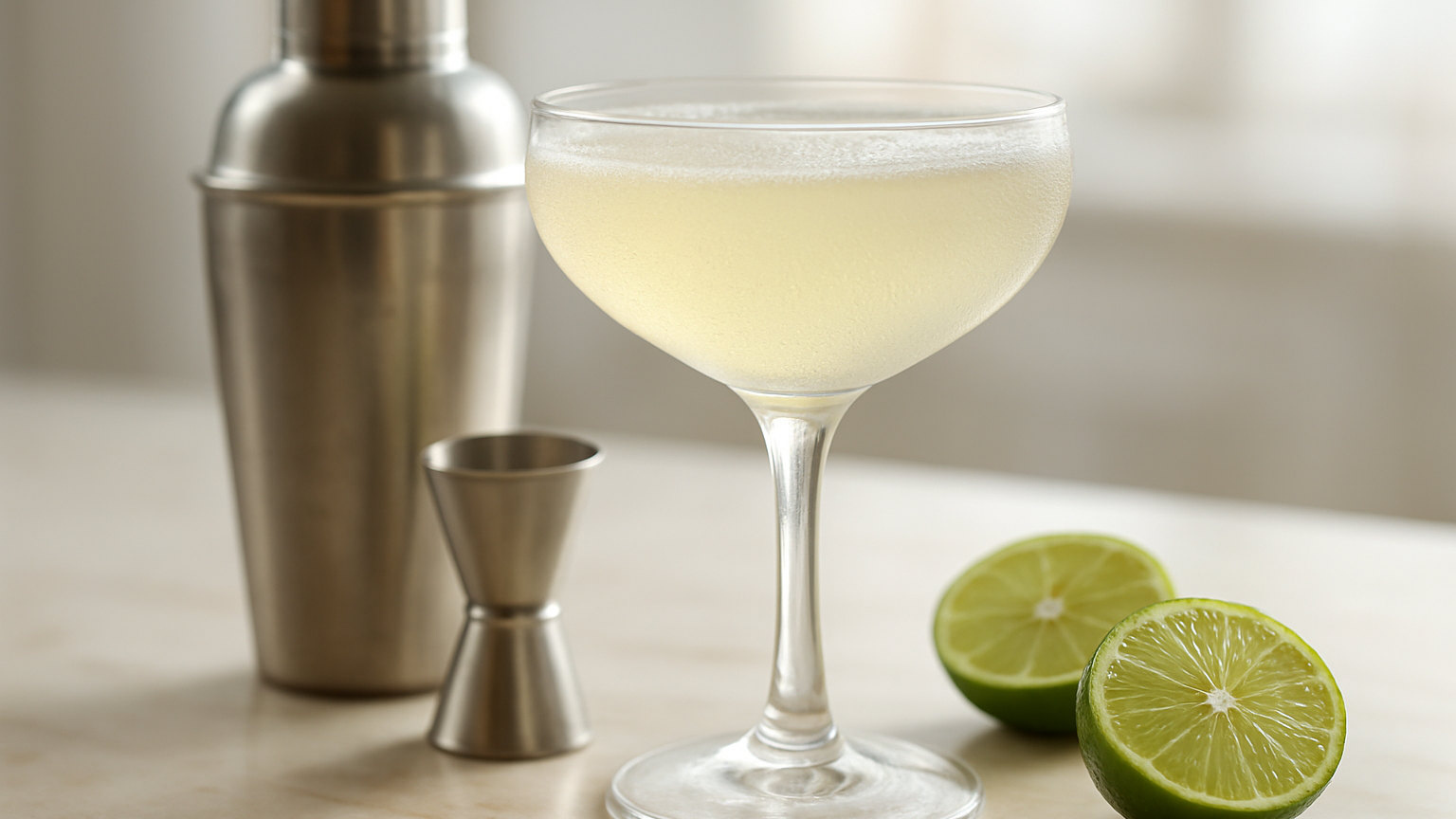
The daiquiri is rum, lime and sugar, shaken and served up. It has three ingredients, no garnish worth mentioning and no technique to hide behind, which is why bartenders order one to find out whether a bar is any good.
The recipe
Combine 60 millilitres of white rum, 30 millilitres of fresh lime juice and 20 millilitres of sugar syrup.
Shake hard with plenty of ice for around twelve seconds and double strain into a chilled coupe.
No garnish is traditional. A lime wheel does no harm and adds nothing.
Taste before straining and adjust the syrup by a few millilitres, since limes vary considerably.
Why it is a test
Everything that can go wrong in a cocktail goes wrong visibly here.
Bottled lime juice tastes flat and slightly cooked, and there is nothing to disguise it. Cheap rum tastes harsh. An unbalanced ratio is immediately obvious. An under-shaken drink is warm and under-diluted; an over-shaken one is watery.
A glass that has not been chilled brings the whole thing up to room temperature within minutes.
Get all of those right and the drink is one of the best there is. Get any of them wrong and it is unmistakable.
The rum
A light Cuban-style white rum is the traditional choice: clean, faintly grassy and dry.
Aged white rums, filtered to remove colour but with time in barrel, give more body and are worth seeking out.
A funkier Jamaican white rum produces a much more assertive drink with pronounced fruit and ester character, which some people prefer.
Rhum agricole, made from fresh cane juice rather than molasses, gives a grassy, vegetal daiquiri that is a different drink and an excellent one.
What does not work is a heavily sweetened or spiced rum, since the drink already has its sugar accounted for.
The frozen version
Worth addressing, since it has done the drink's reputation considerable damage.
A frozen daiquiri blended with crushed ice is a legitimate drink with a genuine history in Havana, and the version made with fresh lime, good rum and a little maraschino liqueur is excellent.
What most people have encountered is a machine-dispensed slush made from a sweetened mix, frequently strawberry flavoured, which shares only a name.
Anyone who tried that and concluded they dislike daiquiris has not had one.
The variations
The Hemingway daiquiri, sometimes called a Papa Doble, adds grapefruit juice and maraschino liqueur and reduces or omits the sugar. It is sharper and drier, and the story attaches it to the writer's preference for less sweetness.
A daiquiri with a demerara syrup and an aged rum is richer and suits colder weather.
Adding a small measure of a herbal or fruit liqueur in place of some of the syrup produces endless variations.
A split base, combining a clean white rum with a small measure of something funkier, adds complexity without changing the structure.
The technique
Shake hard rather than politely. Twelve seconds of genuine effort chills the drink properly and provides the dilution the recipe assumes.
Use plenty of ice in the shaker, since a half-filled shaker dilutes more rather than less.
Double strain through a fine mesh so no ice shards reach the glass, since the drink is served without ice and any fragments will melt into it.
Chill the glass thoroughly beforehand. This is the step most often skipped and the one that determines whether the drink is still good three minutes later.
Up or on the rocks
Served up in a chilled coupe, a daiquiri is concentrated and must be drunk within a few minutes before it warms.
Served over fresh ice in a rocks glass it stays cold longer and dilutes gradually, which suits a warm afternoon and a slower pace.
Both are correct, and the up version is the traditional one. If you are serving several people at once, the rocks version is more forgiving of the delay between pouring the first and the last.


