
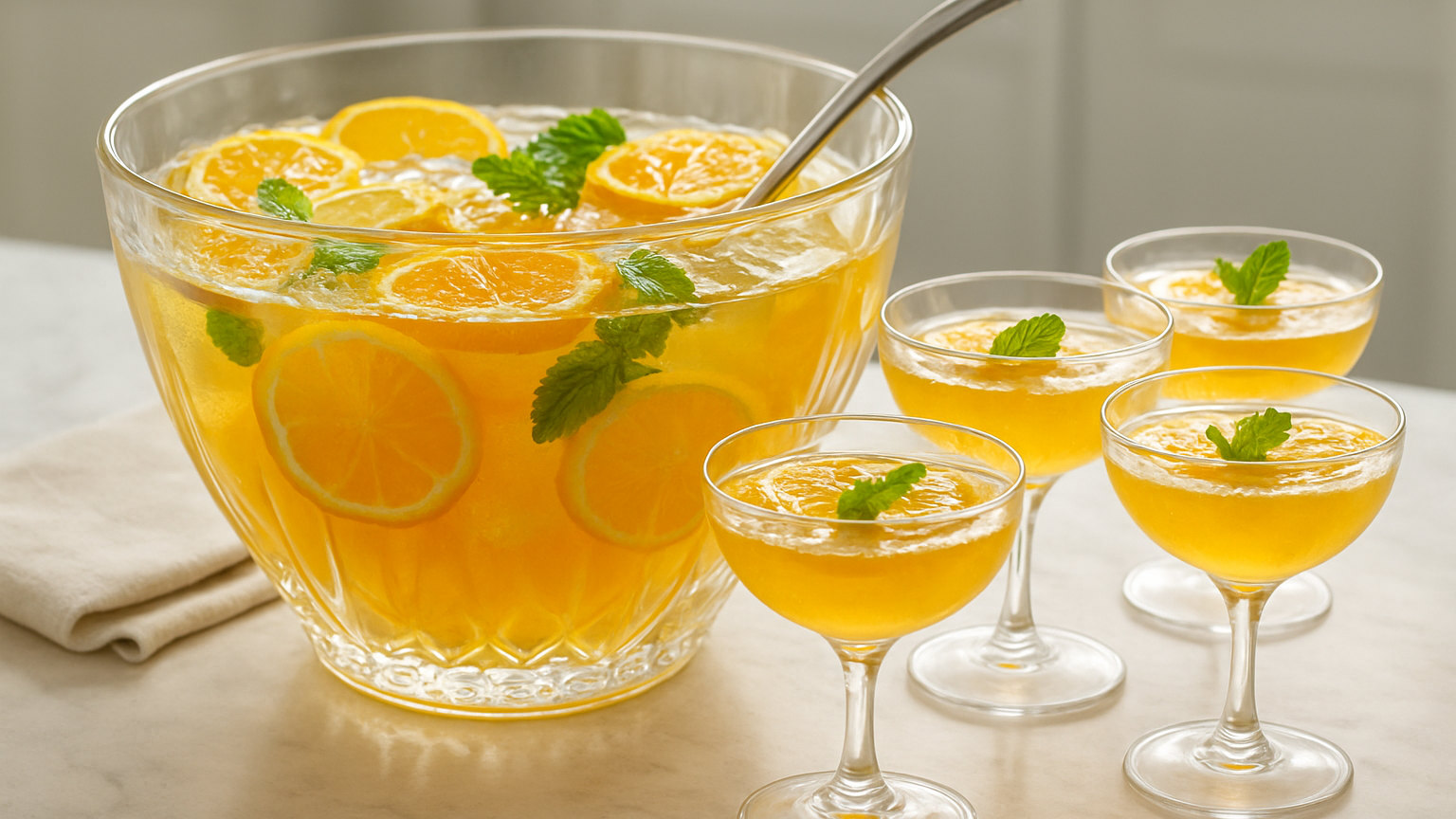
The two ways a punch goes wrong at a party are running out and being far stronger than anyone realised. Both are solved by arithmetic done the day before.
Serving sizes
A punch serving is around 120 to 150 millilitres, which is roughly a small tumbler or a large wine glass a third full.
That is smaller than a pint and larger than a cocktail, and it reflects the fact that punch is designed to be drunk over an evening rather than in one measure.
A three-litre bowl therefore holds around twenty to twenty five servings before ice.
How much per person
Plan on two to three servings per person in the first hour and one to two per hour after that, adjusted for the occasion.
For twelve people over four hours, that suggests somewhere between sixty and eighty servings across all drinks, of which punch will be a proportion.
If punch is the main offering, five to six servings per person over an evening is a reasonable figure, which for twelve people means around nine litres in total.
Make more than the arithmetic suggests. Leftover punch keeps for a day or two refrigerated if it contains no ice, and running out at ten o'clock does not.
Working out the strength
This matters more with punch than with anything else, because nobody counts glasses from a bowl.
Add up the alcohol. A litre of spirit at forty per cent contains four hundred millilitres of pure alcohol, which is forty units.
Divide by the total volume of the finished punch to get the strength in the glass, and by the number of servings to get units per serving.
A punch following the traditional formula, at three parts spirit to four parts water plus citrus and sugar, lands somewhere around twelve to fifteen per cent, which is roughly wine strength.
At that strength, a 150 millilitre serving contains around two units, which is worth knowing and worth telling people.
Adjusting the strength
The weak element is the lever. Increasing the water or tea proportion lowers the strength without changing the flavour balance much.
A punch at eight to ten per cent is considerably more sensible for a long evening than one at eighteen, and it will not be noticed as weak provided the flavours are strong.
Using a lower-strength base, such as a fortified wine in place of some of the spirit, achieves the same thing.
Sparkling wine as part of the liquid lightens it further.
Scaling a recipe
Make one serving first, note the exact measures, then multiply. Scaling an untested recipe to nine litres is how people end up with a great deal of something not quite right.
Taste the finished batch cold rather than at room temperature, since chilling flattens sweetness and a punch that seemed balanced warm usually needs more sugar or less acid once refrigerated.
Hold back some of the citrus and some of the sugar until after tasting, since it is far easier to add than to correct.
Practical points
Make the base the day before without ice or any sparkling element, and refrigerate it. It improves over a few hours.
Add sparkling wine or soda at the moment of serving.
Use a large ice block rather than cubes, which melts far more slowly and keeps the punch cold without diluting it to nothing.
Say what is in it and roughly how strong it is when you put it out, provide a ladle with a known measure, and have a non-alcoholic version alongside in an identical bowl, clearly labelled.
Leftovers
Punch that has not had ice melting in it keeps for two or three days refrigerated, and the citrus will fade first.
Punch that has sat in a bowl with ice for four hours is diluted and generally not worth saving, which is an argument for keeping a reserve in the fridge and topping the bowl up rather than making everything at once.
Anything left over works as a base for a hot punch the following evening, warmed gently with a little extra spirit to compensate for the dilution.


