
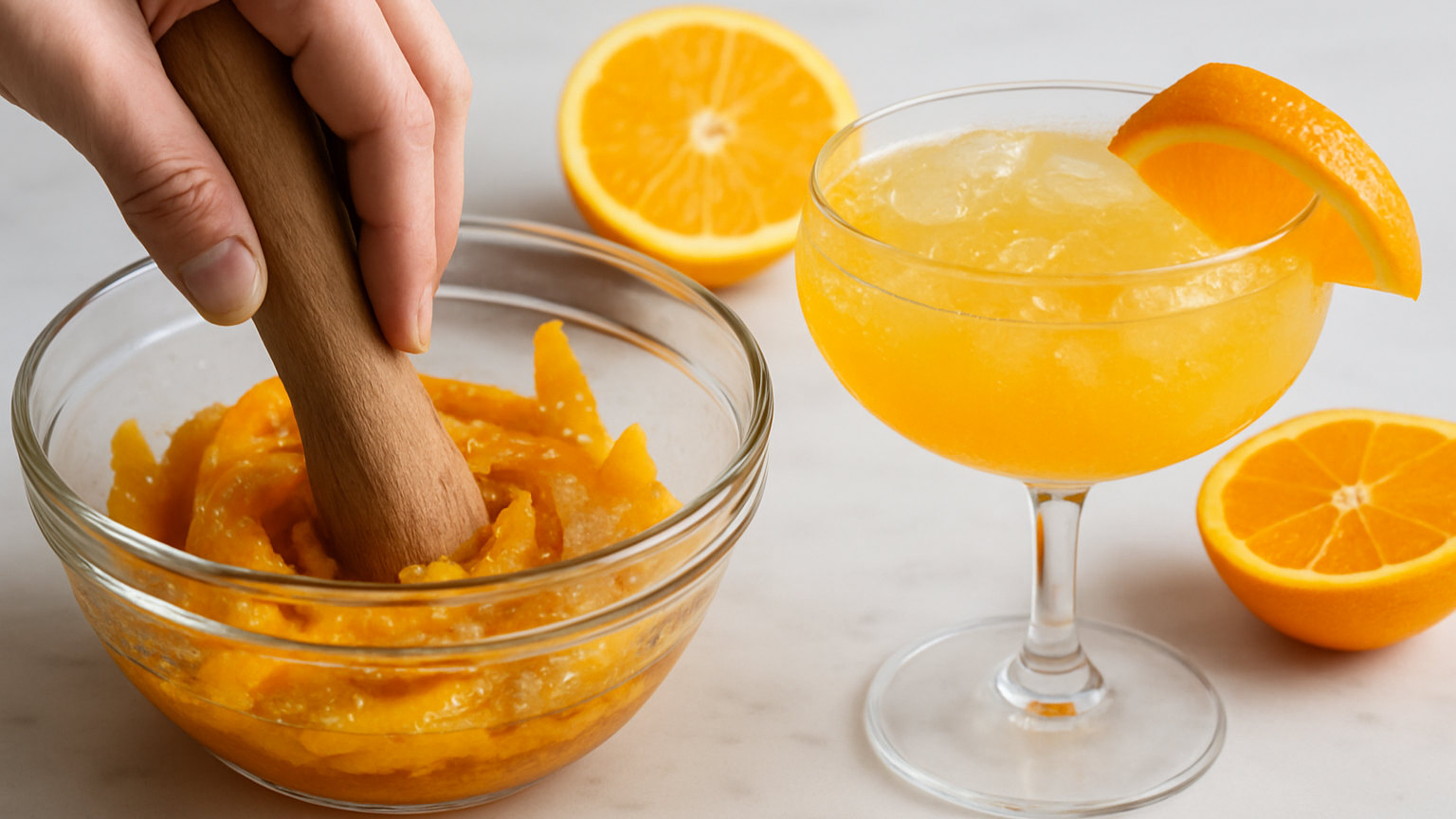
Oleo saccharum means oily sugar, and it is the technique that separates a proper punch from a bowl of fruit juice. Citrus peel combined with sugar produces a syrup carrying the fruit's aromatic oil, which is a quite different thing from its juice.
How it works
The aromatic compounds in citrus live in the coloured outer layer of the skin, not in the flesh. Juice contains acidity and sugar; the peel contains the smell.
Sugar draws that oil out by osmosis. Left in contact with the peel, the crystals pull moisture and oil from the cells, dissolving into a fragrant syrup over several hours.
No heat is involved, which matters, since heating citrus oil drives off exactly the volatile compounds you are trying to capture.
The method
Peel the citrus you intend to juice, taking wide strips with a vegetable peeler and as little white pith as possible, since pith contributes bitterness.
Combine the peels with an equal weight of sugar in a bowl. As a rough guide, the peel of four lemons takes around 150 to 200 grams.
Muddle or press the peels against the sugar to bruise them, which speeds extraction considerably.
Cover and leave at room temperature for four to twelve hours. Stir occasionally.
The sugar will have partly dissolved into a thick, intensely aromatic syrup. Strain out the peels, pressing gently.
If any sugar remains undissolved, add a small quantity of warm water or the citrus juice and stir until it goes.
Which citrus
Lemon is the classic and the most useful.
Orange gives a sweeter, rounder result that suits punches built on brandy or aged rum.
Grapefruit is excellent and brings a bitterness that gives a punch structure.
Lime works and is slightly harder, since lime peel is thinner and more prone to picking up pith.
Mixing two or three produces a more complex result and is worth doing.
Using it
In a punch, it replaces the sweet element of the formula entirely.
In a cocktail, it can replace sugar syrup in anything where citrus aroma is welcome. A daiquiri or a whiskey sour made with lemon oleo saccharum in place of syrup is noticeably more aromatic.
Diluted with soda water it makes an excellent non-alcoholic drink on its own.
It also works in cooking, in dressings and over fruit.
Keeping it
Refrigerated in a sealed jar, it lasts a couple of weeks. The high sugar content preserves it reasonably well.
Freezing works and is worth doing if you make a large batch, and portioning it into an ice cube tray gives measured quantities.
Label it with the date, and discard anything that has gone cloudy or started to fizz, since a fermenting syrup is spoiling.
Why it is worth the effort
Two reasons.
The first is that it captures something no other technique does. Citrus juice tastes sour and only faintly of the fruit's aroma; the oil is where the smell lives, and a drink using both has a dimension that juice alone cannot provide.
The second is waste. Squeezing citrus for a punch generates a great deal of peel, and throwing it away discards the most aromatic part of the fruit.
Taking the peel before juicing costs nothing, takes five minutes, and produces an ingredient that would otherwise have gone in the bin.
Speeding it up
The standard method takes hours, and there are two ways to shorten it.
Bruising the peels harder against the sugar before leaving them increases the surface contact and extracts faster.
Sealing the peels and sugar in a bag and holding it in a warm water bath at around fifty degrees for an hour produces a comparable result in a fraction of the time, though gentle warmth loses a little of the freshest aromatics.
Neither is necessary if you plan a day ahead, which is the better approach.
What to do with the spent peels
They still have some life in them. Dropping them into a jar of vodka or gin produces a serviceable citrus infusion within a day or two.
They also dry well in a low oven and keep as a garnish or an ingredient for mulling.


