
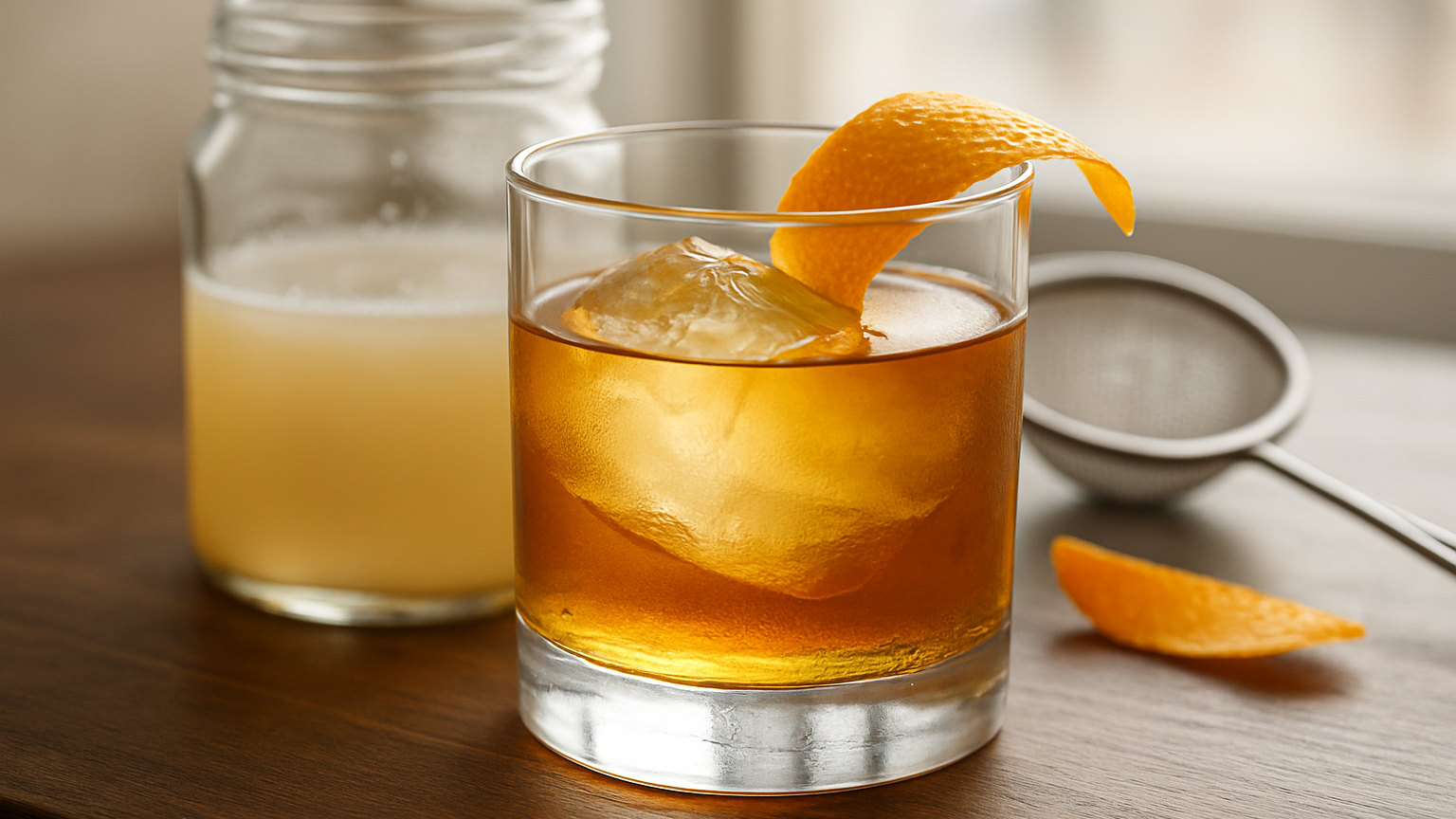
Fat washing means infusing a spirit with a fat, chilling it until the fat solidifies, and removing it. What remains is a spirit carrying the fat's flavour without any of its texture, and it is one of the more genuinely useful techniques to come out of modern bartending.
Why it works
A great many flavour compounds are fat-soluble rather than water-soluble, which means they dissolve readily in oil and poorly in water.
Alcohol is a solvent for both, so a spirit left in contact with fat will draw those compounds out. Chilling the mixture below the fat's melting point causes it to solidify and separate, at which point it can be lifted or strained off.
The flavour stays behind in the spirit. A trace of fat remains, which contributes a subtle roundness to the texture that is part of the appeal.
The famous example
Bacon-washed bourbon, developed by Don Lee at a New York bar in the mid 2000s and used in a drink built on the old fashioned template with maple syrup in place of sugar.
It made the technique widely known and remains the reference version, though a good deal of more restrained work has followed.
How to do it at home
Render or melt the fat and let it cool slightly. Combine it with the spirit in a sealed container, roughly one part fat to ten or fifteen parts spirit as a starting point.
Leave at room temperature for two to four hours, shaking occasionally.
Transfer to the freezer for at least six hours, or overnight. The fat will solidify into a layer.
Lift or strain it off, then filter the spirit through a coffee filter to remove any remaining solids. Filtering is slow and worth doing properly, since a cloudy result usually means it was rushed.
Store the finished spirit in the fridge and use it within a few weeks.
Combinations worth trying
Brown butter with bourbon or aged rum is the most reliably good and considerably more elegant than bacon. Butter browned until nutty gives caramel and toasted flavours that suit an old fashioned particularly well.
Toasted sesame oil with whisky produces something savoury and unusual, and a small quantity goes a long way.
Coconut oil with rum is straightforward and effective, and coconut fat solidifies at a convenient temperature.
Olive oil with gin or vodka gives a savoury, faintly vegetal character that suits a martini.
Duck fat with cognac, and chorizo fat with tequila, both work and are more of a commitment.
What can go wrong
Over-infusing produces a spirit that tastes greasy and rancid rather than flavoured. Start with less time than you think and taste as you go.
Inadequate filtering leaves fat in suspension, which will separate in the bottle and looks unpleasant.
Rancidity is the main practical concern. Fats oxidise, so a fat-washed spirit does not keep indefinitely even at high alcohol strength. Refrigerate it, make small quantities and use them within a few weeks.
Anyone with an allergy should be told what is in a drink, since a fat-washed spirit contains no visible trace of its origin. Bacon, butter, nut oils and sesame all matter here, and sesame in particular is a declarable allergen.
Whether it is worth it
For brown butter and for coconut, unequivocally. Both produce something you cannot achieve any other way, and both take about fifteen minutes of actual work.
For the more elaborate savoury versions, it depends on how much you enjoy the process. The technique is easy and the results are frequently novelties rather than improvements, which is a fair description of a good deal of modern bar technique.
How to use the result
Fat-washed spirits work best in simple drinks where the infusion is the point. An old fashioned is the obvious vehicle, since there is nothing else competing.
Adjust the sweetener to suit: brown butter bourbon takes maple or demerara syrup well, and coconut-washed rum needs less sugar than usual since the fat contributes a perception of sweetness.
Avoid citrus-heavy drinks, where the acidity tends to fight the fat character rather than complement it.


