
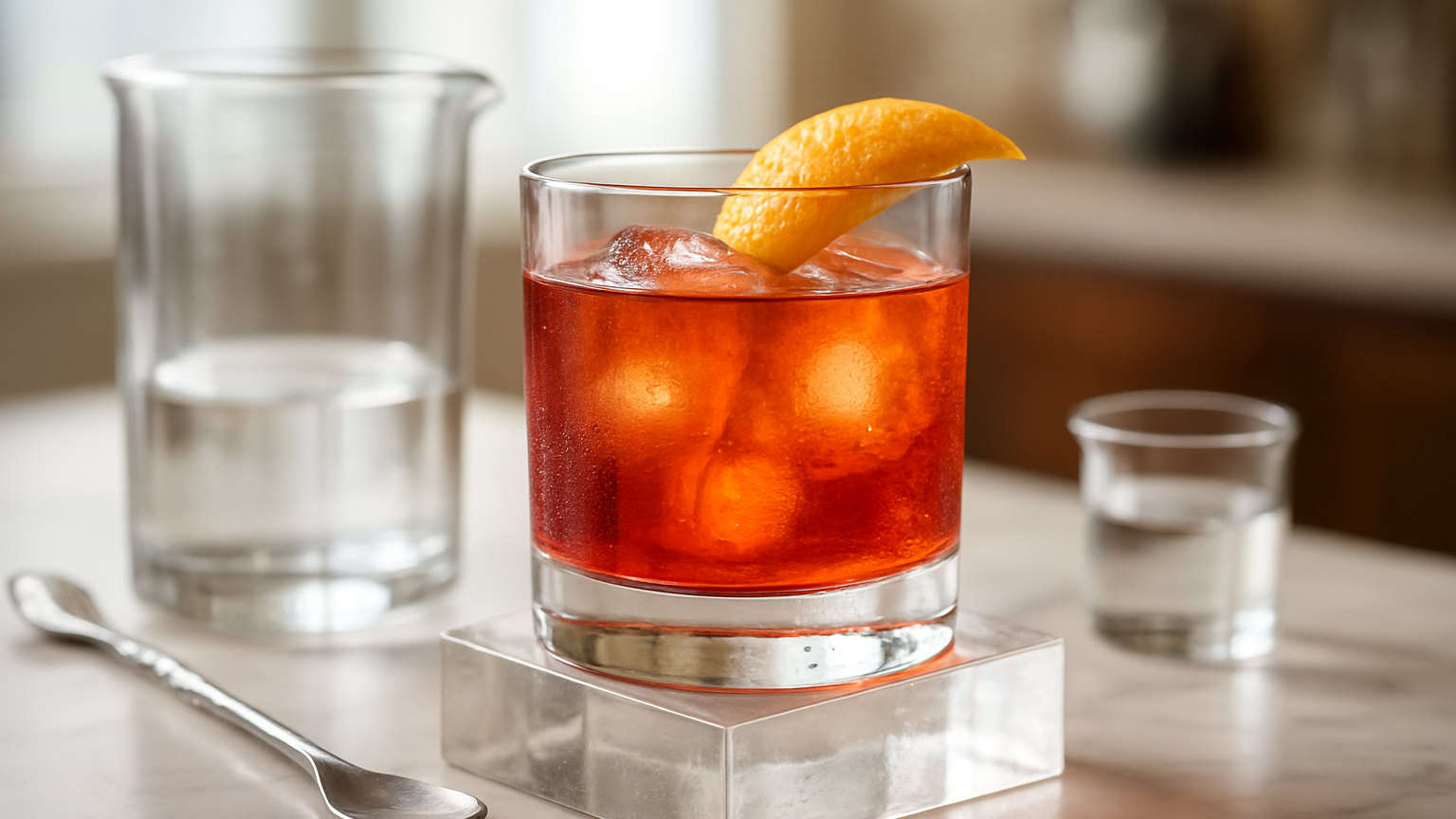
Batching means making a cocktail in advance in quantity, so that serving it is a matter of pouring rather than mixing. It is how bars manage volume and it is the most useful technique a home host can adopt.
The part that catches people out is dilution.
Water is an ingredient
A cocktail made to order gains water from the ice during stirring or shaking, and that water is not incidental. It softens the alcohol, opens the aromatics and brings the drink to its intended strength.
A batch poured over ice will dilute eventually, but not enough and not evenly, and it will be harsh when first poured.
The solution is to add the water in advance. As a working rule, add around twenty to twenty five per cent of the total volume as water for a stirred drink such as a negroni or a manhattan, and around twenty five to thirty per cent for a shaken one.
Measure the total ingredients, calculate the percentage, add filtered water, then taste and adjust. Taking notes the first time saves repeating the arithmetic.
What batches well
Spirit-forward stirred drinks are ideal. Negronis, manhattans, boulevardiers and old fashioneds all batch perfectly and improve slightly with a day or two for the ingredients to marry.
Anything without citrus or dairy keeps for weeks in the fridge and, at higher strength, for months.
A batched negroni or manhattan kept in the freezer is served straight from the bottle at temperature with no further dilution, which is the easiest possible service.
What does not
Fresh citrus is the limiting factor. Lemon and lime juice begin deteriorating within hours and taste flat and slightly cooked by the following day.
For sours, batch everything except the citrus and add the juice within a few hours of serving, or squeeze to order and combine as you pour.
Anything with egg white or dairy should be made fresh, and anything carbonated needs its sparkling element added at the moment of serving.
Drinks that depend on a specific texture from shaking, such as an espresso martini, do not survive batching in full.
Storing it
Use bottles that seal properly and fill them to the neck, since air in the bottle oxidises the contents.
Label with the contents and the date, which sounds fussy and prevents the common outcome of an unidentified bottle in the fridge in March.
Refrigerate anything containing vermouth, since vermouth is wine and goes stale. Freezer storage suits high-strength batches and produces a drink ready to pour.
Keep it out of the light, as with any spirit.
Batching for a gathering
Work out quantities per serving first, multiply, and make slightly more than the arithmetic suggests.
For a party, one well made batched drink served properly beats three made badly under pressure. Choose something that suits the occasion and make enough of it.
Set out the glassware, the ice and any garnish in advance so that serving requires no thought.
And keep the measures honest. A batch makes it easy to lose track of how much spirit is in each glass, and writing the strength per serving on the bottle is a sensible habit.
Testing a batch
Make a single serving first, note the exact ingredients, then scale up. Scaling an untested recipe to twenty servings is how people end up with two litres of something not quite right.
Taste the batch cold rather than at room temperature, since chilling flattens sweetness and a batch that tasted balanced warm frequently needs adjusting once refrigerated.
Serving from a batch
Pour into a chilled glass over fresh ice, or straight from the freezer with no ice at all for high-strength batches.
Add the garnish to order, since an expressed citrus peel loses its aroma within minutes and a batch cannot supply that in advance.
Bitters are worth adding fresh too, particularly the aromatic dashes on top of a sour, since they sit on the surface rather than in the mixture.


