
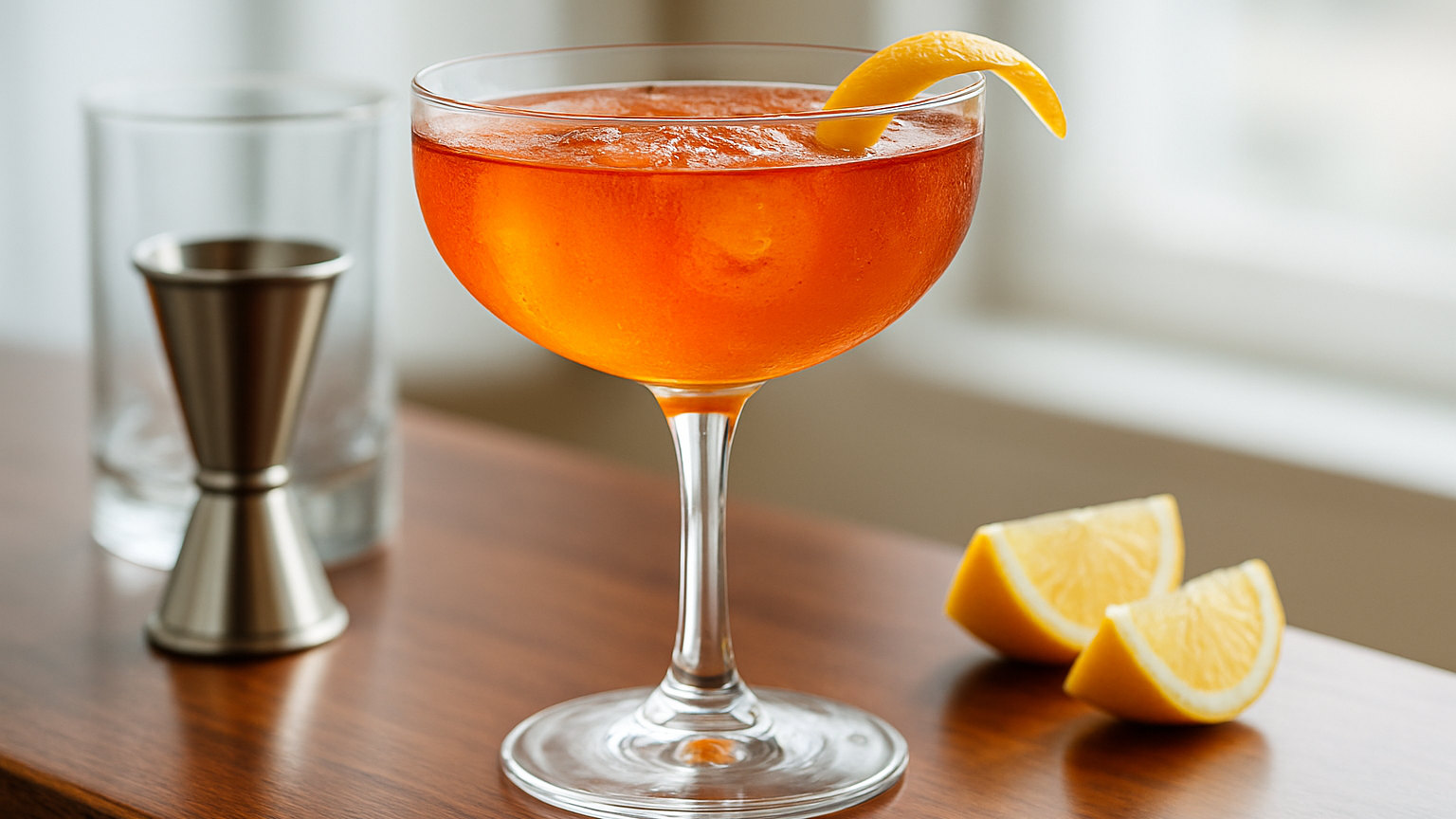
The cocktail canon is not closed. A number of drinks created since the 1980s are now made in bars worldwide, appear on lists as a matter of course and are recognised by name, which is a reasonable working definition of a classic.
What is striking about them is how conventional they are. None broke the rules; they applied them with better ingredients.
The qualifying drinks
The bramble, created by Dick Bradsell in London in the 1980s, is gin, lemon, sugar and a drizzle of blackberry liqueur over crushed ice.
The espresso martini, also Bradsell, has become one of the most ordered drinks in Britain.
The penicillin, created by Sam Ross in New York in the mid 2000s, combines blended Scotch, lemon, honey, ginger and a float of smoky Islay whisky.
The paper plane, also Ross, is equal parts bourbon, amaro, bitter aperitivo and lemon.
The naked and famous, from Joaquín Simó, applies the same equal parts structure to mezcal.
The jungle bird, from a Kuala Lumpur hotel in the 1970s, was largely forgotten and revived. Tommy's margarita, the gin basil smash and the old cuban all have similar claims.
What they have in common
Three or four ingredients, almost without exception. A drink with nine components cannot be remembered, cannot be made quickly and does not travel between bars.
A recognisable structure. The penicillin is a sour. The paper plane is an equal parts drink. The bramble is a sour with a liqueur float. None of them invented a new shape.
Ingredients that stayed available, which sounds trivial and is the reason a great many good drinks disappeared. A recipe built on a liqueur that goes out of production goes with it.
And a clear point of interest. Each does one thing the drinker notices: the smoky float, the equal parts trick, the layered liqueur.
Why so many came from so few bars
A striking proportion originated in a handful of places during the cocktail revival: a few New York bars in the 2000s, a few London ones in the 1980s and 1990s.
Those bars were working from historical books, using fresh ingredients and proper technique at a time when almost nobody else was. Their staff went on to open other bars and take the drinks with them.
Attribution is unusually reliable as a result. Where nineteenth century origin stories are largely folklore, these drinks have named creators, dated venues and people still around to confirm the details.
What did not make it
Thousands of drinks. The revival period produced an enormous volume of invention, and the survival rate is roughly what it has always been.
The ones that failed tended to be too complex, dependent on a house-made ingredient nobody else had, or interesting rather than good. A drink that requires a three-day infusion cannot spread.
Fashion accounts for some of it. Drinks built around techniques that turned out to be a passing enthusiasm went with them.
What this suggests
The lesson for anyone making drinks at home is that the constraints are what produce durable results.
Few ingredients, a proven structure, components you can actually buy, and one idea rather than five. Every modern classic follows that description, and it is a considerably better guide than novelty.
What is happening now
The current direction is towards lower strength and lower waste rather than towards new techniques. Drinks built on sherry, vermouth and amaro appear on lists where a spirit-forward cocktail would once have been assumed, and menus increasingly use ingredients across several drinks to reduce what gets thrown away.
Whether anything from this period joins the canon will not be clear for another decade, which is roughly how long the current modern classics took to establish themselves. The espresso martini was made for twenty years before anyone called it a classic.
Making them at home
The modern classics are unusually well suited to a domestic bar, since almost all of them use three or four ingredients and none requires equipment beyond a shaker and a jigger.
The one obstacle is that several depend on a specific liqueur or amaro, and a bottle bought for a single drink can sit unused. Choosing two or three modern classics that share ingredients is the sensible approach: a bottle of amaro that appears in three recipes earns its place, and one that appears in none does not.


