
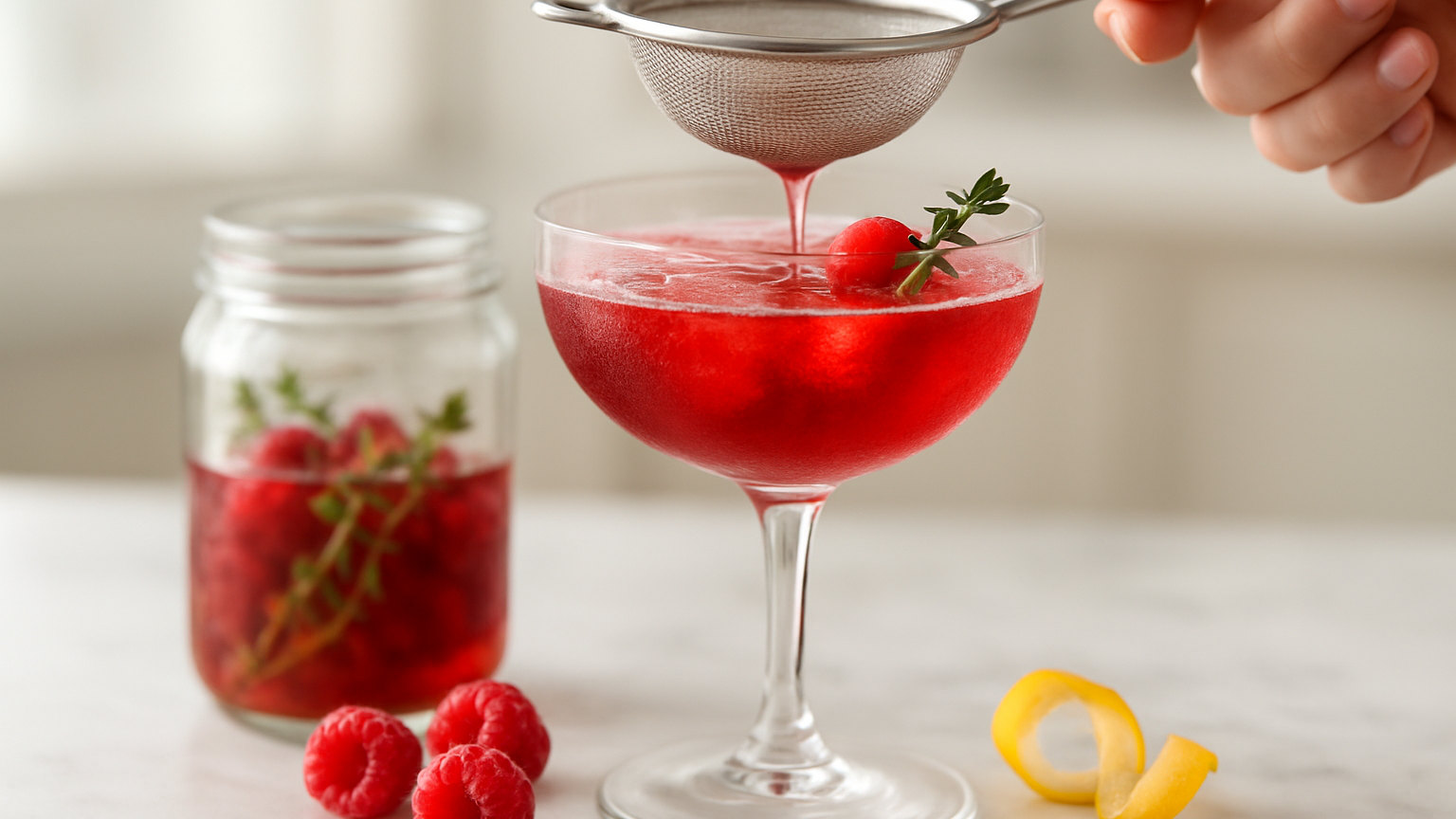
Infusion is the most accessible piece of bar technique there is. A jar, a spirit and something to put in it produces results within hours, and the only real skill is judging when to strain.
The basic method
Combine the flavouring ingredient with the spirit in a sealed glass container, keep it out of direct light at room temperature, and taste regularly.
When it reaches the strength you want, strain it through a fine sieve and then, if necessary, through a coffee filter. Bottle and store it as you would any spirit.
The variables are surface area, temperature and time. Chopping or bruising an ingredient speeds extraction considerably, and gentle warmth speeds it further.
How long things take
The ranges vary enormously and this is where most infusions go wrong.
Delicate herbs such as basil, mint and coriander need thirty minutes to a couple of hours. Beyond that they turn vegetal and grassy, and an over-infused herb spirit tastes of lawn clippings.
Chillies need anywhere from fifteen minutes to a few hours, depending on the chilli, and should be tasted every ten minutes at first. This is the single easiest infusion to ruin.
Citrus peel, with no pith, needs a few hours to a day. Pith contributes bitterness, so peel carefully.
Soft fruit needs one to three days. Firmer fruit such as apple or pineapple needs three to five.
Spices vary: vanilla takes a week or more, cinnamon a day or two, cardamom and pepper a few hours. Strong spices should be treated like chillies.
Coffee beans need four to twelve hours, and tea needs minutes rather than hours, since tannin extraction turns it astringent quickly.
Which spirit
Vodka is the blank canvas and shows the infused flavour most clearly.
Gin works well with anything that complements juniper, and cucumber, citrus and floral ingredients all suit it.
Rum takes tropical fruit, vanilla, coconut and spice. Tequila takes chilli, pineapple and citrus. Whisky takes vanilla, apple and warm spices, and is worth infusing gently since it has plenty of character already.
Higher strength spirits extract faster and more completely, which is worth knowing if you are working with something at fifty per cent or above.
Speeding it up
Sous vide infusion, sealing the spirit and the ingredient in a bag and holding it in a water bath at around fifty five to sixty degrees for an hour or two, produces in an afternoon what a jar takes days to achieve.
The heat also extracts different compounds, so the result is not identical to a cold infusion, and some ingredients are better cold.
If you use this method, cool the bag before opening it, since warm alcohol vapour is unpleasant and flammable.
Safety and storage
Alcohol above about twenty per cent inhibits most spoilage organisms, so an infused spirit at normal bottling strength is stable at room temperature.
The caution applies to anything that lowers the strength or introduces perishable material. Infusions containing fresh fruit pulp, dairy, low-alcohol bases or anything below about twenty per cent should be refrigerated and used quickly.
Always strain the solids out once the infusion is done rather than leaving them in the bottle, since prolonged contact continues to extract and eventually spoils.
Label everything with the contents and the date. Anyone with an allergy should be told what is in a drink, since an infused spirit gives no visual clue, and nuts and sesame in particular matter here.
What works and what does not
Reliable: chilli, citrus peel, vanilla, cinnamon, coffee, cucumber, pineapple, raspberry, lemongrass and ginger.
Difficult: anything oily, which can separate, and anything with a delicate aroma that alcohol overwhelms.
The general rule is to under-infuse rather than over-infuse. A spirit that is not quite strong enough can go back in the jar; one that has gone too far cannot be rescued.
Using what you make
An infused spirit works best in a simple drink where it is the point. A chilli tequila needs only lime and agave; a cucumber gin needs only tonic.
Adjust the rest of the recipe to suit, since an infusion frequently adds sweetness or bitterness that the original balance did not account for.
And make small quantities. A 200 millilitre infusion is enough to establish whether the idea works, and it is considerably less painful to pour away than a full bottle.


