
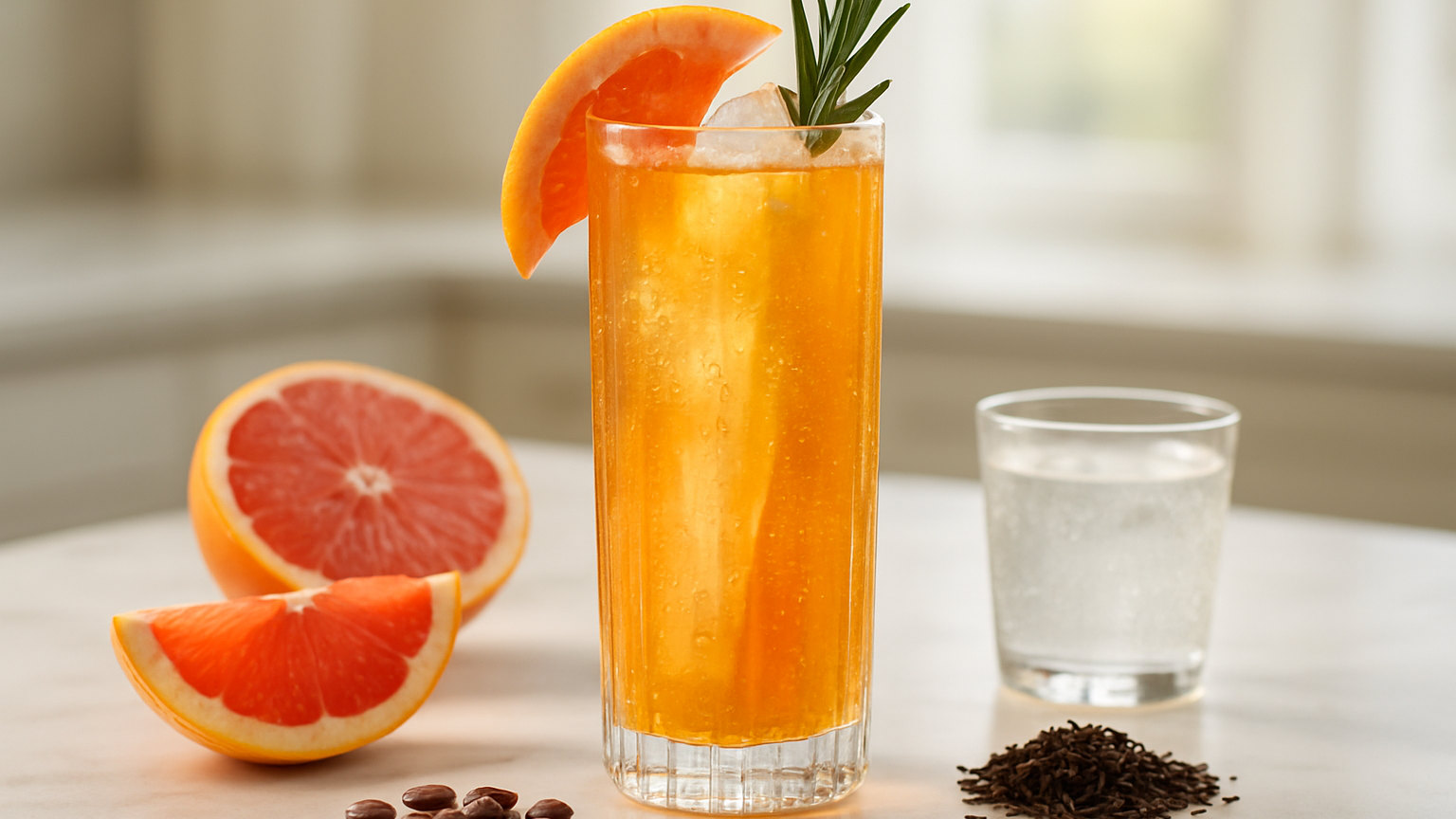
If a non-alcoholic drink tastes childish, the reason is almost always that nothing in it is bitter. Bitterness gives a drink length, structure and an adult character, and it is what separates a tonic water from a squash.
Why it matters
Sweetness registers immediately and fades; bitterness arrives later and lingers. A drink with both has a shape, moving from an initial impression through to a finish.
Bitterness also suppresses the perception of sweetness, so a drink with a bitter component can carry more sugar without tasting sugary.
Almost every alcoholic drink has some, whether from botanicals, hops, tannin, roasted grain or citrus peel. Almost no home-made non-alcoholic drink does, which is the single largest difference between the two categories.
Tea
The most useful and the cheapest. Black tea brewed strongly is full of tannin, and it provides both bitterness and a drying astringency that reads as structure.
Brew it deliberately over-strong, cool it, and treat it as an ingredient rather than a drink. Two or three bags in a small quantity of water for five minutes produces a concentrate that can be measured into a glass.
Green tea is more delicate and turns unpleasantly bitter if over-brewed, so it wants a shorter steep in cooler water. Lapsang souchong contributes smoke as well, which is genuinely useful where you want the effect a peated whisky would give.
Cold brewing tea, steeping it in cold water for several hours, extracts less tannin and produces something smoother, which is the opposite of what you usually want here.
Coffee and chicory
Coffee provides roast bitterness and works in drinks where that character fits.
Chicory root, roasted and brewed, is the more interesting option. It is bitter, earthy and caffeine-free, it has a long history as a coffee substitute, and it gives a depth that suits darker non-alcoholic drinks well.
Both are strong flavours, so measure rather than pour.
Citrus and grapefruit
Grapefruit juice carries genuine bitterness alongside its acidity, which makes it one of the most useful juices in the category.
Citrus peel is bitter in the pith and aromatic in the zest, and an oleo saccharum made by steeping peels in sugar captures the aroma with some of the bitterness.
A twist expressed over a drink adds bitterness alongside the oil, and it is a free improvement.
Bitter sodas and aperitifs
Several ready-made options exist and are worth keeping. Bitter orange sodas and chinotto-style drinks are genuinely bitter and mix well.
Tonic water contains quinine and is bitter by design, which is why a well made non-alcoholic drink built on tonic works so easily.
Non-alcoholic aperitifs designed to replace bitter liqueurs vary in quality and the better ones supply exactly what is needed here.
Herbs and roots
Gentian root is the bittering agent in a great many aperitifs and can be bought dried. A small quantity infused in a syrup produces a powerful bittering ingredient, and it should be used sparingly.
Dandelion root, burdock and wormwood all work similarly and all reward caution.
Rosemary, thyme and sage contribute a resinous bitterness alongside their aroma.
Getting the balance right
Add bitterness gradually and taste as you go, since it is easier to add than to remove.
Pair it with acidity and a little sweetness rather than using it alone. Bitter and sour without any sugar is austere; bitter, sour and lightly sweet is a proper drink.
And note that bitterness is the most acquired of the tastes. Someone new to it may find a first attempt unpleasant and the third entirely reasonable, so a drink made for guests should be gentler than one made for yourself.
Foraged and dried bitters
Anyone interested in going further can make a bittering tincture, though the traditional method uses high-strength alcohol as the solvent, which defeats the purpose here.
A glycerine-based extraction works instead, steeping dried bittering roots in a mixture of glycerine and warm water over several days and straining thoroughly.
Two cautions apply. Bittering roots are potent and should be used in drops rather than measures, and anyone gathering plant material should be certain of what they have picked and should check that it is safe to consume, since several bitter plants are not.


