
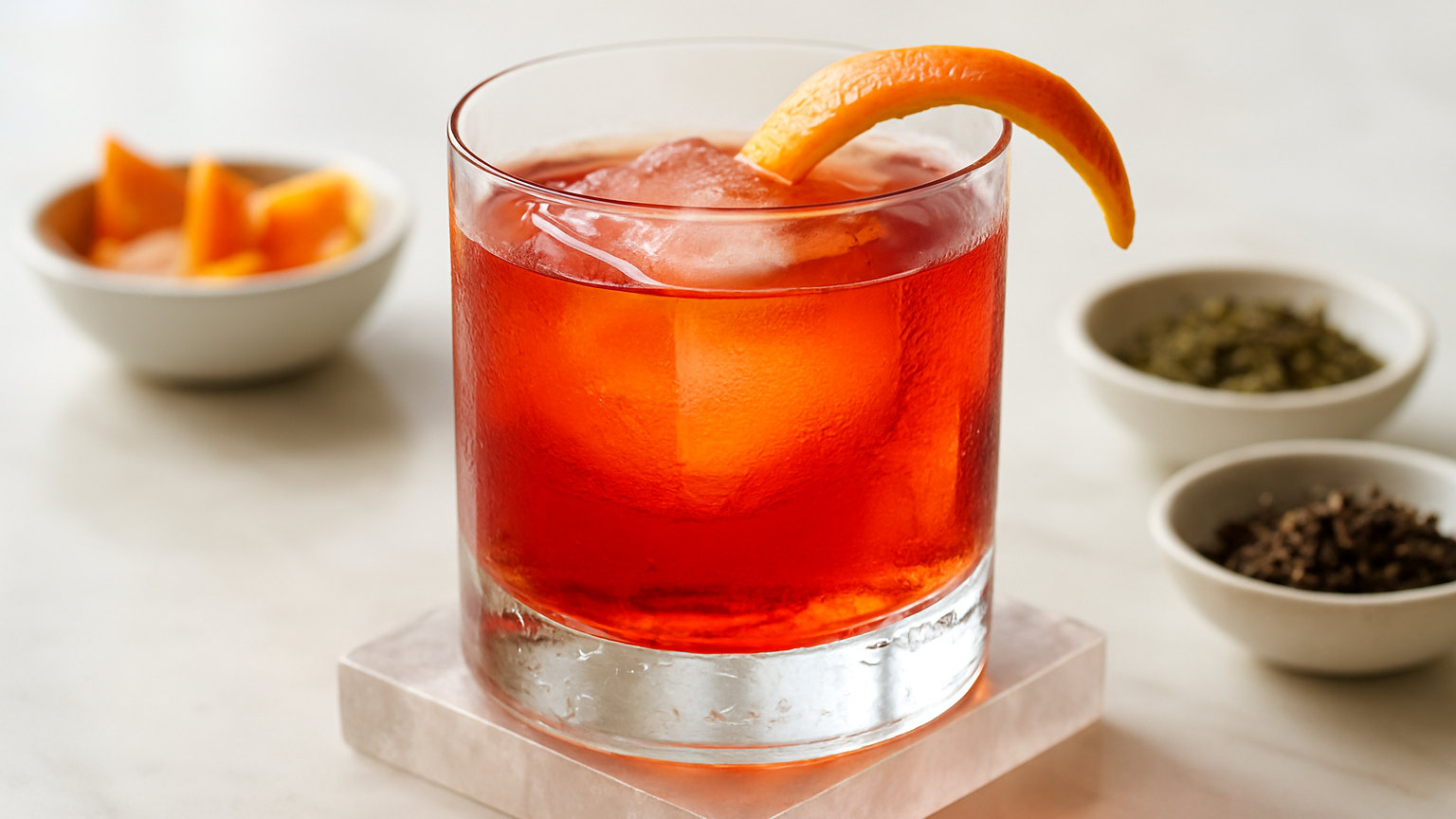
The obvious approach to a non-alcoholic version of a classic is to take the recipe and swap the spirit. It almost never works, because the proportions assumed the alcohol was doing structural work.
The approach that does work is to ask what each ingredient contributed and replace the function.
The method
Break the original into what it is doing rather than what is in it.
A daiquiri is acid, sugar and a spirit that provides body and warmth. A negroni is bitterness, sweetness, botanical aroma and strength. A whiskey sour is acid, sugar, body and a base with tannin and sweetness.
Then find non-alcoholic ingredients that perform each role. Tea for tannin and structure, shrub or citrus for acid, syrup for body and sweetness, bitter soda or infusion for bitterness, and herbs or peel for aroma.
Adjust the proportions rather than copying them, since the original ratios balanced against alcohol that is no longer there.
The ones that translate well
Long drinks, consistently. A mojito needs mint, lime, sugar and soda, and the rum was contributing body more than flavour. A version with a little extra lime and a richer syrup is genuinely good.
The gin and tonic works because tonic supplies bitterness, acidity and carbonation.
The paloma, built on grapefruit soda and lime with a salted rim, barely needs the tequila.
The mule, with ginger beer and lime, is carried by the ginger.
Anything built on a strong mixer will translate, since the alcohol was never the dominant flavour.
The sours
These translate with work. The acid and sugar are unaffected; the base needs replacing.
A whiskey sour becomes strong black tea with lemon, honey syrup and an aquafaba foam, finished with a few drops of alcohol-free bitters. Brewing the tea deliberately over-strong supplies the tannin and the astringent finish.
A margarita becomes lime, agave syrup and a salted rim, with a smoky lapsang souchong infusion standing in for the agave spirit's character.
The foam matters here. It supplies the texture the alcohol would have provided and makes the drink read as considered rather than improvised.
The ones that do not work
Spirit-forward stirred drinks, without exception. A martini is gin and vermouth and nothing else, and a version without alcohol has no content.
The negroni is the interesting case. A version using a non-alcoholic bitter aperitivo, a non-alcoholic vermouth alternative and something botanical can be reasonable, since the drink is built on bitterness rather than on alcoholic warmth. It will be lighter and shorter than the original and it is not embarrassing.
An old fashioned or a manhattan has nothing to replace, and attempts generally produce sweet, thin liquid.
The honest position is to make a different drink rather than a poor imitation.
The naming problem
Calling something a virgin mojito or a non-alcoholic negroni sets an expectation the drink will be measured against, usually unfavourably.
Giving it its own name changes how it is received entirely. A drink presented as a mint and lime cooler is judged on what it is; the same drink called a virgin mojito is judged on what it is not.
This is a small point with a large effect, particularly for anyone serving these to guests.
Where to start
Take a drink you like, identify its acid, its sweetener, its bitter element and its aromatic element, and rebuild it from the non-alcoholic shelf.
Taste and adjust rather than following the original ratios, and expect to need more acid and more bitterness than the recipe specifies.
And accept that some drinks cannot be converted, which is not a failure. Building a good non-alcoholic drink from scratch is easier and more satisfying than approximating a cocktail that depended on the ingredient you have removed.
Adjusting the proportions
One specific change applies almost universally. Without alcohol, a drink needs more acid and more bitterness than the original recipe calls for, and frequently a little less sugar.
A useful starting adjustment is to increase the citrus by around a quarter and reduce the syrup slightly, then taste and correct.
Dilution needs attention too. A cocktail gains water from shaking or stirring, and a non-alcoholic version has less to carry that water, so a shorter shake and a fuller glass of ice generally produce a better result.


