
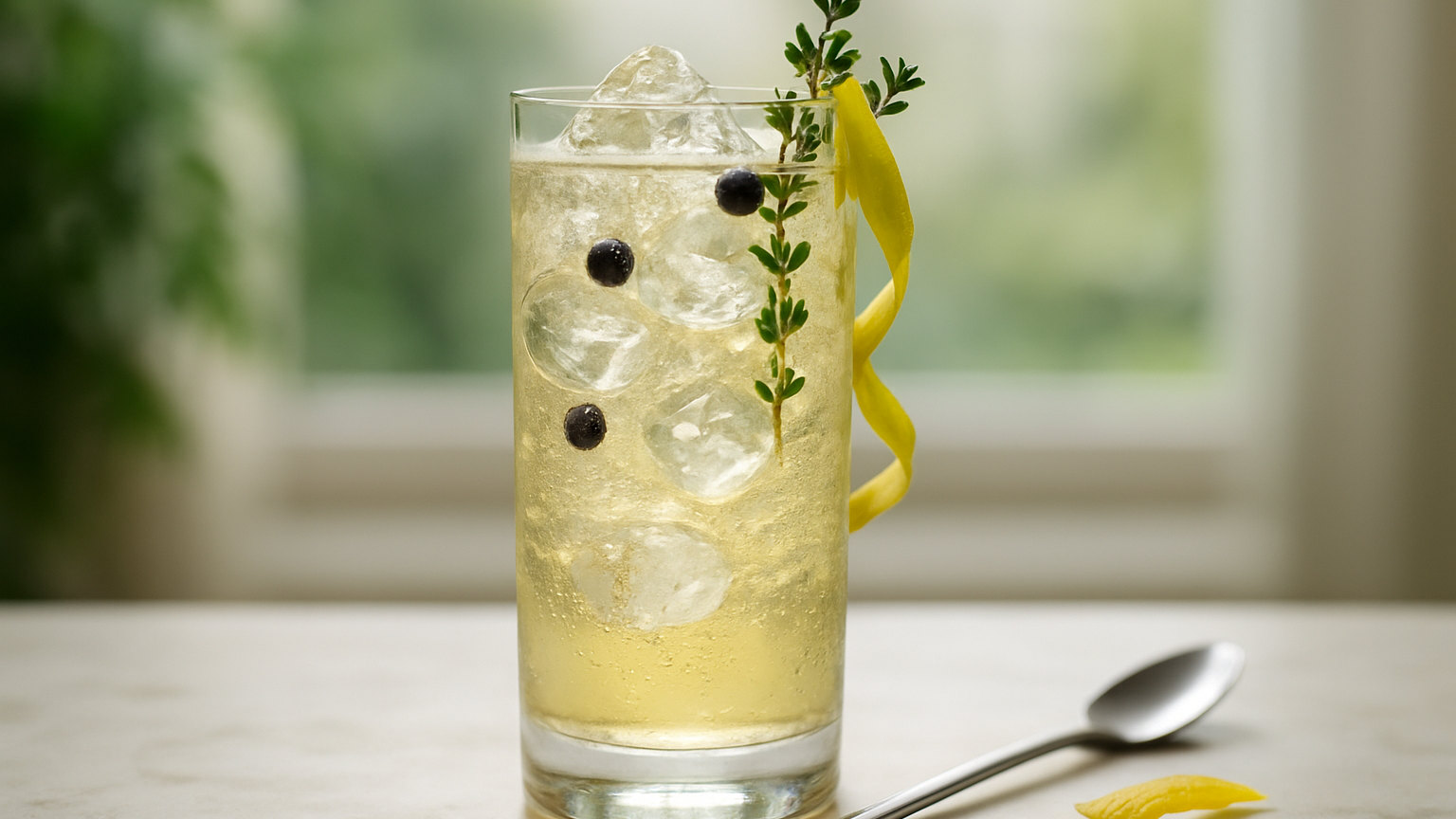
Of all the drinks people try to make without alcohol, the gin and tonic is the most forgiving. The reason is straightforward: in the original, the tonic contributes most of what you actually taste.
What tonic is doing
Tonic water supplies bitterness from quinine, sweetness, acidity and carbonation. That is four of the five things a good drink needs, and none of them depends on the spirit.
Gin contributes botanical aroma, a little warmth and some body. Remove it and the drink loses aroma and weight but keeps its structure entirely.
This is why a non-alcoholic version can be genuinely convincing where a non-alcoholic martini cannot.
The straightforward version
Fill a large glass completely with ice. This matters more than anything else, since a full glass melts slowly and a half-empty one produces a watery drink within minutes.
Add 50 millilitres of a distilled non-alcoholic botanical spirit.
Pour 150 to 200 millilitres of cold tonic water gently down the side of the glass or over a bar spoon, which preserves the carbonation.
Stir once, briefly. Over-stirring drives off the bubbles.
Garnish generously, and this is the step to take seriously. A large piece of citrus peel expressed over the surface, plus a herb sprig or a few juniper berries, supplies the aroma the drink is otherwise short of.
Versions without a botanical spirit
Several work well and cost considerably less.
Verjuice and tonic, using around 30 millilitres of verjuice, gives gentle acidity and a wine-like character.
Strong cold-brewed juniper and citrus peel infusion in water, made in advance and kept in the fridge, delivers botanical aroma directly.
A splash of a good shrub with tonic produces something sharper and fruitier.
Cucumber and mint muddled gently in the glass before adding ice and tonic is simple and genuinely refreshing.
Or simply tonic over ice with an enormous garnish: a wide strip of grapefruit peel, a rosemary sprig and a few crushed juniper berries. It is closer to the original than most people expect.
Choosing the tonic
Since the tonic is doing most of the work, it is worth spending on. Differences between brands are far more noticeable here than in a full-strength gin and tonic.
Lighter tonics with less sugar suit drinks where you want the botanicals to lead. Traditional Indian tonic is more bitter and more assertive.
Flavoured tonics, including elderflower, Mediterranean and citrus styles, are useful when there is no spirit supplying aroma, since they contribute their own.
Buy small bottles or cans rather than large ones, since tonic goes flat quickly and a flat mixer ruins the drink.
The details that matter
Everything should be cold before it meets. Chilled tonic, a chilled glass and plenty of ice mean less dilution and better carbonation retention.
Ratio is a matter of taste, and one part spirit to three or four parts tonic is a reasonable starting point. Without alcohol, a slightly stronger ratio of botanical to tonic frequently works better.
The garnish is not decoration here. In a drink with no alcohol carrying aromatics, the smell arriving from the glass rim does a disproportionate share of the work, and doubling the garnish is the cheapest improvement available.
The wider lesson
The same logic applies to any long drink. Where a mixer supplies bitterness, acidity and carbonation, the alcohol was never carrying much of the flavour, and a non-alcoholic version can be very close to the original.
Ginger beer, bitter sodas and good lemonades all work the same way, which is why long drinks are the reliable territory in this category and stirred drinks are not.
The garnish, properly
Since aroma is what the drink is short of, the garnish is doing real work rather than decorating.
Cut a wide strip of peel rather than a thin twist, and squeeze it skin-side down over the surface so the oils land on the drink before dropping it in.
Slap a herb sprig once between the palms to release its oils before adding it, and position it so it sits under the nose rather than lying flat in the glass. Both take a second and both are noticeable.


