
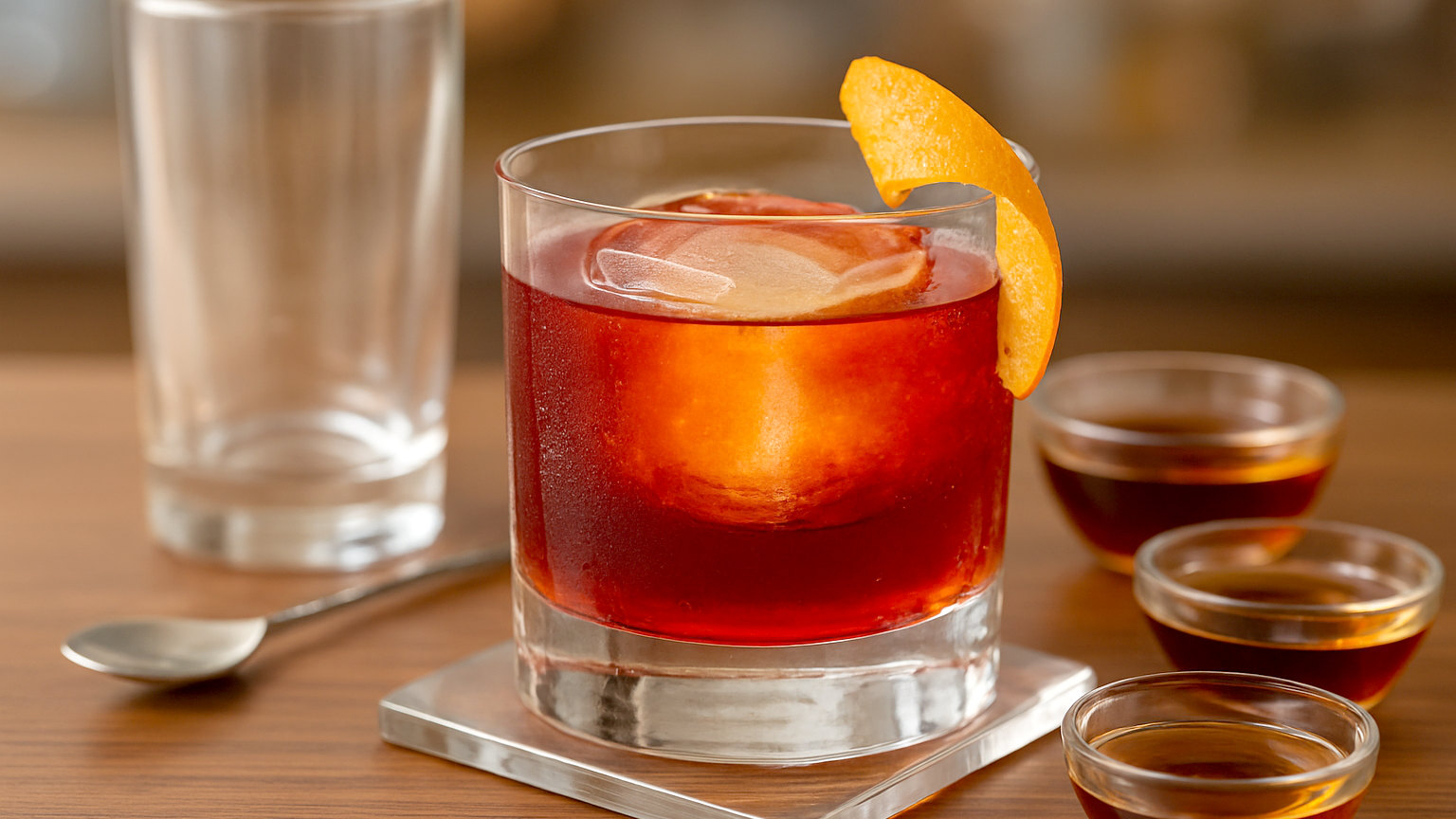
The negroni is gin, red bitter aperitivo and sweet vermouth in equal parts. Because it has three slots and each is filled by an assertive ingredient, it accepts substitution better than almost any other drink.
Changing the base
The boulevardier replaces gin with bourbon or rye, producing something richer and rounder. It is a winter drink where the negroni works year round, and it is usually made with slightly more whiskey than the other two components.
A mezcal negroni brings smoke and a vegetal savouriness, and the bitterness handles the smoke unusually well. It has become a standard.
The Kingston negroni uses aged Jamaican rum, and the funk and molasses work against the bitterness better than they have any right to.
An aged tequila version is softer and sweeter.
Changing the bitter component
Substituting a different red bitter aperitivo changes the drink noticeably, since they vary in bitterness, sweetness and colour.
Using a darker amaro in place of the aperitivo produces something considerably heavier and more medicinal, which suits people who find the standard version too sweet.
A gentian-based aperitif gives the white negroni its distinctive character.
Changing the vermouth
The old pal replaces sweet vermouth with dry and the gin with rye, producing a lean, dry, considerably more austere drink. It is a different proposition entirely and worth knowing.
Using a bolder sweet vermouth, or one with more bitterness of its own, shifts the balance without changing the structure.
The named variations worth making
The white negroni uses gin, a gentian aperitif and a quinine-forward aperitif wine. It is paler, drier and more floral, and it was created in France in the 2000s by a British bartender working with local ingredients.
The sbagliato replaces the gin with prosecco, which lowers the strength substantially and produces something lighter and more festive. The name means mistaken, from an account of a bartender reaching for the wrong bottle.
The americano replaces the gin with soda water entirely, sitting at around ten per cent in the glass. It is the ancestor of the whole family and the sensible choice when a full-strength negroni is more than the occasion calls for.
The negroni bianco uses a white bitter aperitivo and dry vermouth, producing a paler and more delicate drink.
Adjusting the ratio
Equal parts is the standard and plenty of bartenders adjust it.
Increasing the gin to forty five millilitres while keeping the others at thirty produces a drier, more spirit-forward drink and is a common house variation.
Reducing the aperitivo suits anyone who finds the standard version too bitter, and increasing it suits the opposite.
The structure survives these adjustments because all three components are assertive enough to be heard at any reasonable proportion.
Building your own
The template is something strong and aromatic, something bitter, and something sweet and herbal, in roughly equal measure.
Substitute one component at a time from the standard recipe, so you can attribute the change. Substituting two at once produces a drink you cannot learn anything from.
And keep the vermouth fresh. Every drink in this family contains a third fortified wine, and a stale bottle ruins all of them equally.
Where to start
Make an americano, a negroni and a boulevardier on the same evening in small measures.
Each step changes exactly one variable, and the progression demonstrates how the family works more clearly than any description.
Serving them
Over a large ice cube in a rocks glass is the standard and the most forgiving, since the drink stays cold while you work through it.
Served up in a coupe it is more concentrated and warms faster, which suits a smaller measure.
Either way, express an orange peel over the surface. The citrus oil is a genuine part of the aroma rather than a decorative garnish, and skipping it noticeably diminishes the drink.


