
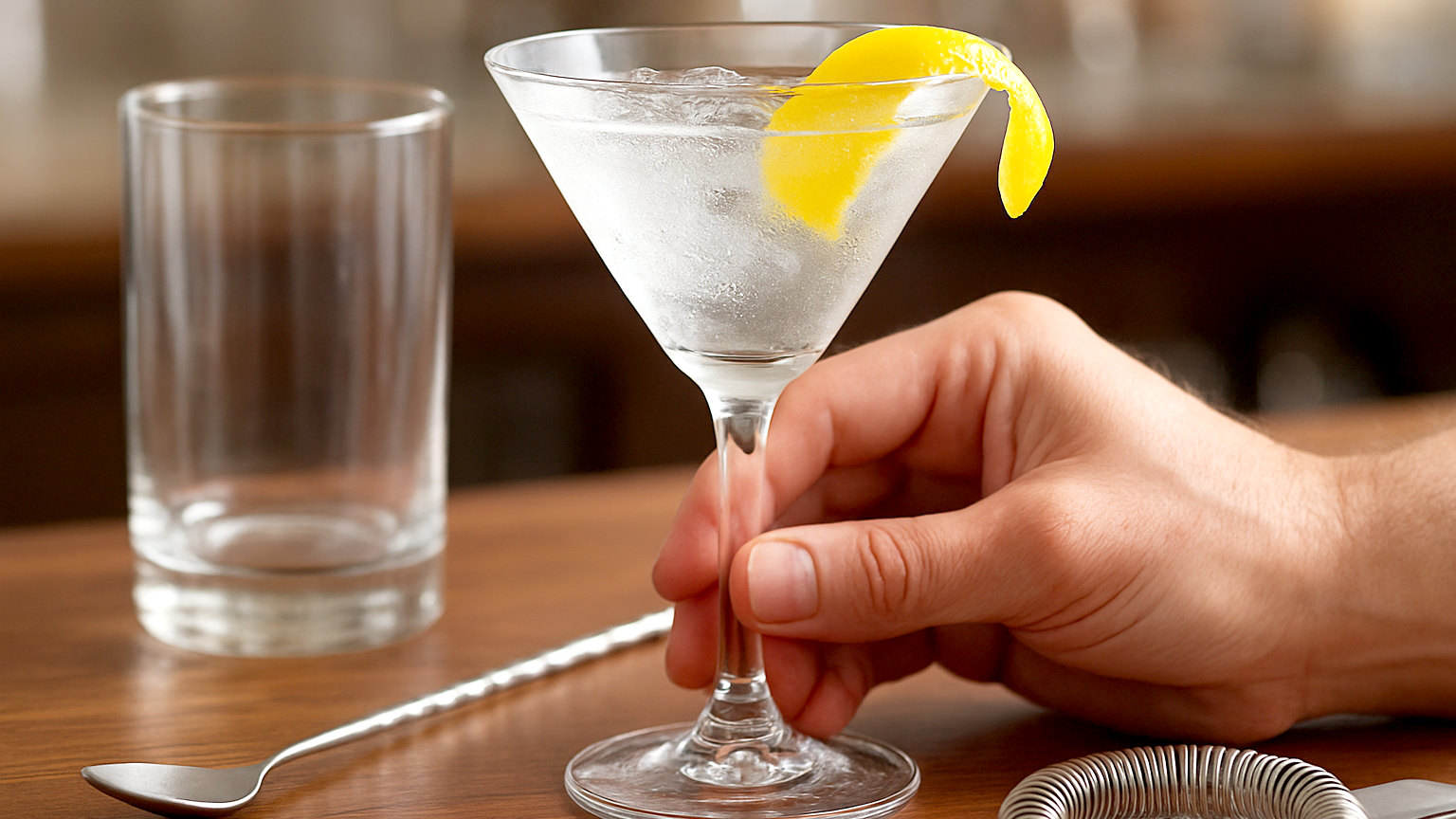
Ordering a stirred cocktail well is a matter of specifying two or three variables. It takes one sentence, it is entirely normal, and it produces a considerably better result than accepting whatever the house makes.
What to specify
For a martini: the base spirit, the ratio and the garnish. A gin martini, on the wetter side, with a twist.
For a manhattan: the whiskey and the ratio. A rye manhattan, two to one, up.
For a negroni: whether you want it as standard, and how you want it served. A negroni, over a large cube.
Anything you do not specify will default to the bar's house preparation, which may be considerably drier or wetter than you like.
The vocabulary that helps
Wet and dry refer to the amount of vermouth: wet means more, dry means less. This trips people up constantly, since dry vermouth is what is being added.
Up means served in a stemmed glass without ice. On the rocks means over ice in a tumbler.
Perfect means the vermouth is split between sweet and dry.
Dirty means olive brine added.
None of this is compulsory, and a good bar will ask if you do not offer it.
Asking about the ingredients
Two questions are worth asking and neither is rude.
Which vermouth do you use, and how recently was it opened. That sounds fussy and is the single largest determinant of whether the drink will be good, and a bar that takes vermouth seriously will be pleased to be asked.
What is the house gin or whiskey. If you have a preference, saying so is normal; if you do not, asking what they recommend usually gets a good answer.
Asking for adjustments
Entirely acceptable and welcomed in most bars.
Asking for a martini stirred rather than shaken, or for less vermouth, or for a twist rather than an olive, are all routine requests.
Asking for a smaller measure is also reasonable and worth knowing about, since a large martini glass encourages a pour that is more than many people want.
What is less reasonable is asking a busy bar for something elaborate at the wrong moment, which is a matter of timing rather than of principle.
What a good bar will ask you
Gin or vodka. Olive or twist. Any preference on the ratio.
A bar that asks none of these and produces a drink without discussion is either very confident or not paying attention, and the drink will tell you which.
A bar that offers you a taste to check the balance before finishing the drink is one worth returning to.
If it arrives wrong
Say so early, before you have drunk half of it, and be specific: it is drier than I hoped, or it seems warm.
Most bars will remake it without argument, and they would rather know.
A martini that arrives warm is a genuine fault rather than a preference, since the drink depends on temperature, and it is worth mentioning.
Learning what you like
The useful approach is to order the same drink in several places and notice the differences, which will be substantial.
Then order deliberately: the ratio you prefer, the garnish you prefer, in the glass you prefer.
Most people who think they dislike martinis have had two or three, all made to somebody else's specification, and have never established what their own preference actually is.
In a bar that does not specialise
Adjust expectations rather than the order. A pub without a cocktail list may have vermouth that has been open for a year, and a martini will be poor through no fault of the bartender.
In that situation a highball or a spirit with a good mixer is the better choice, since neither depends on an ingredient that may have gone stale.
Asking what they make often is a polite way of finding out what the bar is set up for, and the answer is usually honest.


