
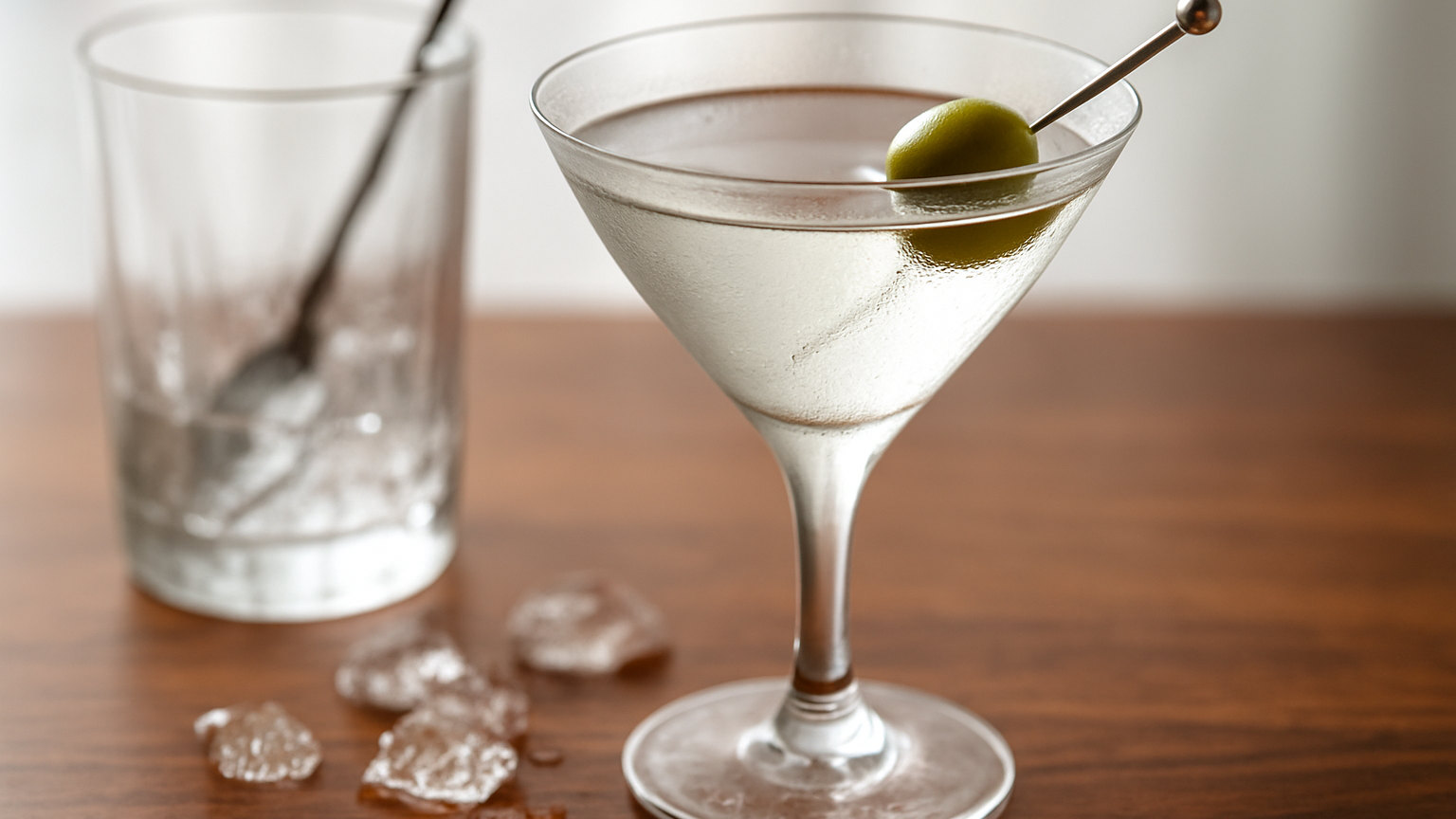
The martini is gin and dry vermouth, stirred with ice and strained into a chilled glass. It has two ingredients and no citrus juice, which means every decision shows.
The recipe
Combine 60 millilitres of gin with 20 millilitres of dry vermouth in a mixing glass filled with ice.
Stir for around thirty seconds, until the outside of the glass is properly frosted.
Strain into a thoroughly chilled coupe or a small stemmed glass.
Garnish with an olive or a lemon twist, expressing the peel over the surface if you use one.
That ratio is three to one, which is a sensible modern starting point and considerably wetter than the fashion of the late twentieth century.
Why the vermouth matters
A generation of drinkers was taught that the less vermouth a martini contains, the better it is, with various jokes about waving the bottle at the glass.
That produces cold gin. It is a perfectly acceptable drink and it is not a cocktail, since nothing is happening beyond dilution and temperature.
Vermouth is aromatised fortified wine, and it contributes acidity, herbal complexity, a little sweetness and body. Those are the qualities that make a martini a mixed drink rather than a measure of spirit.
Historical recipes were considerably wetter still, frequently equal parts or two to one, and a fifty-fifty martini is worth making at least once to understand what the drink originally was.
The vermouth problem
This is where most home martinis fail, and it has nothing to do with the gin.
Vermouth is wine at around fifteen to eighteen per cent, and it oxidises exactly as wine does. An open bottle kept in a cupboard is stale within weeks and unpleasant within a couple of months.
Since vermouth is a quarter of the drink, a stale bottle ruins it entirely, and no amount of expensive gin compensates.
Keep it in the fridge, buy the smallest bottle available, and replace it within a month or two of opening. That single habit improves a home martini more than anything else you can do.
Stirring, not shaking
Stirring chills and dilutes with minimal aeration, producing a clear, silky, dense drink.
Shaking aerates and introduces tiny ice fragments, making the drink cloudy and lighter in texture. Some people prefer that, and there is nothing wrong with asking for it.
The claim that shaking bruises the gin is not chemistry. Nothing in gin is damaged by agitation. What changes is clarity, texture and dilution, all of which are real.
Thirty seconds of steady stirring is right. Under-stirring leaves the drink warm and harsh; over-stirring makes it thin.
Temperature is the whole game
A martini contains no ice once served, so it warms from the moment it is poured.
Chill the glass thoroughly, in a freezer if possible, or with ice and water while you stir.
Serve it in a small glass. A large one encourages a larger pour, and the last third of an oversized martini will be warm and unpleasant.
Some bartenders serve a small glass alongside the remainder in a carafe on ice, which solves the problem entirely and is worth copying at home.
The garnish
An olive contributes salt and brine, which suits a drier martini and makes the drink savoury.
A lemon twist contributes citrus oil, which lifts the botanicals and makes the drink brighter. Express it over the surface rather than simply dropping it in.
Neither is more correct. They produce noticeably different drinks, which is worth demonstrating to yourself by making two.
The ratio, historically
Recipes from the nineteenth century frequently specify equal parts gin and vermouth, or even more vermouth than gin, with the drink sweetened and dosed with bitters.
The move towards dryness happened gradually through the twentieth century and accelerated sharply after the Second World War, reaching a point where the vermouth was essentially notional.
Modern bartending has moved partway back. Three to one is now common in good bars and two to one is not unusual, which is a considerably better drink than the barely-wet version most people were taught to expect.


