
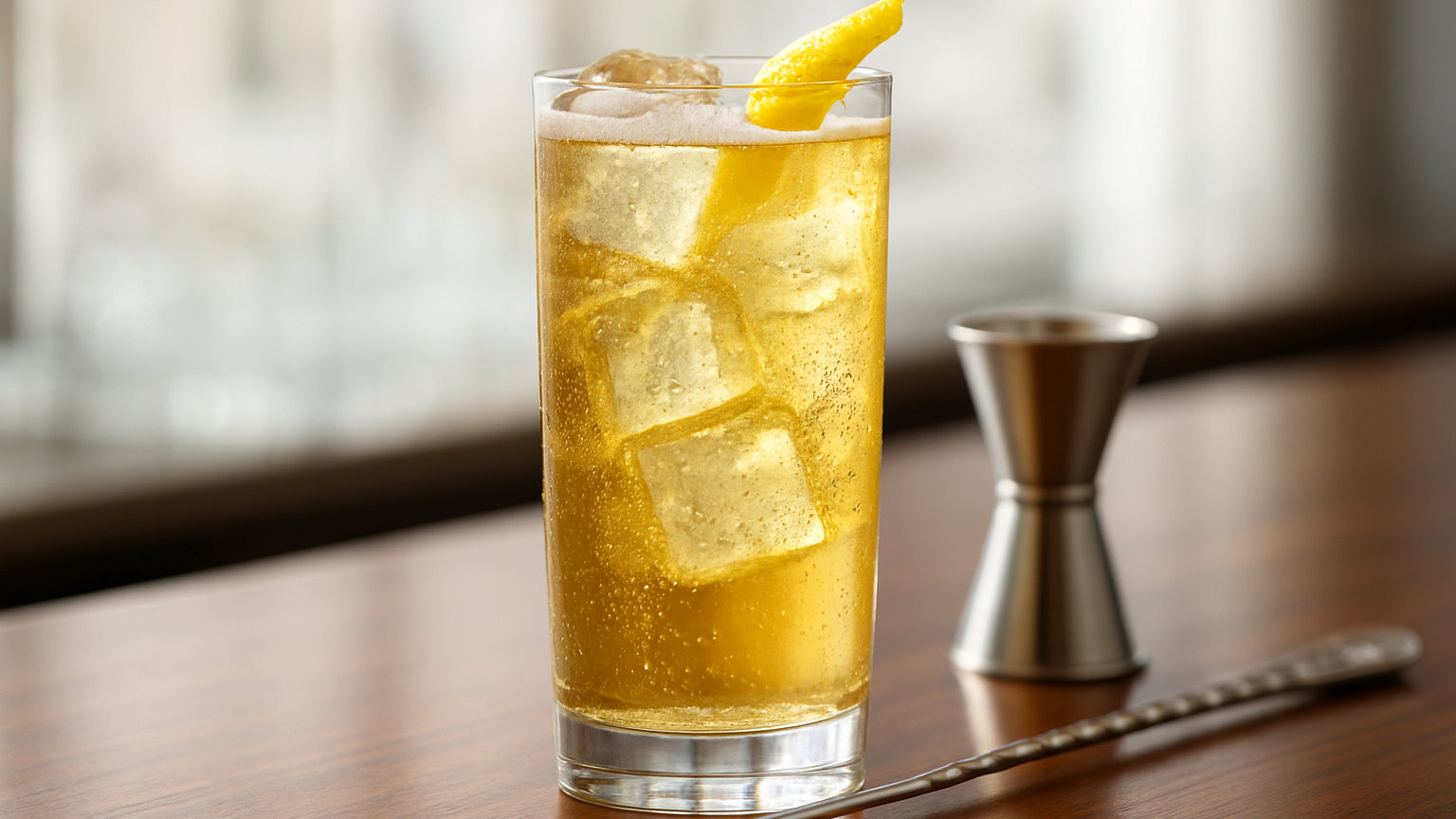
The whisky highball is the everyday drink of Japan, sold in cans, poured from dedicated taps and made in bars with an attention that surprises visitors. It is whisky and soda over ice, and the version made carefully is a different drink from the version made carelessly.
The method
Chill the glass thoroughly, ideally in a freezer.
Fill it completely with ice, preferably large clear cubes.
Stir the ice briefly with a bar spoon to chill the glass further, then pour off any water that has melted.
Add 45 millilitres of whisky. Stir it with the ice a specific number of times, thirteen and a half turns being the figure traditionally quoted, which is less about the exact count than about chilling the spirit thoroughly before the soda arrives.
Top up the ice if it has settled.
Pour cold soda water gently down the side of the glass, or over the back of a bar spoon, in a single steady pour.
Stir once, upwards, lifting the spoon vertically rather than swirling, which mixes without driving off carbonation.
Garnish with a wide strip of lemon peel expressed over the surface, or nothing at all.
Why each step exists
Chilling the whisky before the soda is the crucial one. Adding cold soda to room-temperature spirit warms the mixture and drives off carbonation immediately, so pre-chilling the whisky preserves the bubbles.
Pouring off the meltwater removes dilution that has already happened, so the drink starts at full strength.
The vertical stir mixes the layers with minimal agitation, and a swirling stir would flatten the drink.
None of this is mysticism. Each step addresses a specific mechanism, and skipping them produces a measurably flatter, warmer drink.
The ice
Japanese bar culture treats ice as an ingredient, and clear, dense, hand-cut ice is standard in serious bars.
Clear ice melts more slowly than cloudy ice because it contains fewer air bubbles and impurities. Making it at home is possible using directional freezing, insulating a container so it freezes from the top down and pushing impurities to the bottom, which can then be cut away.
For most purposes, large cubes from a silicone mould made with filtered water are a substantial improvement over a tray of small ones and require no effort.
Which whisky
Lighter, cleaner styles work best. Japanese blends were largely designed with this drink in mind and suit it perfectly.
Blended Scotch works well and is what most people will have. Irish whiskey is excellent in a highball.
Heavily peated whisky produces a divisive result, since soda amplifies smoke considerably. Some people love it and it is not the default.
Bourbon works and gives a sweeter drink that suits a squeeze of lemon.
An expensive single malt is generally wasted, since the point is refreshment rather than contemplation.
The ratio
One part whisky to three or four of soda is standard, which produces a drink of around one unit and roughly six to eight per cent in the glass.
That is the whole appeal. It is a long, cold, low-strength drink that suits food and an evening, which is why it became a national habit rather than an occasional one.
Whether the ritual is worth it
The full procedure takes about ninety seconds. Most people will not do all of it most of the time, and the two steps that matter most are worth keeping.
Fill the glass with ice, and make sure the whisky is cold before the soda goes in. Those two alone deliver the majority of the improvement, and neither takes any longer than not doing them.
The soda
Since soda water contributes nothing but carbonation, its only relevant qualities are how fizzy it is and how cold.
Buy small bottles or cans and open them fresh. A large bottle that has been in the fridge for three days is flat, and a flat highball is a poor drink whatever whisky went into it.
Some Japanese bars use strongly carbonated soda specifically for this drink, and a highly carbonated mixer does produce a livelier result.


