
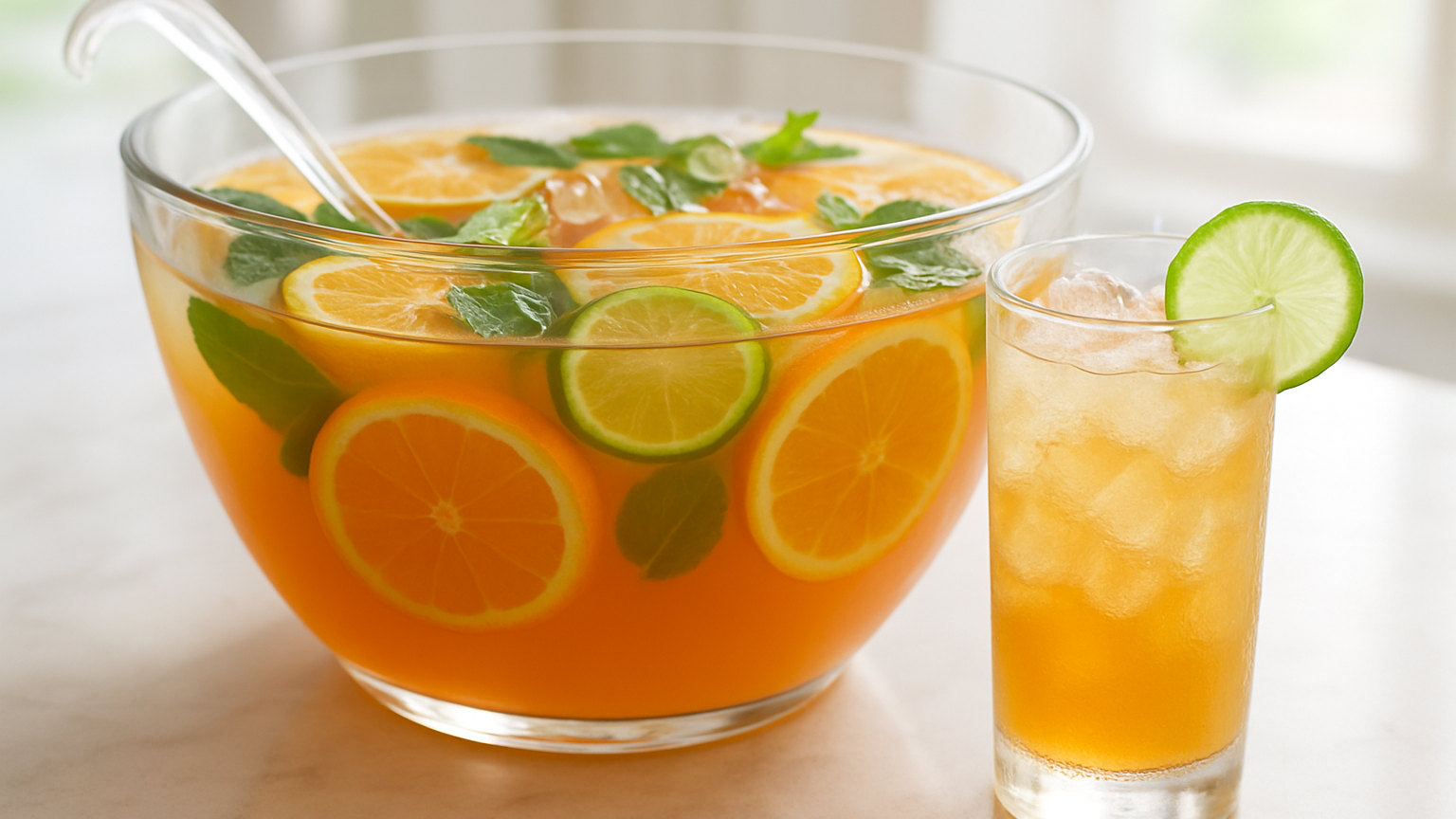
Punch is older than the cocktail by a considerable margin, arriving in Britain from the East in the seventeenth century and dominating drinking for the best part of two hundred years before individual mixed drinks took over.
It is also the most practical thing to serve a group, since one vessel replaces twenty individual drinks.
The formula
The traditional rhyme describes five parts: one of sour, two of sweet, three of strong, four of weak, and spice.
In modern terms that means one part citrus, two parts sugar or syrup, three parts spirit and four parts water or tea, with spices or aromatics added.
The ratios are a starting point rather than a rule, and most modern punches are less sweet than the formula suggests. A useful adjustment is to reduce the sweet element and increase the citrus slightly.
The weak element is where a great many punches go wrong. Water or tea is not filler; it is the dilution that makes the drink drinkable, and a punch without it is a bowl of spirit.
Oleo saccharum
The technique that separates a good punch from a fruit-juice mixture, and it is genuinely simple.
Peel the citrus you intend to juice, taking wide strips with as little pith as possible. Combine the peels with an equal weight of sugar, stir, cover and leave for four to twelve hours.
The sugar draws the aromatic oil out of the peel, producing an intensely fragrant syrup. Strain out the peels and use the syrup as the sweet element.
It captures citrus aroma far more completely than juice alone, and it uses the part of the fruit that would otherwise be thrown away.
Scaling it
Plan on two to three servings per person for the first hour and one to two per hour after, with each serving around 120 to 150 millilitres.
Make the base in advance, without ice and without any sparkling element, and refrigerate it. It improves over a few hours as the flavours combine.
Add sparkling wine, soda or any carbonated component at the moment of serving, and add ice to the bowl rather than to the base.
The ice block
The single most useful practical trick. A large block of ice melts far more slowly than cubes, so the punch stays cold without becoming watery over an evening.
Freeze water in a plastic container, a cake tin or a bundt mould the day before. Adding citrus slices or berries makes it look considerably better.
Boiling and cooling the water first, or freezing it in stages, produces clearer ice, though this is decoration rather than function.
Put the block in the bowl and top up with cubes as it shrinks.
A workable recipe
For around fifteen servings: make an oleo saccharum from the peel of six lemons with 300 grams of sugar. Combine it with 300 millilitres of lemon juice, 750 millilitres of aged rum or brandy, 500 millilitres of strong brewed black tea, cooled, and 500 millilitres of water.
Add a few dashes of aromatic bitters and a grating of nutmeg. Refrigerate for a few hours, then serve over a large ice block with a garnish of citrus wheels.
Taste and adjust before serving, since citrus varies.
Serving it responsibly
A punch makes it very easy to lose track of how much has been drunk, since nobody counts glasses from a bowl.
Say what is in it and roughly how strong it is when you put it out. Provide a ladle with a known measure rather than letting people fill tumblers.
Have a non-alcoholic version alongside, made properly and served from an identical bowl, and label both clearly. A jug that looks the same and contains alcohol is a genuine problem for anyone who cannot drink.
And put out water and food. Both make for a better evening.
Hot punch
The same formula works warm, and a hot punch is one of the better things to serve in winter.
Warm the base gently rather than boiling it, since alcohol evaporates and the aromatics go with it. Somewhere around sixty to seventy degrees is enough, and keeping it in a slow cooker on a low setting works well.
Brandy, aged rum and whisky all suit it, and warm spices come into their own. The citrus should be added later than in a cold punch, since heat dulls it.


