
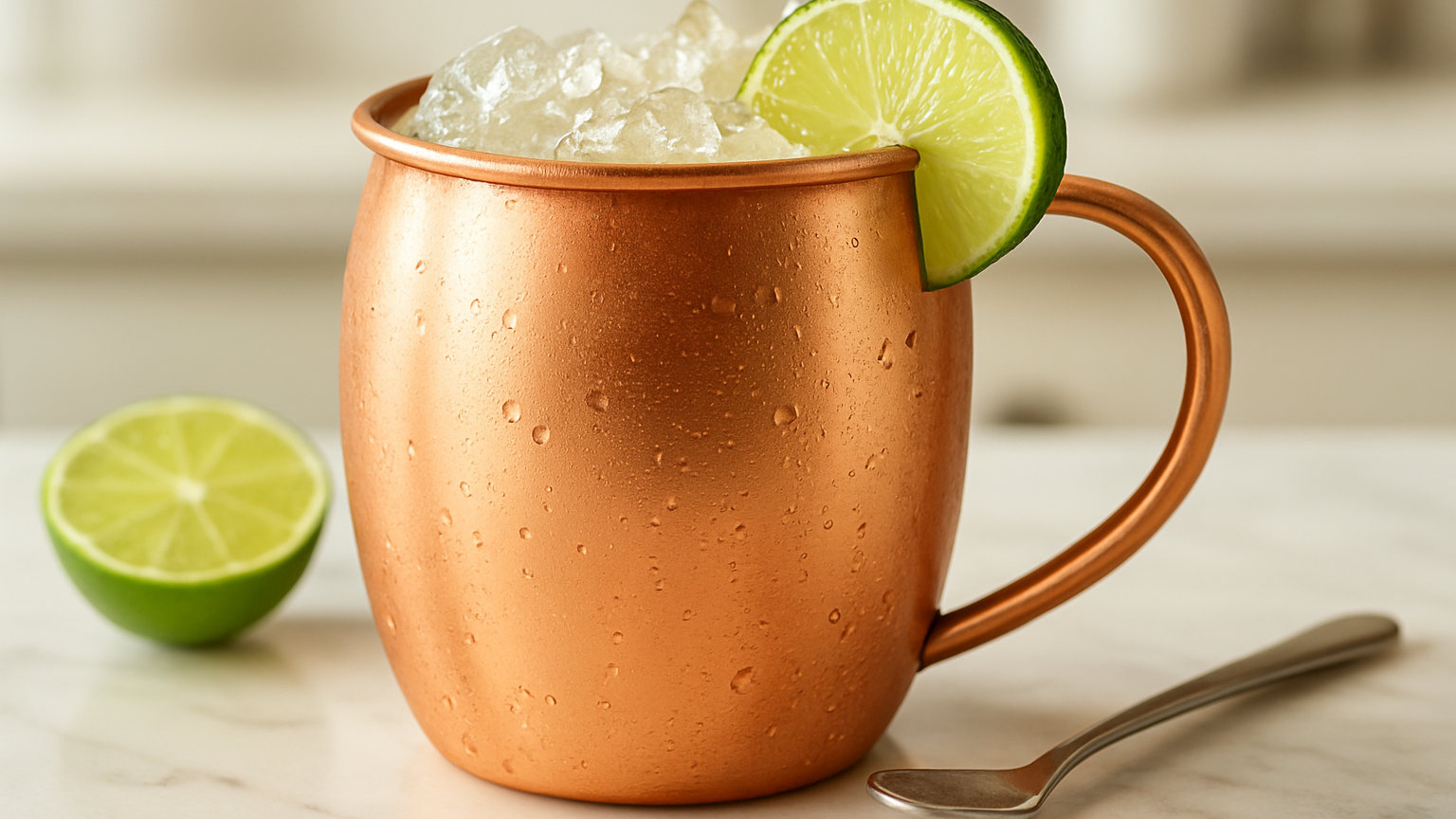
The Moscow mule is vodka, ginger beer and lime served over ice in a copper mug. It is one of the more successful marketing inventions in drinks history and, unusually, a genuinely good drink.
The recipe
Fill a copper mug or a highball glass completely with ice.
Add 50 millilitres of vodka and 20 millilitres of fresh lime juice.
Top with 120 to 150 millilitres of cold ginger beer, poured gently.
Stir once and garnish with a lime wedge and, if you like, a sprig of mint.
The origin
The standard account places it in Los Angeles around 1941, bringing together a vodka distributor struggling to sell an unfamiliar spirit, a bar owner with an excess of ginger beer, and in some versions a supplier with a quantity of copper mugs.
Whether all three parties were quite as neatly matched as the story suggests is open to question, and the drink was unquestionably promoted heavily and is widely credited with establishing vodka in the American market.
The name has no connection to Russia beyond the association with vodka.
Does the copper mug do anything
Yes, and less than the mystique suggests.
Copper conducts heat efficiently, so the mug chills rapidly and frosts on the outside, and the metal feels colder to the touch than glass at the same temperature. That is a genuine sensory difference.
Claims that copper reacts with the lime to enhance the flavour are not well supported and are best treated as marketing.
The mug also keeps your hand off the drink if you hold it by the handle, which slows warming.
The copper caveat
This is worth stating plainly. Copper reacts with acidic liquids, and prolonged contact between acidic food or drink and unlined copper can leach copper into it.
Food safety authorities in several countries have issued guidance on this, and the usual advice is that vessels used for acidic drinks should be lined, typically with stainless steel or nickel on the interior.
Most mugs sold now are lined, and it is worth checking before buying. An unlined mug used occasionally for a drink consumed promptly is a different proposition from one used regularly, and anyone uncertain should choose a lined one or use a glass.
Do not store a finished drink in a copper mug, and wash it by hand rather than in a dishwasher, which damages the finish.
Ginger beer or ginger ale
Ginger beer, and the distinction matters.
Ginger beer is brewed or heavily flavoured, spicy, cloudy and assertive. Ginger ale is a lighter, sweeter, clearer carbonated soft drink with far less ginger presence.
A mule made with ginger ale is a thin, sweet drink. Made with a proper spicy ginger beer it has real character, and the heat of the ginger is what carries the vodka.
Some ginger beers are alcoholic, generally at around four per cent, and the label is worth checking, particularly if you are making something for someone who is not drinking.
The mule family
The template is spirit, ginger beer and lime, and every substitution has a name.
A Kentucky mule uses bourbon and is richer. A Mexican mule uses tequila and is sharper. A gin gin mule adds mint and a gin base and is one of the better modern variations.
A dark and stormy uses dark rum and is traditionally built with the rum floated on top, and the name is a registered trademark associated with a specific Bermudian rum.
A non-alcoholic version made with ginger beer, lime and plenty of ice is genuinely good, which is not true of every convertible cocktail.
Making it well
Fill the mug or glass completely with ice, since a copper mug conducts heat in both directions and an under-iced drink warms quickly.
Use fresh lime rather than bottled, since the drink has only three components and one of them is the citrus.
Add the ginger beer last and gently, and stir once at most. Ginger beer is often less carbonated than tonic to begin with, so there is less to spare.


