
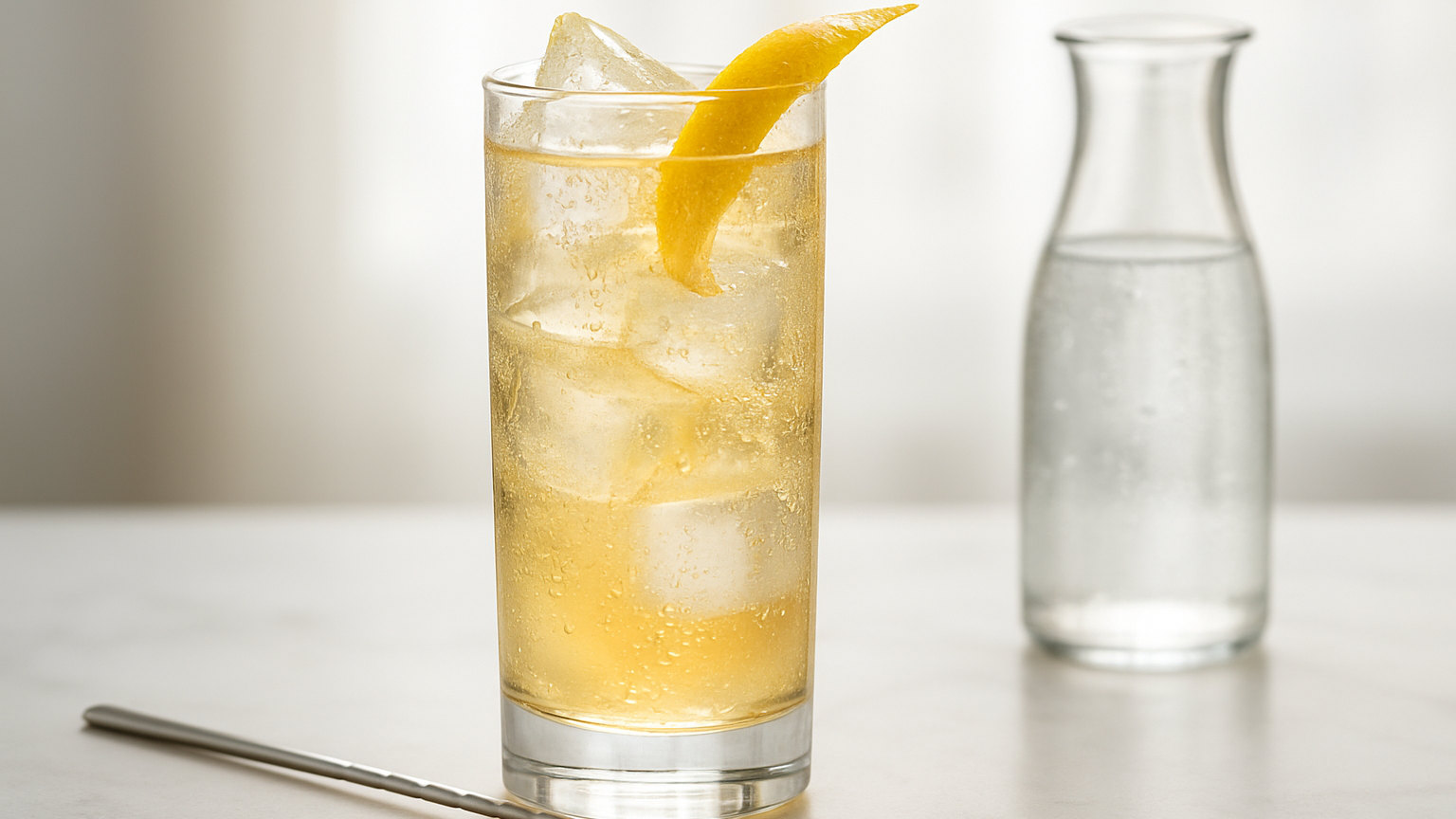
A highball is a spirit lengthened with a non-alcoholic mixer and served over ice in a tall glass. That is the whole definition, and it covers the gin and tonic, the whisky and soda, the rum and cola and a great many others.
It is the most commonly made drink in the world and, until recently, the least respected.
Where the name comes from
The term appears in American bar usage in the late nineteenth century, and the origin is disputed. The most repeated explanation involves railway signalling, where a raised ball indicated a train should proceed at speed, and the drink was something a bartender could produce quickly.
Like most cocktail etymologies it is plausible and thinly documented. What is clear is that the word described a category of tall, quickly assembled drinks rather than one recipe.
Why it was dismissed
Because it looks like nothing. There is no technique to display, no shaking, no elaborate garnish and no obvious skill, so during the period when cocktail bars competed on complexity the highball was what you ordered if you were not interested.
It also suffered from being made badly almost everywhere: a small glass, three cubes of ice, a heavy pour of warm mixer and a stir that flattened whatever carbonation survived.
What changed
Japanese bar practice, largely. The whisky highball is a national drink in Japan, and the attention paid to it there is difficult to overstate: specific ice, chilled glassware, a measured pour, a particular stirring technique and control of the carbonation.
The results are noticeably better than a carelessly made version, which forced a reconsideration elsewhere. A drink that rewards that much attention is not a simple drink.
The parallel is with lager in brewing. A product with nowhere to hide is harder to execute well, not easier.
What separates a good one
Five things, and none of them involves an unusual ingredient.
Ice quantity. A glass filled to the top melts more slowly than one with three cubes, so the drink stays cold and dilutes less. Under-icing is the single most common error.
Temperature. Every component should be cold before it meets: the spirit, the mixer and the glass. Ice that has to do the chilling produces a watery drink.
Carbonation. Bubbles are driven off by agitation, so the mixer should be poured gently down the side of the glass or over a bar spoon, and the drink stirred once at most.
Ratio. Somewhere between one part spirit to two of mixer and one to four, depending on the spirit and the mixer, and worth deciding deliberately rather than pouring by eye.
Garnish. A wide strip of citrus peel expressed over the surface supplies aroma that the drink otherwise lacks, and it costs nothing.
The strength question
Highballs are usually the most sensible drink on any list, which is part of their appeal.
A single measure of spirit lengthened with mixer contains around one unit, against two or more in most cocktails. That makes a highball a drink you can have two of over an evening without the arithmetic becoming alarming, which is precisely what the format was for.
Why it matters
The highball is the drink most people make most often, at home and in a pub, which means small improvements have a disproportionate effect.
Filling the glass with ice, chilling the mixer and pouring gently takes no longer than doing none of those things. The difference in the glass is larger than switching to a more expensive spirit, and it costs nothing at all.
The glass
The tall glass that gives the category its shape is not incidental. A highball glass holds enough ice to keep the drink cold and enough volume for the mixer to do its work, and its narrow profile slows the loss of carbonation compared with a wide one.
Anything from around 300 to 400 millilitres works. A short tumbler forces a smaller pour of mixer and a stronger, less refreshing drink, which defeats the purpose.
Chill it if you can. A glass straight from a cupboard warms the drink immediately, and thirty seconds in a freezer makes a noticeable difference.


