
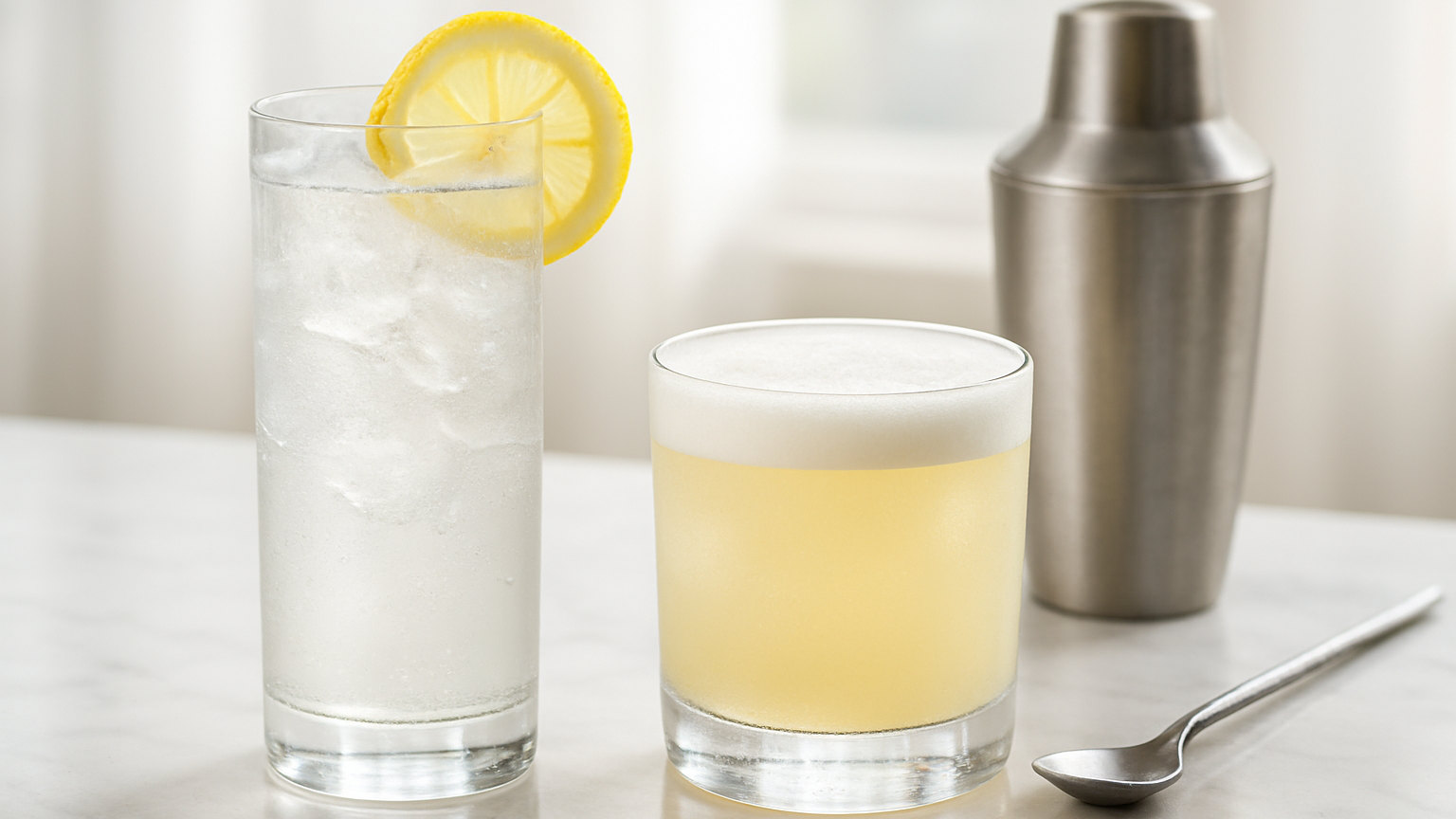
A Tom Collins is gin, lemon, sugar and soda water. A gin fizz is gin, lemon, sugar and soda water. They are different drinks, and the difference is entirely in how they are put together.
The Tom Collins
Built long in the glass over ice.
Combine 50 millilitres of gin, 25 millilitres of fresh lemon juice and 15 millilitres of sugar syrup in a tall glass. Fill with ice, top with 100 millilitres of soda water, stir once and garnish with a lemon slice and a cherry.
Some recipes shake the first three ingredients briefly before straining into the iced glass, which chills them faster.
The result is long, cold, refreshing and modest in strength, and it stays cold to the bottom of the glass because it is full of ice.
The name is generally linked to Old Tom gin, a slightly sweetened style that was standard when the drink emerged, and to a nineteenth century hoax involving a fictitious man of that name, which is a better story than most cocktail origins and about as well documented.
The gin fizz
Shaken hard and served short, without ice in the glass.
Shake 50 millilitres of gin, 25 millilitres of lemon juice and 15 millilitres of sugar syrup with plenty of ice for a good ten to fifteen seconds. Strain into a chilled small glass, then top with 60 millilitres of cold soda water.
The hard shake aerates the drink, producing a light foam, and the soda added at the end lifts it further.
Serving it without ice means it is a drink to be finished promptly rather than nursed, and it is noticeably more concentrated than a Collins.
The distinction that matters
A Collins is a highball: built in the glass, long, over ice, sipped over time.
A fizz is a sour with soda: shaken, aerated, short, drunk quickly.
The same ingredients produce a refreshing session drink in one case and a brisk, textured short drink in the other. It is a useful demonstration that technique is an ingredient.
The fizz family
A silver fizz adds egg white for foam and texture. A golden fizz uses the yolk, which is richer. A royal fizz uses the whole egg.
Anyone pregnant, elderly, very young or with a compromised immune system is generally advised to avoid raw egg, and pasteurised egg white removes the concern entirely. Aquafaba works as a vegan alternative.
The ramos gin fizz is the elaborate one: gin, lemon, lime, sugar, cream, egg white and orange flower water, shaken for a famously long time to produce a thick, pillowy foam that rises above the rim of the glass.
Accounts of its origin in New Orleans describe teams of bartenders shaking it in relay. Twelve minutes is the number usually quoted, and modern practice generally achieves an acceptable result with a long dry shake followed by a shorter one with ice. It contains dairy, which is worth mentioning to anyone avoiding it.
The Collins family
The template is spirit, citrus, sugar and soda, and it accepts substitutions freely.
A John Collins traditionally uses genever or, in modern usage, bourbon. A vodka Collins is self-explanatory. A whiskey version with a maple syrup sweetener works well.
Adding a herbal or fruit liqueur in place of part of the syrup produces endless variations, and a Collins made with an amaro instead of some of the gin is one of the better low-effort improvements available.
The tall narrow glass takes its name from the drink, which is a reasonable indication of how established the format is.
Which to make
The Collins if you want something to drink slowly over an hour, since it is long, low in strength and stays cold in a full glass of ice.
The fizz if you want something short and brisk, particularly earlier in the day, since the format was traditionally a morning drink.
Both take the same ingredients, so it is worth making one of each on the same evening to see how much difference construction alone makes.


