
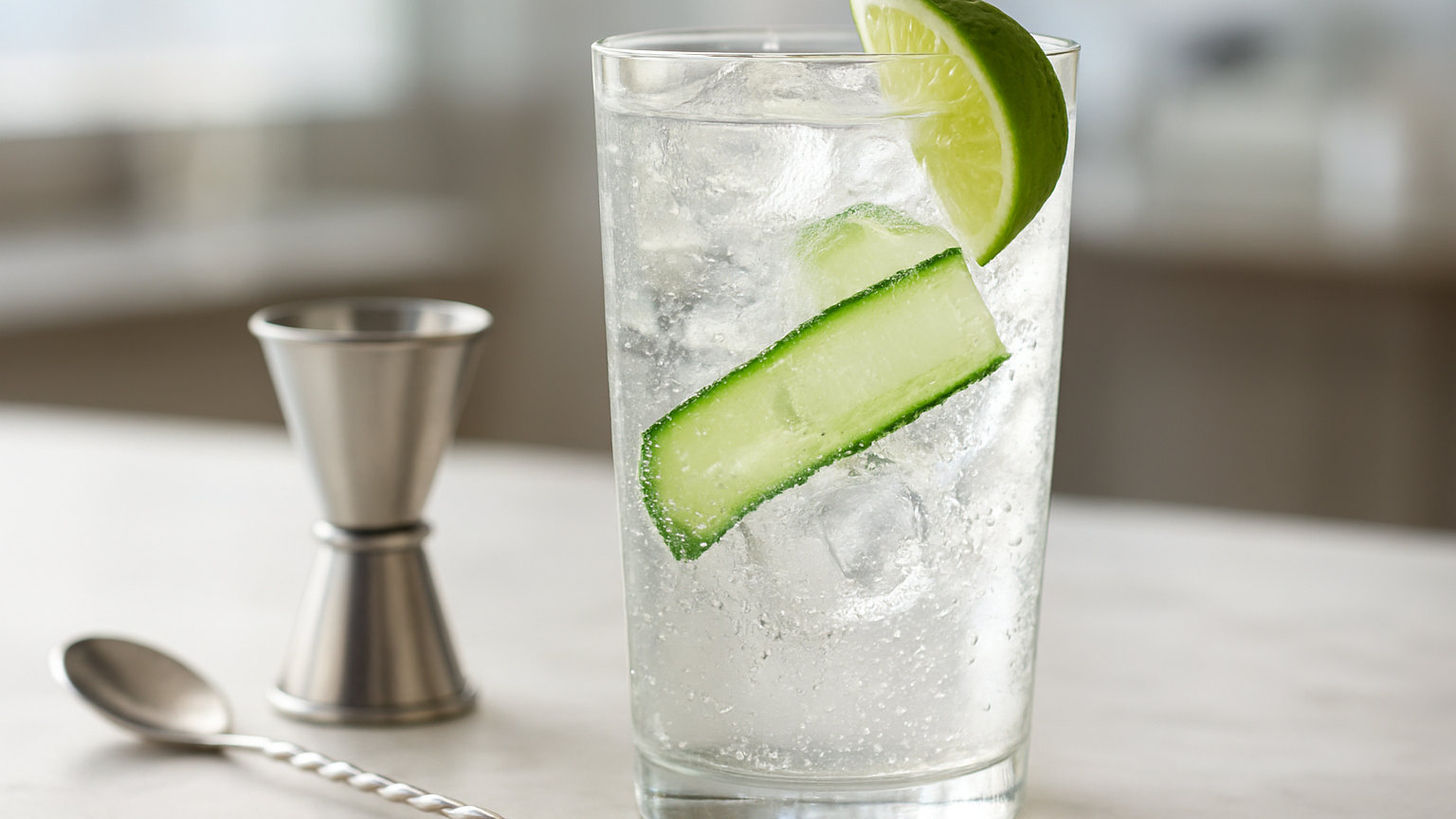
The gin and tonic is the most frequently made mixed drink in Britain and the one most often made carelessly. It has four components and every one of them is a decision.
The method
Fill a large glass completely with ice. Not three cubes, not half full: to the top.
Add 50 millilitres of gin.
Pour 150 to 200 millilitres of cold tonic gently down the side of the glass or over a bar spoon.
Stir once, briefly, and garnish.
That is it, and the difference between doing it this way and pouring both into a half-iced glass is immediately obvious.
Why the glass must be full of ice
This is counterintuitive and it is the most important point.
More ice means less dilution, not more. A glass packed with ice keeps the whole drink cold, so the ice melts slowly. A glass with three cubes has those cubes melting rapidly against a larger volume of warmer liquid, and the drink is watery within minutes.
Large cubes are better than small ones for the same reason, since they present less surface area.
Use fresh ice from the freezer rather than cubes that have been sitting out, and if the ice has been in a bag with other things in the freezer, it will taste of them and so will the drink.
The tonic
Tonic is more than half the drink by volume and contributes most of the bitterness, sweetness and acidity, so it deserves as much attention as the gin.
Quinine is what makes it bitter, and levels vary considerably between brands. Traditional Indian tonic is the most assertive; lighter and reduced-sugar versions let the gin's botanicals show more clearly.
Buy small bottles or cans rather than large ones. Tonic goes flat quickly once opened, and a flat mixer ruins the drink more thoroughly than a mediocre gin does.
Serve it properly cold. Tonic at room temperature poured over ice loses its carbonation immediately.
The ratio
Between one part gin to two of tonic and one to four, depending on the gin and how you like it.
A navy strength gin at fifty seven per cent will take more tonic than one at forty. A gin with delicate floral botanicals is easily buried and wants a lighter tonic and a shorter pour.
Measuring rather than free-pouring is worth doing, since a heavy hand produces a drink that is stronger than intended without tasting better.
The garnish
Match it to the gin rather than reaching automatically for lime.
A classic juniper-forward London dry suits lemon or lime peel. A citrus-forward gin suits grapefruit. A floral gin suits cucumber or a light herb. A spiced gin suits orange peel and perhaps a few peppercorns.
Express the peel over the surface so the oils land on the drink, which is where the aroma comes from. A wedge dropped in without squeezing does very little.
The elaborate garnishes that became fashionable, involving handfuls of berries and sprigs, generally do more for the photograph than the drink.
The glass
A large glass matters mainly because it holds more ice. Whether it is a highball or the balloon-shaped copa is largely a matter of preference.
The argument for the copa is that the wide bowl gathers aroma and the stem keeps your hand off the drink. The argument against is that it warms faster because of the surface area. Both are true and neither is decisive.
What matters more is that it is chilled and clean, since residue on the glass will flatten the carbonation.
Common mistakes
Too little ice, which is the biggest one and produces a warm, watery drink within minutes.
Warm tonic, which loses its carbonation the moment it hits the ice.
Vigorous stirring, which drives off the bubbles that were the point of using tonic in the first place.
A tired half-empty two-litre bottle, which is flat before it reaches the glass.
And an unsqueezed garnish, which contributes nothing at all. Every one of these is free to fix.


