
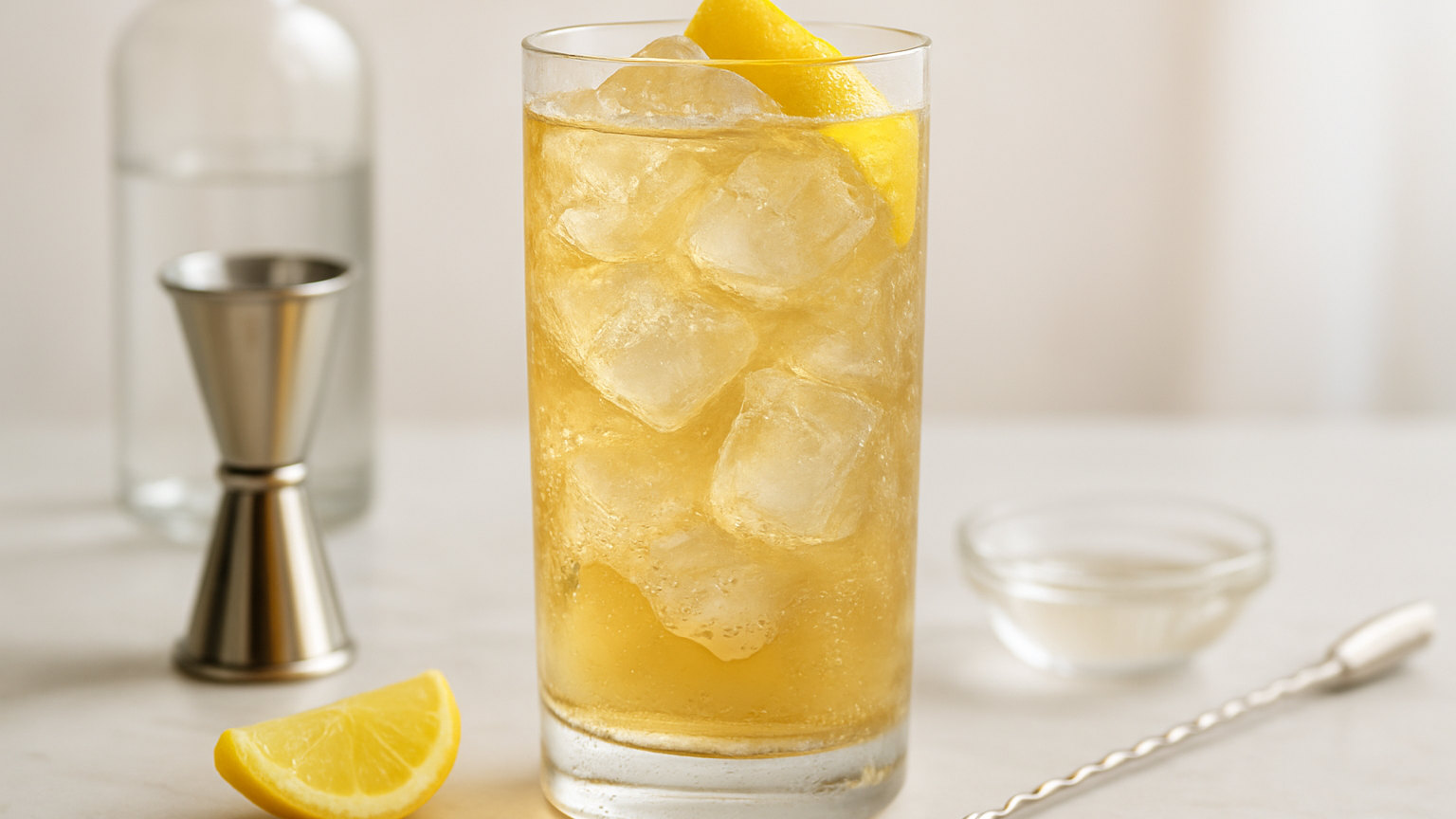
A long drink has four jobs to fill: something with alcohol and character, something acidic, something sweet, and something long. Fill all four and the drink works; leave one out and it will be flat, harsh or cloying in a predictable way.
The four elements
The base supplies flavour and strength, and 40 to 50 millilitres is the usual measure.
The acid brightens and prevents sweetness dominating. Fresh lemon or lime at 15 to 25 millilitres, or a shrub, or a mixer that carries its own acidity.
The sweetener balances the acid and adds body. Sugar syrup, honey syrup, a liqueur or a sweet mixer, at 10 to 20 millilitres if you are adding it separately.
The lengthener provides volume, carbonation and refreshment, at 100 to 150 millilitres.
Aromatics are the optional fifth element and do more than their size suggests: bitters, herbs, expressed peel, spices.
The double-counting rule
The common mistake is treating the mixer as neutral when it is not.
Tonic supplies sweetness and acidity as well as length, so a drink built on tonic usually needs no added syrup and only a small amount of citrus.
Cola supplies a great deal of sugar, so a rum and cola with added syrup is unbalanced before it starts.
Ginger beer supplies sweetness and spice, and grapefruit soda supplies acid and bitterness.
Soda water supplies nothing but carbonation, which means a drink built on soda needs its acid and its sweetener added explicitly.
Working out what the mixer is already doing prevents most of the errors.
A worked example
Say you have aged rum, limes, honey and ginger beer.
The ginger beer supplies length, sweetness and spice. The rum supplies base and body. So you need acid, and probably very little added sweetener.
Fifty millilitres of rum, twenty of lime juice, ten of honey syrup, topped with ginger beer over a full glass of ice, with a lime wedge and a sprig of mint. Taste and reduce the honey if the ginger beer is sweet.
That drink was not looked up; it was reasoned out, and the same reasoning works with almost any combination on a shelf.
Adjusting a drink that is not right
If it tastes sweet, add acid rather than reducing the sweetener, which is quicker and usually more effective.
If it tastes sharp or thin, add a small amount of syrup.
If it tastes correct but dull, it needs aromatics: a dash of bitters, an expressed peel, a herb.
If it tastes watery, there was not enough ice or the components were not cold enough, and the fix is for next time rather than this glass.
If it tastes harsh, it may need more dilution rather than more sugar, which is the most commonly misdiagnosed fault.
The mechanical part
Fill the glass with ice completely, chill every component beforehand, pour the carbonated element gently down the side, and stir once at most.
Add the garnish last and express any citrus peel over the surface.
These four steps apply to every long drink regardless of what is in it, and they matter more than the choice of spirit.
Keeping the strength sensible
One measure of spirit in a long drink is around one unit, which is the format's chief virtue.
Doubling the spirit turns a refreshing drink into a strong one without making it taste better, and it is worth measuring rather than pouring by eye for that reason as much as any other.
If a drink seems weak, the answer is usually more acid, more aromatics or better ice rather than more alcohol.
Recording what works
Anyone experimenting should write down what they did, since a good drink built from what was in the house is impossible to reproduce a fortnight later from memory.
A line in a notebook with the measures and one comment is enough, and it turns occasional successes into a repertoire.
It also reveals patterns. Most people discover after a dozen entries that they consistently prefer more acid and less sugar than published recipes suggest, or the reverse, which is more useful than any individual recipe.


