
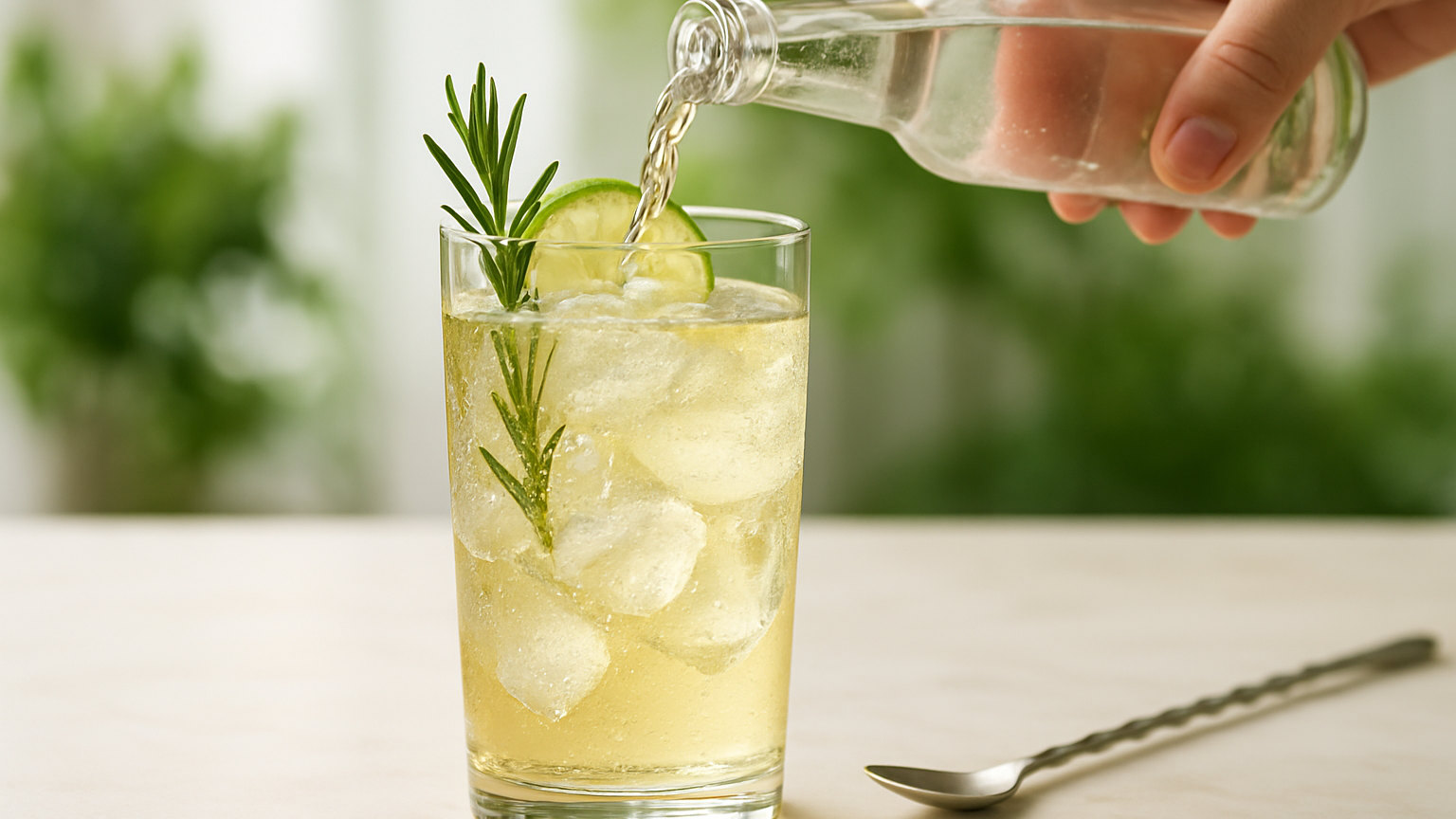
In a gin and tonic made to a normal ratio, roughly seventy per cent of what is in the glass is tonic. It supplies nearly all the sugar, all the quinine bitterness, most of the acidity and all of the carbonation.
Spending twenty pounds more on gin and reaching for whatever tonic is nearest is therefore an odd allocation of attention.
What tonic actually is
Carbonated water, sugar or sweetener, an acid, and quinine.
Quinine comes from cinchona bark and is the bittering agent. It was originally used as an antimalarial, and the drink's colonial origins rest on that: quinine was unpleasant to take, and sugar, water and eventually gin made it palatable.
The quantities in modern tonic are far below any therapeutic level, and quinine content in soft drinks is regulated with a maximum permitted level. It is a flavouring rather than a medicine.
Quinine also fluoresces under ultraviolet light, which is why a gin and tonic glows in a nightclub. It is a genuine property rather than an additive.
How brands differ
Three variables account for most of the difference.
Quinine level, which determines how bitter the tonic is. Some are markedly more bitter than others, and a high-quinine tonic will dominate a delicate gin.
Sugar content, which varies substantially. Light and reduced-sugar tonics are noticeably drier and let botanicals show, though some use sweeteners with their own character.
Carbonation level and bubble size, which affect texture and how long the drink stays lively. Some tonics are noticeably more aggressively carbonated than others.
Beyond that, some brands add citrus extracts or botanicals of their own, which is where flavoured tonics begin.
Flavoured tonics
Elderflower, Mediterranean, citrus, aromatic and floral versions are all widely available, and they are useful in a specific way.
A flavoured tonic supplies aroma that the drink might otherwise lack, which makes it valuable with a neutral gin or in a non-alcoholic version.
Used with an already complex gin it tends to compete rather than complement, and the result can be muddled. The general rule is that the more the gin has to say, the plainer the tonic should be.
Matching them
A classic juniper-forward London dry gin takes a traditional Indian tonic, which has the bitterness to stand up to it.
A delicate floral or contemporary gin is better with a light or low-sugar tonic that will not bury it.
A navy strength gin needs a full-flavoured tonic and a longer pour.
A citrus-forward gin works well with a plain tonic and a grapefruit garnish, where a citrus tonic would be redundant.
The practical points
Buy small bottles or cans. Tonic loses carbonation quickly once opened, and half a large bottle left in the fridge overnight will make a noticeably flatter drink the next day.
Keep it properly cold, since warm tonic poured over ice loses its bubbles on contact.
Pour gently down the side of the glass rather than into the middle, and stir once at most.
The honest conclusion
Does the tonic matter more than the gin? Not exactly, and it matters at least as much and is treated as though it matters far less.
The useful experiment costs a few pounds: make three gin and tonics with the same gin and three different tonics, side by side. Most people find the differences larger than they expected, and larger than the difference between two mid-range gins in the same test.
Sugar and lighter options
A standard tonic contains a meaningful amount of sugar, comparable to many soft drinks, and someone drinking several over an evening is consuming more than they might expect.
Light and reduced-sugar tonics address this and are drier, which many people prefer with a complex gin regardless of any other consideration.
Some use artificial sweeteners with a character of their own, so it is worth trying a couple to find one you like rather than assuming they are interchangeable.


