
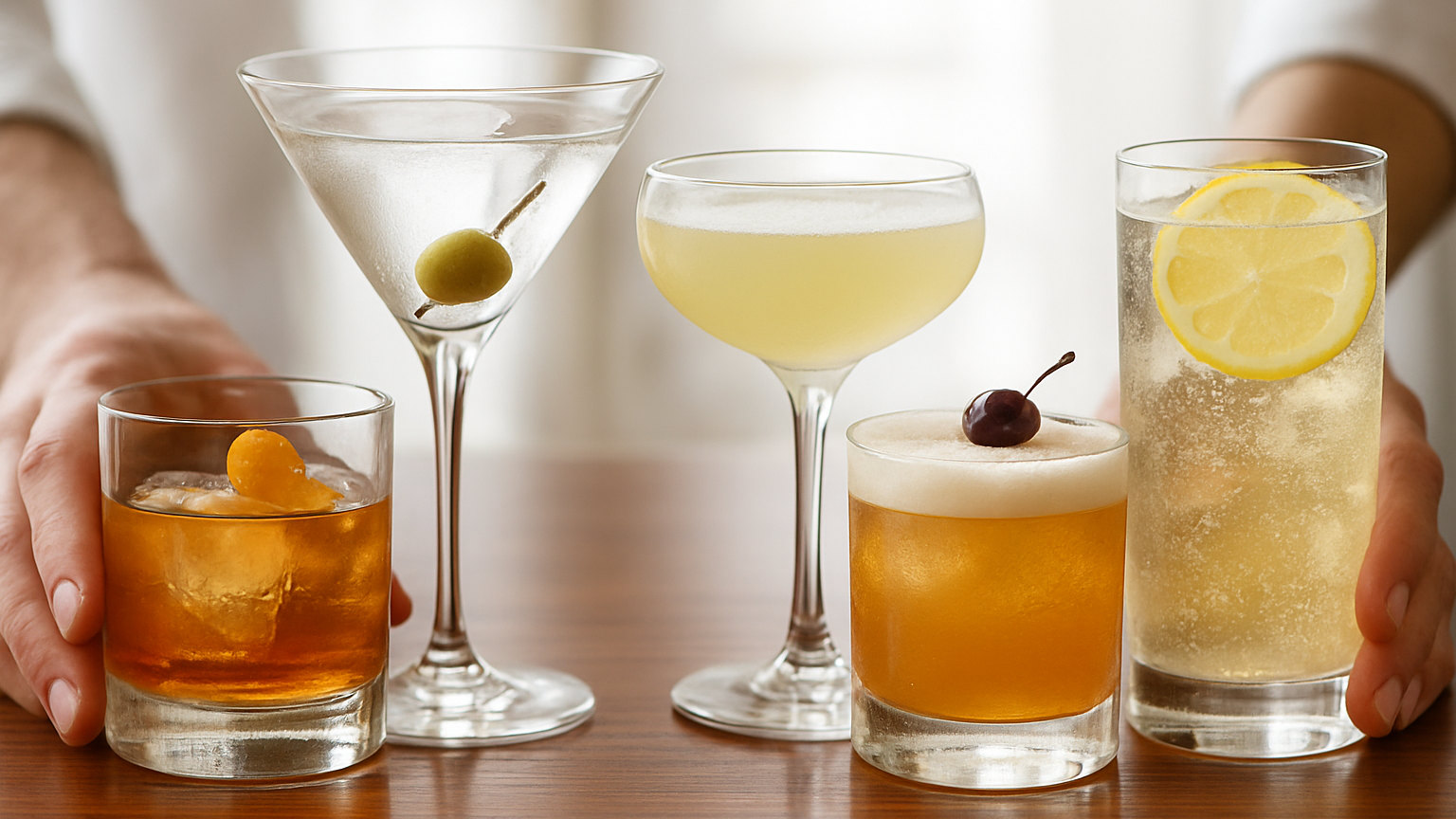
There are thousands of cocktail recipes and perhaps five structures. Learning one drink from each teaches the templates, after which most recipes become variations you can predict rather than instructions you have to follow.
The old fashioned
Start here, because it is the original cocktail and the simplest possible expression of the form: spirit, sugar, bitters and water.
What it teaches is dilution. There is nothing else in the drink, so the only variable that separates a good one from a harsh one is how long you stir and what ice you use. Learning to judge that is the foundation of everything stirred.
The daiquiri
Rum, lime and sugar syrup, shaken. The sour template in its purest form.
What it teaches is balance between acid and sugar, and the absolute necessity of fresh citrus. Make it once with bottled lime juice and once with a lime you squeezed, and the lesson takes about four minutes.
Once the daiquiri is familiar, the margarita, the whiskey sour and the sidecar are the same drink with substitutions.
The negroni
Gin, bitter aperitivo and sweet vermouth in equal parts, stirred.
What it teaches is that bitterness is an ingredient rather than a fault, and how vermouth behaves. It is also the drink that will demonstrate why vermouth belongs in the fridge, since a stale bottle ruins it unmistakably.
The martini
Gin and dry vermouth, stirred and served up.
What it teaches is temperature and restraint. With two ingredients there is nowhere to hide, and the difference between a good and a mediocre martini is entirely technique: how cold, how diluted, how fresh the vermouth.
It also teaches that received wisdom is frequently wrong, since the tradition of using almost no vermouth produces cold gin rather than a cocktail.
The highball
Spirit and a longer mixer over ice, which sounds too simple to count and is the drink most people make most often.
What it teaches is ice management and proportion. A properly made whisky highball or gin and tonic, with a full glass of ice, cold mixer and a measured pour, is noticeably better than a careless one, and the principles apply everywhere.
What you actually need
A jigger for measuring, which matters more than any other item. Free pouring is where home cocktails go wrong.
A shaker, a mixing glass or jug, a bar spoon, a strainer and a citrus squeezer.
For ingredients: one gin, one whiskey, one rum, sugar syrup you can make yourself, aromatic bitters, fresh lemons and limes, and vermouth kept in the fridge.
That covers a substantial proportion of the classic canon.
How to practise
Make the same drink several times rather than a different one each night. Change one variable at a time: stir for longer, use less syrup, try a different gin.
Taste before serving, always. Every recipe is a starting point, citrus varies, and adjusting is what bartenders do rather than a sign you got it wrong.
And keep the measures modest. Cocktails contain considerably more alcohol than a glass of wine, and two well made drinks are a better evening than four rushed ones.
Knowing the strength
The arithmetic is worth doing once. A single measure of spirit at forty per cent contains roughly one unit per twenty five millilitres, so a cocktail built on sixty millilitres of whiskey contains around two and a half units before anything else is added.
A negroni, with three fortified or spirituous components, contains a similar amount. Two cocktails therefore sit close to the same alcohol as a large glass of wine and a half, which is easy to lose track of when the glass is small.
United Kingdom Chief Medical Officers advise not regularly exceeding fourteen units a week, spread over three or more days. How that applies to any individual is a matter for them and their doctor, and the arithmetic above simply converts a recipe into something comparable.
Where to go next
Once the five are comfortable, the productive move is to work through variations rather than to collect new recipes. A daiquiri with a different rum, an old fashioned with agave syrup, a negroni with mezcal: each teaches something about how one component changes a drink.
That approach builds judgement rather than a repertoire, which is the difference between someone who can follow a recipe and someone who can make a decent drink from whatever is in the house.


