
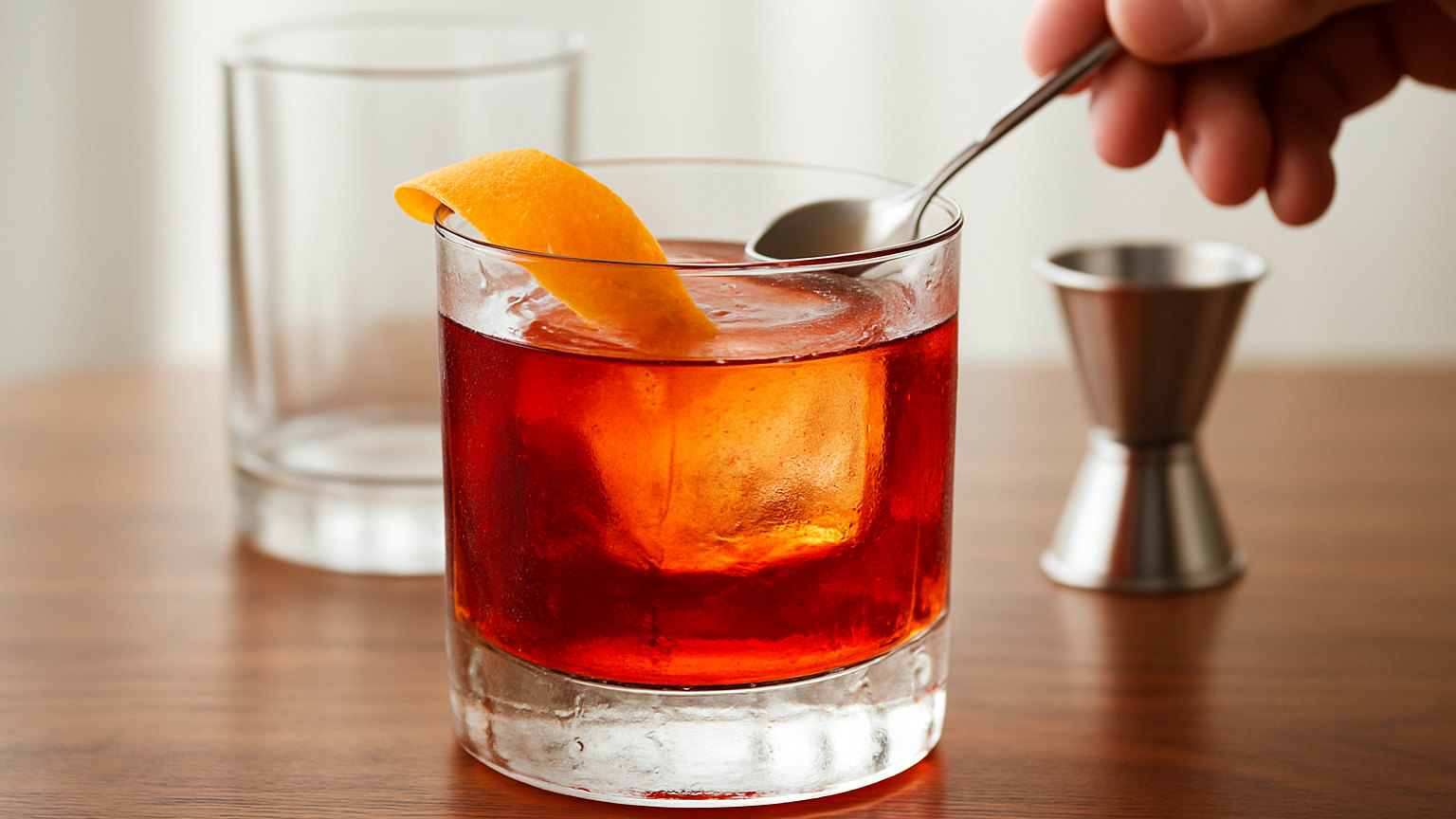
The negroni is gin, bitter aperitivo liqueur and sweet vermouth in equal measures, stirred over ice and garnished with orange. It takes about a minute to make and it is among the most exposed drinks in the canon, since nothing in it can hide behind anything else.
The recipe
Combine 30 millilitres each of gin, red bitter aperitivo liqueur and sweet vermouth, roughly an ounce of each, in a mixing glass with plenty of ice.
Stir for around thirty seconds until properly cold and diluted. Strain over a large ice cube in a rocks glass.
Express a strip of orange peel over the surface and drop it in.
Serving it in a tumbler over ice is the usual approach. Some bars serve it up in a coupe, which concentrates the aromatics and warms faster.
Why equal parts works
The ratio survives because all three components are assertive. Gin brings juniper and botanical structure, the bitter liqueur brings pronounced bitterness and orange, and sweet vermouth brings sugar, herbs and body.
None of them is a background ingredient, so none of them needs a larger share to be heard. Change the proportions and one element takes over.
The balance is also between bitter and sweet rather than between strong and weak, which is why the drink reads as complete despite being entirely made of assertive things.
That said, plenty of bartenders adjust it. Increasing the gin to forty five millilitres produces a drier, more spirit-forward drink, and it is a common house variation rather than a mistake.
The origin story
The usual account has a Count Camillo Negroni in Florence around 1919 asking for his americano to be strengthened with gin in place of soda water.
The story is repeated everywhere and the documentary evidence is thin, which is true of most cocktail origin stories. What is clear is that the drink is a variation on the americano, which is the same bitter liqueur and vermouth with soda instead of gin, and that relationship is more informative than the anecdote.
The ingredients
The bitter liqueur is the fixed point. Several exist, and they differ in bitterness, sweetness and colour, so trying two produces noticeably different drinks.
Vermouth is where most home negronis go wrong. It is wine, it oxidises once opened, and a bottle that has sat in a cupboard for six months has gone stale. Keep it in the fridge and use it within a month or two, and buy small bottles if you make the drink occasionally.
Gin is the most flexible component. A juniper-forward London dry is the standard; a fuller, earthier style gives a rounder drink; a navy strength gin at fifty seven per cent produces something considerably more assertive.
The variations
Swap the gin for bourbon or rye and it becomes a boulevardier, which is richer and sweeter. Swap for mezcal and it becomes smoky and savoury.
Replace the sweet vermouth with dry and the gin with rye and you have an old pal, which is considerably leaner.
Replace the gin with prosecco and you have a sbagliato, a lighter drink whose name means mistaken, from an account of a bartender reaching for the wrong bottle.
Replace the gin with soda water and you have an americano, at around ten per cent in the glass and the best low-strength option in the family.
Getting it right
Stir rather than shake, since there is no citrus juice and shaking would aerate and cloud it.
Use a large ice cube in the serving glass so it does not dilute further as you drink.
And use the orange peel properly, squeezing it over the drink so the oils land on the surface. It is not a garnish in the decorative sense; the citrus oil is a genuine part of the aroma.
Why it divides people
The negroni is bitter in a way that very few drinks are, and a first encounter frequently produces a strong reaction in one direction or the other.
Bitterness is also the taste most subject to acquired preference, and a good many people who disliked their first negroni find the third one entirely reasonable. Starting with an americano, which is the same flavour profile lengthened with soda, is a gentler introduction.
Anyone who simply does not enjoy it after a fair trial has established something useful about their own palate rather than failed a test.


