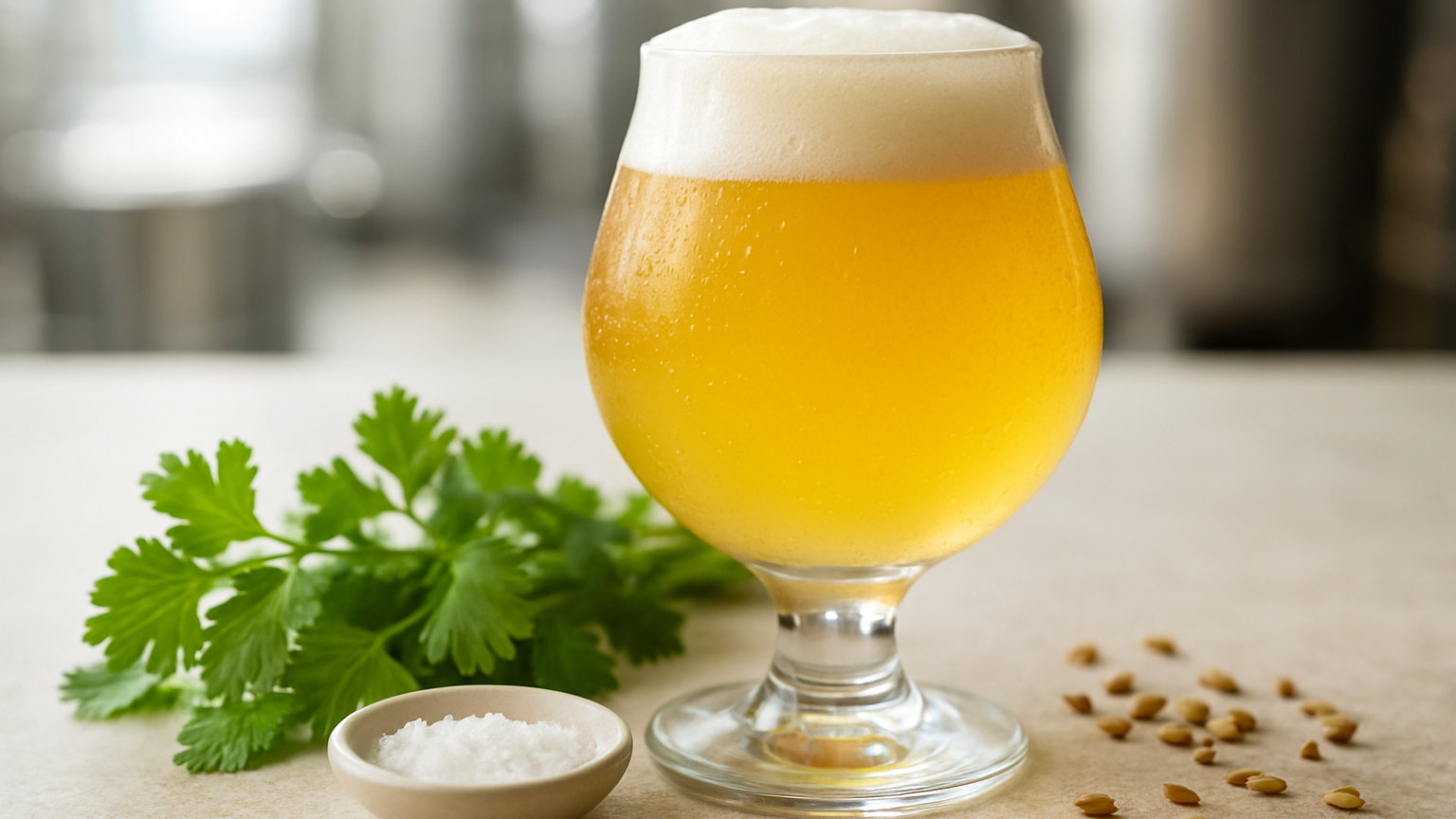
Gose is a sour wheat beer containing salt and coriander, which sounds like a modern craft brewery's invention and is in fact several centuries old. It is named after the river Gose in Goslar, and it became associated with Leipzig, where it was the local speciality.
Where the salt came from
The original explanation is geological. The water in Goslar is naturally saline, and the beer brewed with it carried that character without anyone adding anything.
When production moved to Leipzig and the style spread, brewers added salt deliberately to replicate the effect. That is the position today: gose is made with added salt, typically a modest quantity that registers as a faint mineral quality rather than as obvious salinity.
The coriander is a survival of the older tradition of spiced beer, which predates the universal use of hops.
Both additions place gose outside the German purity rules, which is why it has historically been permitted under a specific exemption as a regional speciality.
What it tastes like
Pale, hazy and light in body, at around four to five per cent. The dominant impression is refreshing tartness from lactic acid, with a lemony citrus quality and a soft wheat texture.
The salt is subtle when correctly judged. Rather than tasting salty, the beer tastes fuller and rounder, since salt suppresses the perception of bitterness and enhances other flavours. It also makes the beer genuinely thirst-quenching in a way that acidity alone does not.
Coriander adds a light citrus spice that echoes the lemon character.
Hopping is minimal. The style is about acidity, salt and wheat rather than about bitterness.
Dying out twice
Gose declined through the twentieth century and stopped being brewed altogether around the middle of it. A revival in the 1980s brought it back on a small scale in Leipzig, and it faded again before a second and more successful revival took hold.
What secured it was interest from outside Germany. American craft brewers adopted gose enthusiastically in the 2010s, and it became a standard style internationally, which is a familiar pattern for endangered European beers.
The modern international version is frequently fruited, kettle soured and considerably more assertive than the traditional Leipzig beer, which is gentler and more restrained.
How it is made now
Most modern gose is kettle soured, with Lactobacillus acidifying the wort over a day or two before boiling and normal fermentation.
Traditional production involved lactic fermentation alongside the main fermentation and sometimes a period of bottle conditioning during which the beer continued to develop.
Salt is added in the boil, typically at a level low enough that most drinkers do not identify it directly.
Serving it and eating with it
Serve cold, around five to seven degrees, in a tall glass. Traditional Leipzig service used a distinctive long-necked vessel, though it is rarely seen now.
At the table it is unusually useful. The combination of salt and acidity does what a squeeze of lemon and a pinch of salt do to food, which makes it excellent with shellfish, oysters, fried fish, ceviche, salads and anything Mediterranean.
It also handles goat's cheese and cured meats well, and its low strength makes it a good beer for a long lunch.
Where to start
Gose is among the most approachable sour styles and a sensible entry point for anyone curious about acidity in beer. It is light, low in alcohol, refreshing rather than challenging, and widely available.
A traditional Leipzig example shows the style as it was; a modern fruited one shows what craft brewing has done with it. Both are worth trying, and the difference between them is a neat illustration of how a revived style changes in the hands of people who did not inherit it.
The salt question
Anyone watching their salt intake occasionally asks about gose, and the quantities involved are modest. A typical gose contains a level of salt intended to be sensed as roundness rather than as salinity, and it is small compared with what a normal meal contributes.
That said, the amount varies between producers and is not usually stated on the label. Anyone advised to restrict sodium for medical reasons should treat it as they would any other seasoned product and ask their doctor rather than assuming.