Berliner weisse is a pale, cloudy, tart wheat beer of around three per cent, and it is traditionally served with a shot of flavoured syrup poured into the glass. Visitors find the syrup baffling, and it makes considerably more sense once you have tasted the beer without it.
What the beer is
Low in alcohol, typically two and a half to three and a half per cent, made with a substantial proportion of wheat and soured with lactic acid bacteria.
The acidity is the point. A traditional Berliner weisse is sharply tart, with a lemony, almost sherbet-like quality and very little malt sweetness or hop character to balance it. It is dry, light and extremely refreshing.
Historically it was fermented with a mixed culture of yeast and Lactobacillus working together, and bottle conditioning allowed it to develop further. Some examples were aged for months or years and became genuinely complex.
Napoleon's troops are said to have called it the champagne of the north, and whether or not the story is reliable, the comparison fits a beer that is pale, sharp and highly carbonated.
The syrup
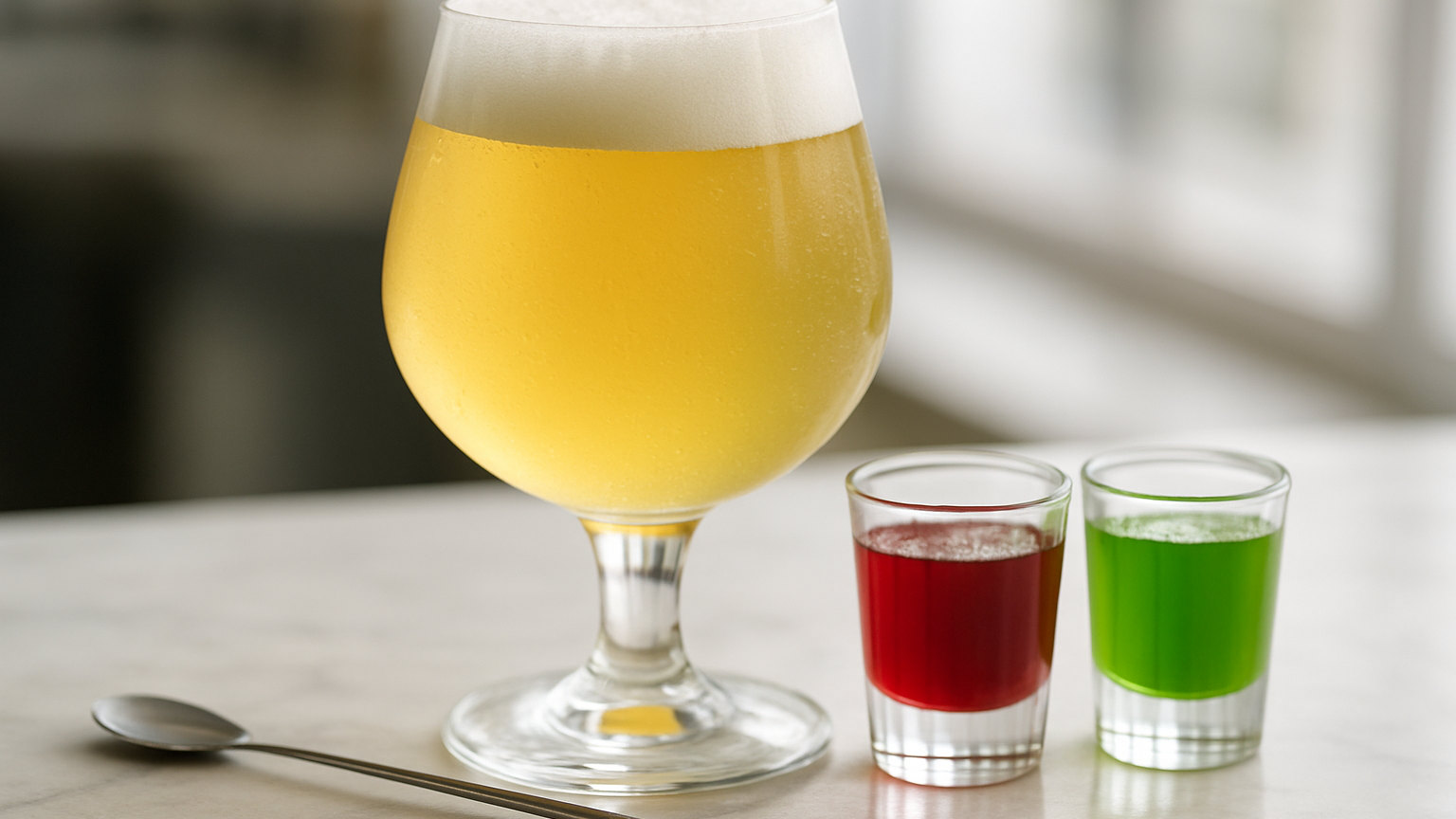
Two are traditional. Woodruff syrup, waldmeister, is bright green and tastes herbal and faintly vanilla-like. Raspberry syrup, himbeer, is red and straightforwardly fruity.
The purpose is to soften the acidity. A beer this tart with no residual sweetness is bracing, and a small quantity of sugar makes it considerably easier to drink in quantity on a warm afternoon.
It is served in a wide bowl-shaped glass with the syrup added at the bar, and the colours are part of the appeal.
Purists point out that the syrup masks a beer that has plenty to offer on its own, which is fair. The counter-argument is that the practice is a genuine local tradition rather than a modern accommodation, and that plenty of Berliners have drunk it that way for generations.
The sensible approach is to taste it plain first, then add the syrup and taste again, which takes one glass and settles the question for yourself.
The decline and revival
Berliner weisse was once brewed by dozens of Berlin breweries and was the city's everyday drink. By the late twentieth century it had almost disappeared, reduced to a couple of industrial versions.
The revival came from two directions: small German producers returning to traditional mixed fermentation, and American craft brewers who adopted the style enthusiastically and used it as a base for fruited sours.
Most modern examples worldwide are kettle soured rather than mixed fermented, which produces a cleaner and simpler acidity than the traditional method.
Why the low strength matters
At three per cent, Berliner weisse is one of the lowest-strength beers in regular production, and that is a deliberate part of the design rather than a limitation.
It was a summer drink for volume consumption, and the acidity gives it flavour intensity that a low-alcohol beer would otherwise struggle to achieve. Sourness does the work that alcohol and malt do elsewhere.
This makes it unusually relevant now, since interest in lower-strength beer has grown considerably and few styles deliver so much character at so little alcohol.
Serving and food
Serve cold, around five to seven degrees, in a wide glass whether or not you use syrup.
At the table its acidity works like a sharp white wine, suiting salads, shellfish, cured meats, goat's cheese and anything fried. It is also a genuinely good aperitif, since the sourness stimulates appetite.
If you have found sour beer intimidating, this is the gentlest way in: light, low in alcohol, cheap, and with the option of a spoonful of syrup if the acidity proves more than you wanted.
The modern fruited versions
A great many beers now labelled Berliner weisse are kettle-soured bases with fruit purée added, at strengths above the traditional range and with considerable sweetness.
They are enjoyable and they are a different product from the Berlin original, which is dry, low in alcohol and tart rather than fruity. If you want to know what the style actually is, look for a German producer and a strength around three per cent, and treat the fruited versions as a separate modern category.