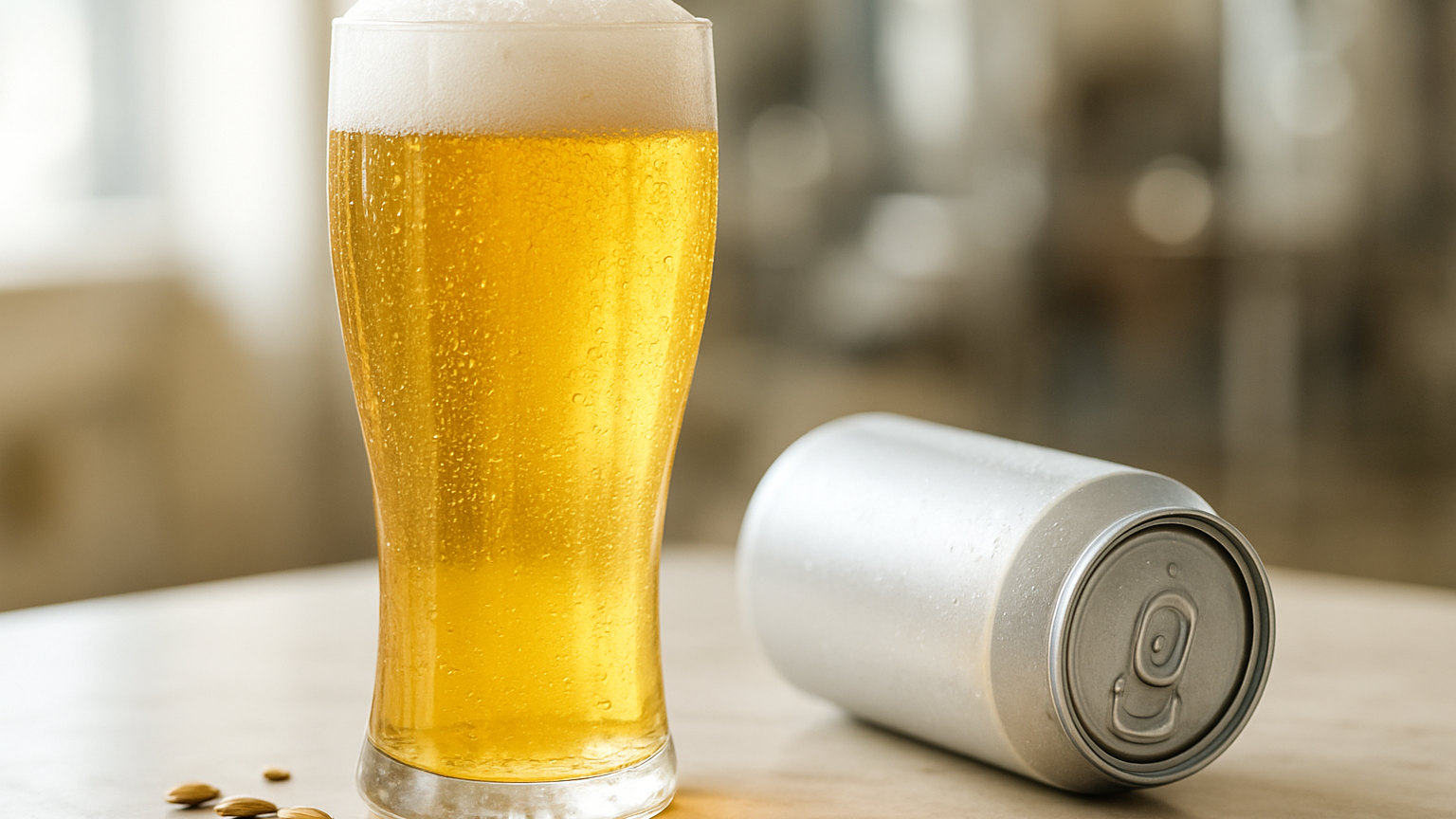
Most beer can be poured carelessly without much consequence. Wheat beer cannot, and the reason is that the yeast which gives the style its name and much of its character has settled into a layer at the bottom of the bottle.
Leave it there and you are drinking a paler, thinner beer that misses a good deal of the point.
The glass
A weizen glass is tall, slim at the base and flaring towards the top, usually holding half a litre. The shape supports the enormous head the style produces and displays the colour and the rising bubbles.
If you do not have one, use the tallest glass you own with the widest opening you can manage. A standard pint glass works adequately; a small tumbler does not, since the head alone can be four or five centimetres deep.
Rinse the glass with cold water and do not dry it. A wet glass helps the head form evenly and reduces the risk that any detergent residue kills it, and this is standard practice in Bavaria rather than a shortcut.
Rousing the yeast
Before opening, roll the bottle gently on its side across a worktop, or turn it slowly end over end a couple of times. The aim is to lift the settled yeast back into suspension without shaking it, which would foam the beer.
Some drinkers prefer the traditional two-stage method instead: pour most of the beer, leave the last centimetre or two in the bottle, swirl it to rouse the sediment, then add it on top.
Both work. The second gives you more control and is the method most Bavarian bars use.
The pour
Hold the glass at about forty five degrees and pour steadily down the side. Wheat beer foams enthusiastically, so a slow start matters.
As the glass fills, bring it upright and pour more directly into the centre to build the head. Aim for a head of three to five centimetres, which is normal for the style rather than excessive.
Stop when the glass is nearly full, swirl the remaining beer in the bottle to mix in the yeast, and pour it in. The beer will turn from hazy to properly cloudy as it goes.
The whole process takes a minute or two, and rushing it produces either a glass of foam or a beer with the yeast left behind.
Why the head matters
It is not decoration. Foam traps volatile aromatic compounds and releases them gradually as you drink, which is why a beer poured flat smells of considerably less.
In a style built entirely on delicate yeast-derived aromas, that is a substantial loss. The banana and clove character reaches you through the head as much as from the liquid.
The head also protects the beer from oxygen over the course of a glass, which matters more the longer you take.
When to leave the yeast out
There is one legitimate reason to pour carefully and leave the sediment behind, which is personal taste. Some drinkers find the yeast character too strong or find that it disagrees with them.
Kristallweizen exists for exactly this preference: the same beer filtered bright, with the yeast removed at the brewery.
Otherwise, the yeast is the point. A hefeweizen poured bright is a technically different beer from the one the brewery intended, and the difference is easy to demonstrate by pouring two glasses from one bottle, one clear and one with the sediment, and tasting them together.
The same principle elsewhere
Any bottle-conditioned beer carries sediment, including many Belgian ales, some strong stouts and traditional bottle-conditioned bitter.
In most of those, the convention runs the other way: pour carefully and leave the yeast behind, since it is a by-product rather than a feature. Wheat beer is the exception, and it is worth knowing which kind of bottle you are holding before you decide how to pour it.
Draught wheat beer
On draught the question does not arise, since the yeast is already in suspension in the keg and comes through with the beer.
What still matters is the glass and the pour. A tall weizen glass rinsed with cold water and filled steadily produces the head the style depends on, and a bar that pours it into a dry pint glass at speed will serve a visibly poorer beer from exactly the same keg.