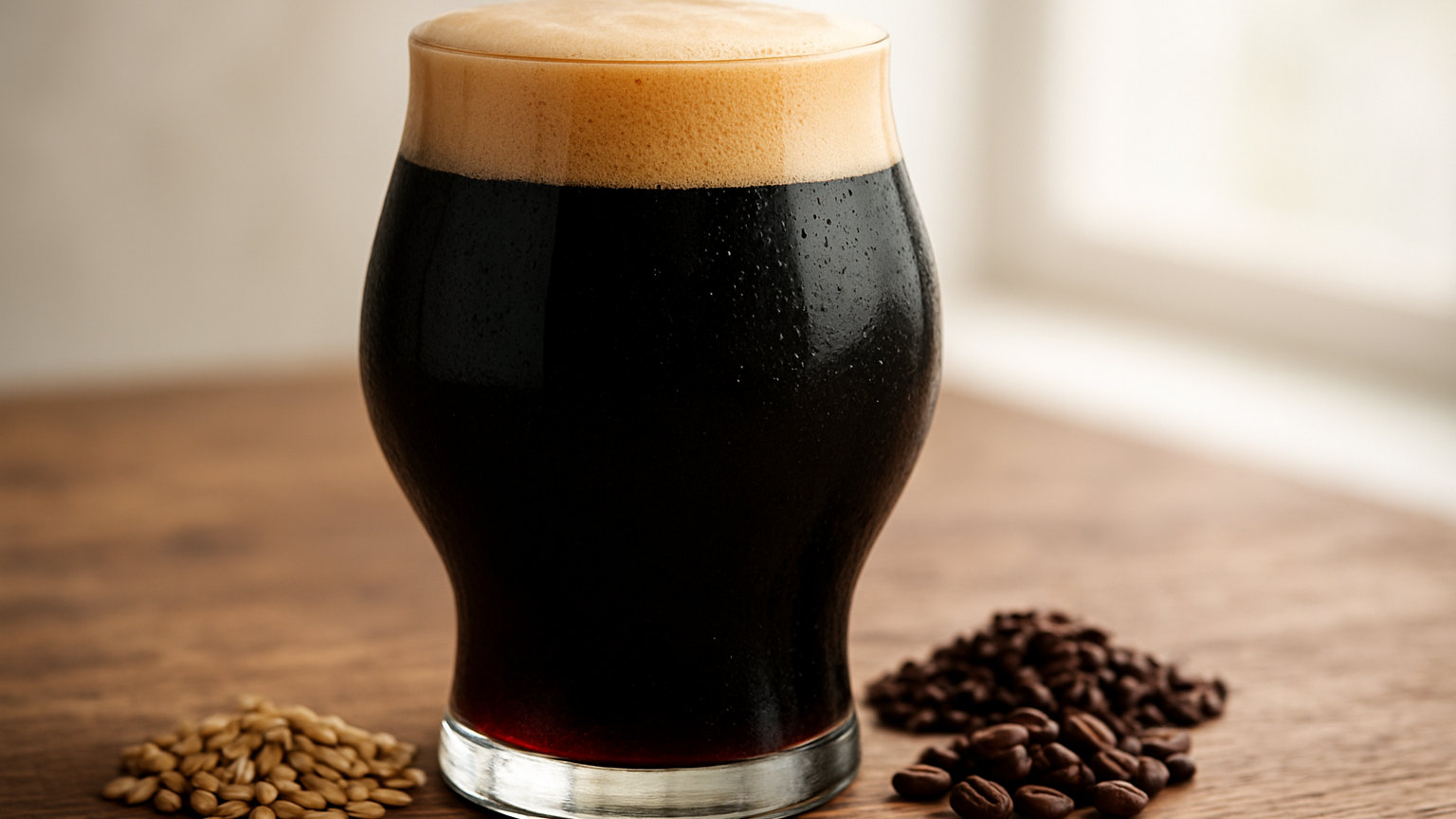
A pint of stout looks like something that should be heavy, sweet and difficult, which is why a great many people who have never tried one assume they would not like it. The colour is misleading in almost every respect.
Where the colour comes from
The base of a stout is ordinary pale malt, the same grain used in a pale ale. Colour and roasted flavour come from a small proportion of very dark grain, frequently as little as five to ten per cent of the total.
That grain has been kilned or roasted at high temperature, which caramelises and then carbonises the sugars inside. The process is directly comparable to roasting coffee beans, and the flavours produced are similar for the same chemical reasons.
A small quantity goes a very long way. Black malt is powerful enough that a few per cent turns a beer opaque, which is why holding a stout up to a strong light frequently reveals deep ruby edges rather than true black.
The different dark grains
Four are commonly used and each does something distinct.
Roasted barley is unmalted grain roasted very dark. It gives sharp, dry, espresso-like bitterness with a slightly astringent edge, and it is the defining ingredient of dry Irish stout.
Black malt is malted barley roasted to a similar degree, giving colour and a drier, more acrid roast character.
Chocolate malt is kilned less far, giving cocoa, coffee and a smoother, sweeter roast without the sharpness.
Brown malt sits lighter still, contributing toast, biscuit and a nutty quality, and it was the backbone of historical porter.
Debittered or dehusked dark malts are a modern option, processed to remove the husk material responsible for astringency. They give colour and a gentle roast without the bite, and they are what make black IPA and smooth modern porters possible.
Does it taste burnt?
It tastes roasted, which is a different thing, in the same way that coffee tastes roasted rather than burnt.
A well made stout has coffee, cocoa, dark chocolate and sometimes a liquorice or dark fruit note, with a dry finish. The roast character should be clean rather than acrid.
Genuinely burnt or ashy flavours indicate either too much roasted grain, poor quality malt or a water chemistry problem. High-carbonate water accentuates roast harshness, which is why brewers making dark beer adjust their water differently from those making pale beer.
Why colour does not predict weight
This is the most useful correction. Dark colour comes from a small quantity of roasted grain; body and strength come from the total quantity of malt and how much of it ferments.
A dry Irish stout at four per cent is lighter in body and lower in calories than most standard lagers, despite looking like something considerably more substantial. Conversely a pale barley wine at ten per cent is far heavier than it appears.
The visual assumption that dark means strong, sweet and filling is simply wrong, and it keeps a good many people away from a category that includes some of the most sessionable beers made.
What the colour does predict
Roast character, and that is about all. A darker beer will taste more of coffee and cocoa than a paler one, since that is what the dark grain contributes.
Everything else, including sweetness, body, bitterness and strength, is decided by other parts of the recipe and can go in any direction. A milk stout is sweet, a dry stout is not; an oatmeal stout is silky, an imperial stout is enormous, and all four are black.
The practical advice for anyone who has avoided dark beer is to start with a four per cent dry stout on a cold evening. It is lighter than it looks, it costs very little, and it is the clearest demonstration that appearance and weight are unrelated in beer.
Water chemistry and the roast
One technical detail explains why the same recipe tastes different in different places. Roasted grain is acidic, and brewing water high in carbonate neutralises that acidity, which allows dark beer to be made without the mash becoming too sour.
Regions with hard, carbonate-rich water were consequently well suited to dark beer, which is part of why London built its reputation on porter while Burton, with its sulphate-heavy water, built one on pale ale. Brewers now adjust water chemistry deliberately, but the historical geography of British beer styles follows the geology quite closely.