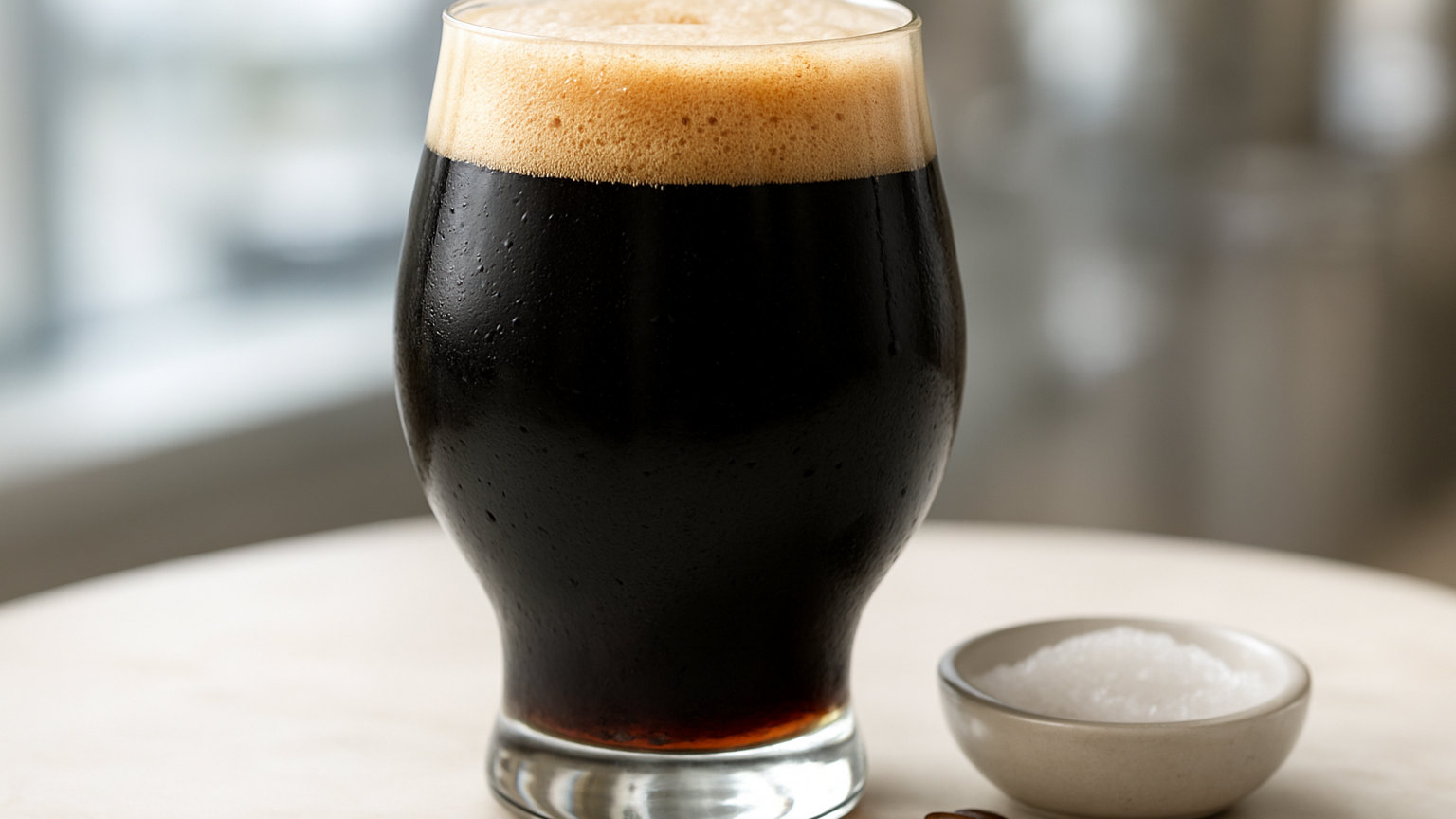
Milk stout, also called sweet stout or cream stout, contains lactose, the sugar found in milk. The name is literal rather than descriptive, and the ingredient does something no other sweetener can.
Why lactose works
Brewer's yeast can ferment most sugars it encounters, converting them to alcohol and carbon dioxide. It cannot ferment lactose, because it lacks the enzyme required to break the molecule down.
Add lactose to a beer and it therefore survives fermentation intact, remaining in the finished product as residual sweetness and additional body.
That is a useful property. Adding ordinary sugar would simply raise the alcohol content, since the yeast would consume it. Lactose is the straightforward way to make a beer sweeter and fuller without making it stronger.
It is also only mildly sweet compared with table sugar, which means a reasonable quantity can be used without the beer becoming syrupy.
What it tastes like
A traditional milk stout sits around four to five per cent, black, with a smooth full body and a distinctly sweet finish. The roast character is present but softened, and the overall impression is of coffee with milk and sugar rather than espresso.
Chocolate, caramel and cream are the usual descriptors. Bitterness is restrained, since it would clash with the sweetness.
It is among the most approachable dark beers for anyone who finds dry stout too sharp, and it works particularly well for drinkers coming to beer from sweeter drinks.
The nourishing claim
Milk stout was historically marketed as strengthening and nutritious, sometimes specifically to nursing mothers and convalescents, and some brands carried slogans to that effect.
The claims reflect the nutritional assumptions of the early twentieth century rather than current understanding, and advertising rules subsequently required them to be removed. Beer contains some carbohydrate and trace minerals and is not a meaningful source of nutrition.
Current United Kingdom guidance is that there is no known safe level of alcohol consumption in pregnancy, and the historical practice of recommending stout to expectant or nursing mothers is not something anyone would advise now. Anyone with questions about alcohol and health should raise them with a doctor or midwife rather than relying on a beer's history.
Who should avoid it
Two groups, and the label does not always make it obvious.
Lactose is a dairy product, so milk stout is not vegan. Beers containing it should declare it, and increasingly do, but the style name is the clearest signal.
People with lactose intolerance may react to it. The quantities are modest and individual tolerance varies considerably, so this is a matter for personal judgement, and anyone uncertain should treat it as they would any other dairy-containing product.
Milk stout is not the only offender. Lactose now appears widely in pastry stouts, milkshake IPAs and various sweetened modern styles, so the ingredient turns up in places the name does not warn you about.
The modern use of lactose
Craft brewing adopted lactose enthusiastically over the past decade, using it well beyond stout. Milkshake IPA, fruited sours and dessert-inspired beers of all kinds rely on it for sweetness and body.
The technique has drawn criticism for producing beers that read as confectionery rather than as beer, which is a fair argument about balance rather than about the ingredient itself.
Used with restraint in a traditional milk stout, lactose does something genuinely useful: it produces a low-strength, full-bodied, gently sweet dark beer that is easy to drink and difficult to achieve any other way.
If you have found stout too bitter or too dry, this is the version of the style most likely to change your mind, and a four and a half per cent example is a modest commitment.
Sweet stout without lactose
A beer can be sweet without any dairy at all, and several producers now make sweet stouts using alternative approaches for drinkers avoiding lactose.
Options include mashing at a higher temperature to leave more unfermentable dextrins, adding oats or wheat for body, using a less attenuative yeast strain that leaves more sugar behind, or including malted grains with a high proportion of unfermentable sugars. The results are not identical, since lactose has a particular smoothness, and they are close enough to be worth seeking out if dairy is a concern.