Stout is among the easier beers to pair with food, because the flavours it carries are the same ones cooking produces. Roasting grain and roasting meat generate related compounds, which means a dark beer alongside browned food is matching like with like.
The mechanism
Browning food, whether by grilling, roasting, searing or baking, produces flavour through the Maillard reaction between sugars and amino acids. Kilning and roasting malt does the same thing.
That shared chemistry is why a porter alongside roast beef tastes coherent rather than merely tolerable, and why the same beer with a steamed dish does not.
Roast bitterness also cuts through fat in the way hop bitterness does, and the carbonation lifts richness off the palate.
The obvious matches
Grilled and roasted meat is the clearest. Beef, lamb, sausages, barbecue and anything with a char all suit stout and porter, and a beef stew made with the same beer is a straightforward and effective approach.
Chocolate is the other. Dark chocolate and stout share roast character, and a good imperial stout with a chocolate dessert is one of the better matches in drinking, since beer copes with cocoa's bitterness where most wine does not.
Coffee-based desserts, tiramisu and anything with espresso work for the same reason.
Cheese does well, particularly hard aged varieties where the nuttiness meets the malt, and blue cheese with a sweeter or stronger stout.
Oysters, and why it works
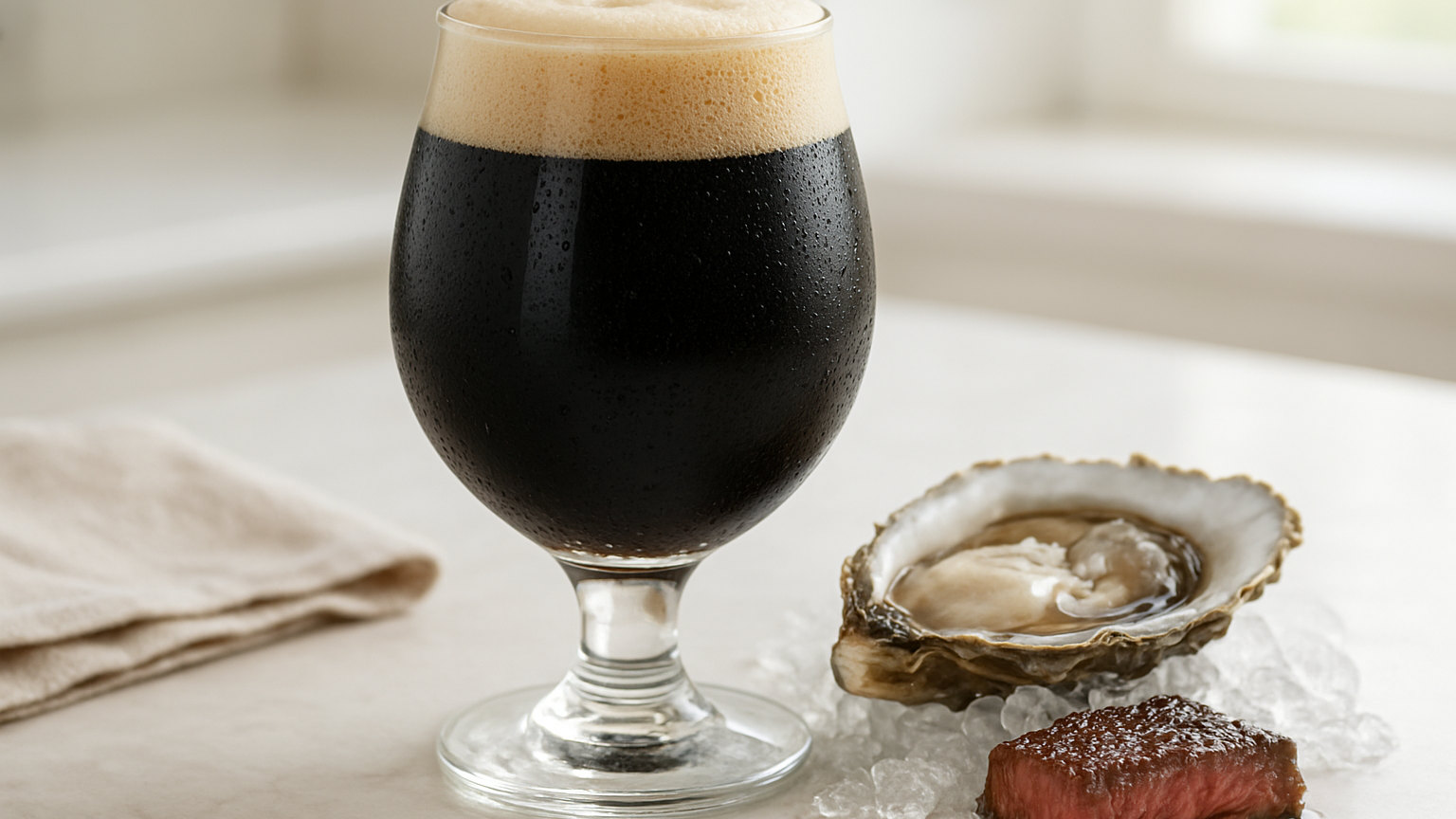
The pairing of stout and oysters is old and genuine, and the usual explanation is wrong. It is not that the beer was invented to accompany them.
Oysters were cheap food in eighteenth and nineteenth century London and were eaten in enormous quantities in exactly the places porter was drunk. The pairing arose from availability rather than from design.
It works nonetheless. The oyster's salinity makes the beer's roast bitterness read as rounder and fuller, while the beer's dryness and carbonation cut the brine and the texture. A dry Irish stout is the classic partner and it is genuinely excellent.
Some breweries make oyster stout with actual oysters or shells in the boil, which contributes a faint mineral quality and, notably, means the beer is not vegan.
Matching the style
Dry stout is the food beer of the family. Low in strength, dry and firmly roasted, it cuts through fat and salt and suits shellfish, sausages, pies and cheese.
Milk stout and oatmeal stout, being sweeter and fuller, suit desserts and richer dishes better than they suit savoury food.
Porter sits comfortably with roast meat, mushrooms, root vegetables and anything caramelised.
Imperial stout is difficult with most food simply because of its strength, and works best with strong cheese, chocolate and as a beer to finish a meal rather than accompany one.
Where it struggles
Delicate food is overwhelmed. White fish, salads and subtle poultry have no chance against roast bitterness.
Very spicy food is difficult, since bitterness amplifies chilli heat, though a sweeter milk stout copes better than a dry one.
Light desserts and anything citrus-based clash, since roast character and bright acidity do not sit together well.
Cooking with it
Stout is one of the most useful beers in the kitchen. It adds depth to beef stews, chilli, gravy and onion soup, and it is the traditional liquid in steak and stout pie.
One caution: roast bitterness concentrates when a liquid reduces, so a heavily roasted dry stout can turn a sauce acrid. A porter or a sweeter stout is the safer choice for long cooking, and adding it early rather than late gives it time to mellow.
In baking, stout works well in chocolate cake and in fruit cake, where the malt and roast support the other flavours rather than competing with them.
Serving it alongside a meal
One practical adjustment helps. A stout served very cold contributes refreshment and little flavour, which works against a beer meant to accompany a roast or a stew.
Letting the bottle warm for fifteen minutes before the food arrives gives it the malt presence to sit alongside the dish rather than merely cutting through it. For strong examples, pouring a third of a pint rather than a full glass keeps the pace sensible across a meal.