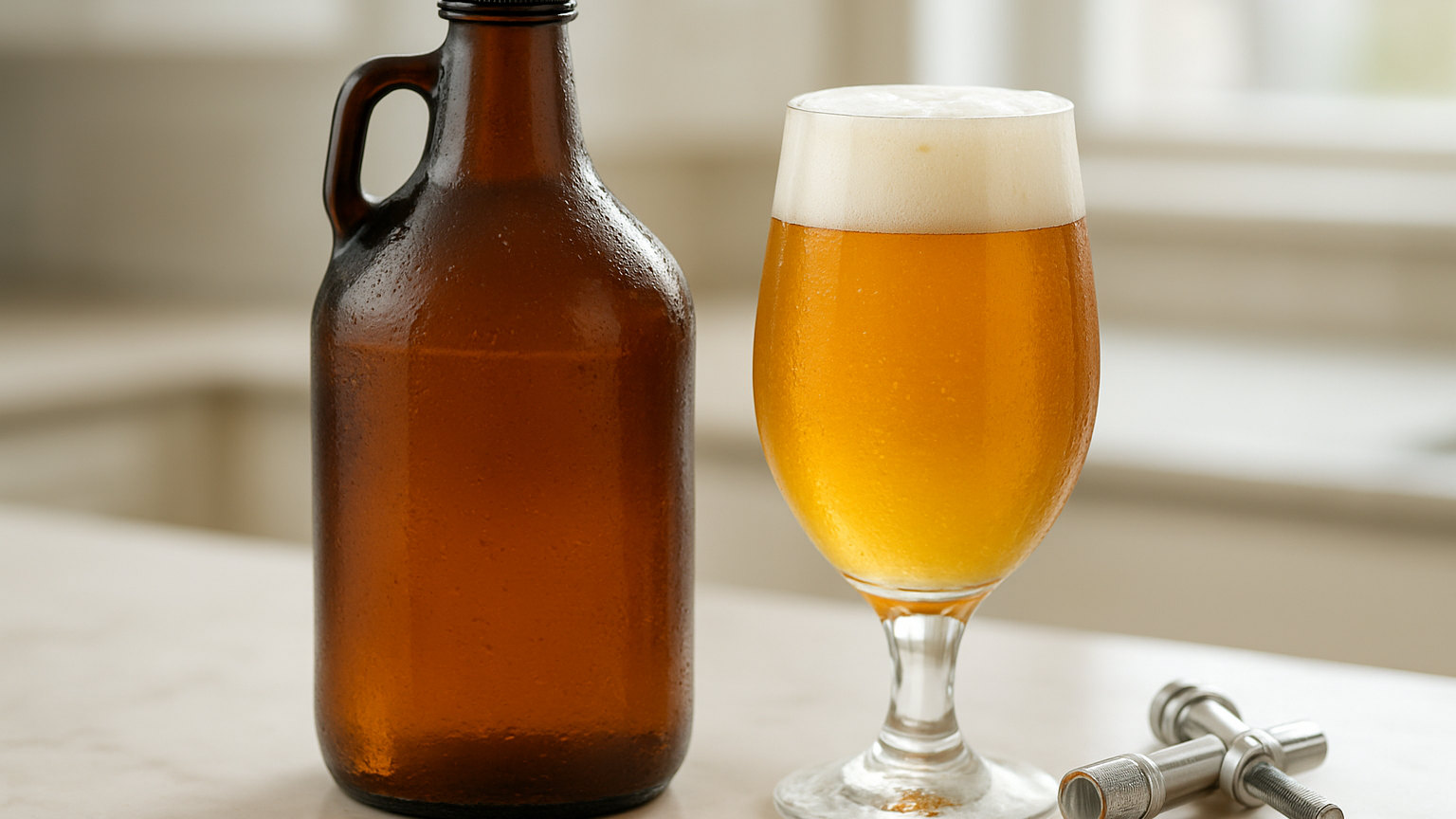
A growler is a refillable container, usually one or two litres, filled with draught beer at a brewery or bar to take home. They became popular alongside taprooms, and they suit some situations very well and others badly.
What they are
Most are glass or stainless steel with a screw cap or a swing top. Glass is cheaper and shows the beer; steel is more durable, blocks light entirely and keeps beer cold longer.
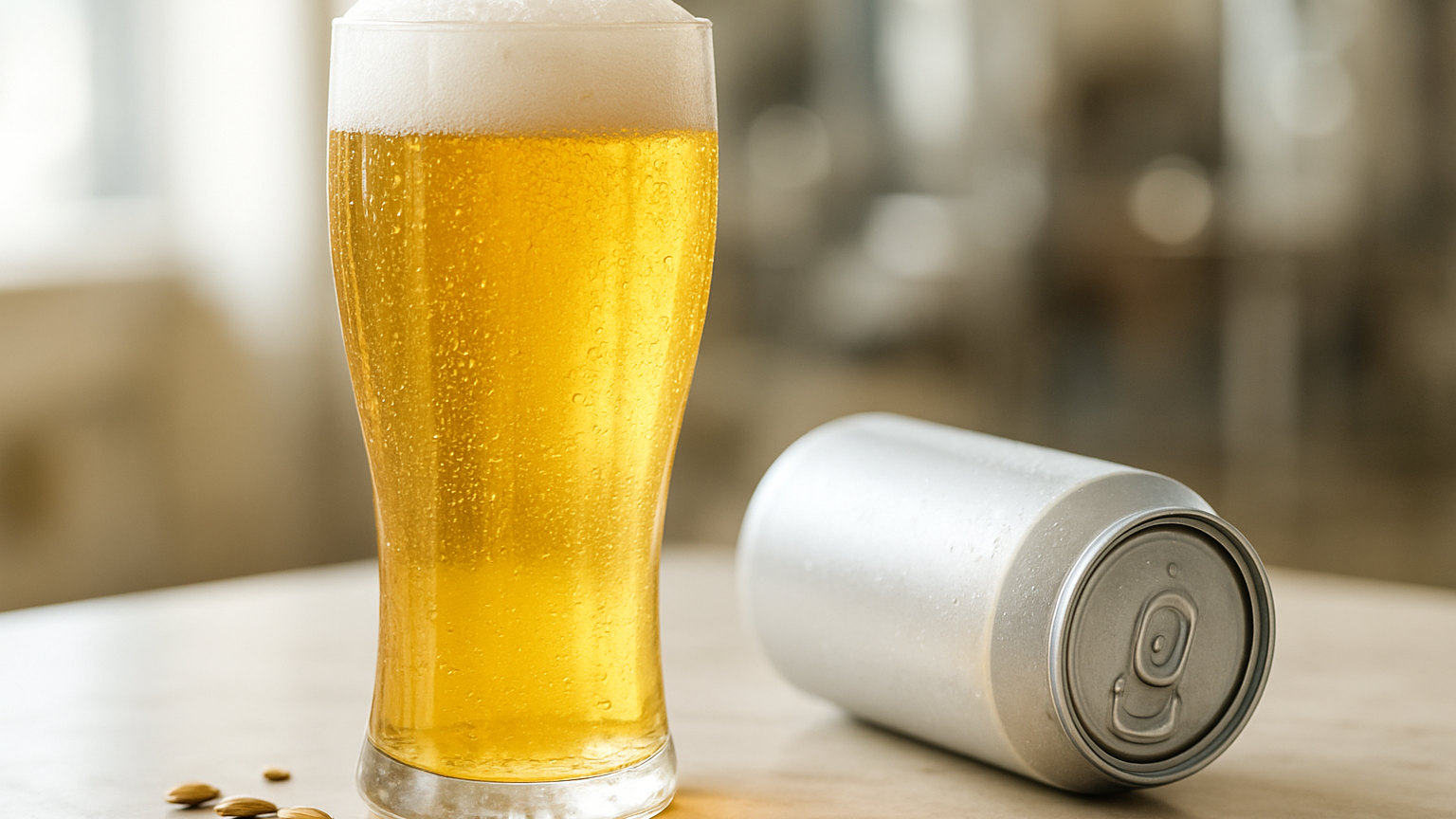
A crowler is the disposable relative: a large can, typically around 750 millilitres, filled and seamed on the spot with a small machine. It is single use, blocks light completely and seals better than most growler caps.
Sizes vary, and a two-litre growler holds roughly three and a half pints, which is a substantial commitment to one beer.
The problem with them
Oxygen and carbonation, both of which start working the moment the container is filled.
A growler filled by simply running beer in from a tap picks up oxygen during filling and holds a headspace of air above the beer. That air stales the beer and the carbonation escapes into it.
The practical consequence is that a simply filled growler is best drunk the same day and is noticeably flat and dull within two or three days. Once opened, it should be finished, since the remaining beer goes flat within hours.
This is the constraint that catches people out. A growler is not a way of keeping draught beer; it is a way of moving it a short distance.
Counter-pressure filling
Better filling systems purge the container with carbon dioxide, fill under pressure to avoid foaming and oxygen pickup, and seal with minimal headspace.
Beer filled this way keeps considerably longer, in the region of one to two weeks unopened if refrigerated, and it holds its carbonation properly.
If a venue offers counter-pressure filling it is worth using, and it is worth asking, since the difference is substantial.
Crowlers, being seamed cans, are effectively counter-pressure filled and hold up well.
Practicalities in Britain
Growler filling is less established here than in the United States, and not every brewery or bar offers it. Licensing, hygiene and the practicalities of accepting customer containers mean some places will fill only their own branded vessels.
Cleanliness is your responsibility. A growler must be rinsed thoroughly after use and stored dry with the cap off, since a sealed damp container grows things quickly. Most venues will refuse to fill one that looks unclean, reasonably.
Expect a deposit or a purchase price for the container itself.
When they make sense
Taking cask ale or a taproom-only beer home the same day, where no packaged equivalent exists. This is the strongest case, and for cask in particular a growler is the only realistic route.
Filling for a gathering that evening, where the beer will be drunk within hours.
Buying something at a brewery that is not canned, which is frequently the most interesting thing they have.
When they do not
Stocking up. Cans are better in every respect for keeping beer, being sealed, light-proof and packaged with minimal oxygen.
Anything you will not finish in a sitting, since a partially drunk growler deteriorates fast.
The honest summary is that a growler is a transport container rather than a storage one. Used that way it is genuinely useful; treated as a way to keep draught beer at home for the week, it will disappoint.
Looking after one
Rinse it with hot water immediately after emptying, before anything dries on. Avoid strong detergent, which leaves residue that will kill the head on the next fill, and never use anything abrasive on the inside.
Store it dry with the cap off, since a sealed damp container grows things quickly and a mouldy growler cannot be rescued.
Check the seal periodically, since a perished gasket is the usual reason beer goes flat faster than it should, and replacements are inexpensive.