Beer is a more capable food partner than wine across a considerable range of dishes, and lager in particular handles several things that defeat almost any bottle. The reasons are structural rather than a matter of taste.
The three mechanisms
Carbonation physically scrubs the palate, lifting fat and oil off the tongue between mouthfuls. Nothing in still wine does this, and it is why lager works so well with fried food.
Bitterness from hops cuts richness and resets the palate in a way that complements rather than clashes with salt. Where a tannic red wine turns harsh and metallic against salty food, hop bitterness does not.
And the absence of tannin removes the single largest source of pairing failures. Chilli, oily fish, vinegar and strong salt all react badly with tannin and are handled comfortably by beer.
Where lager is the obvious answer
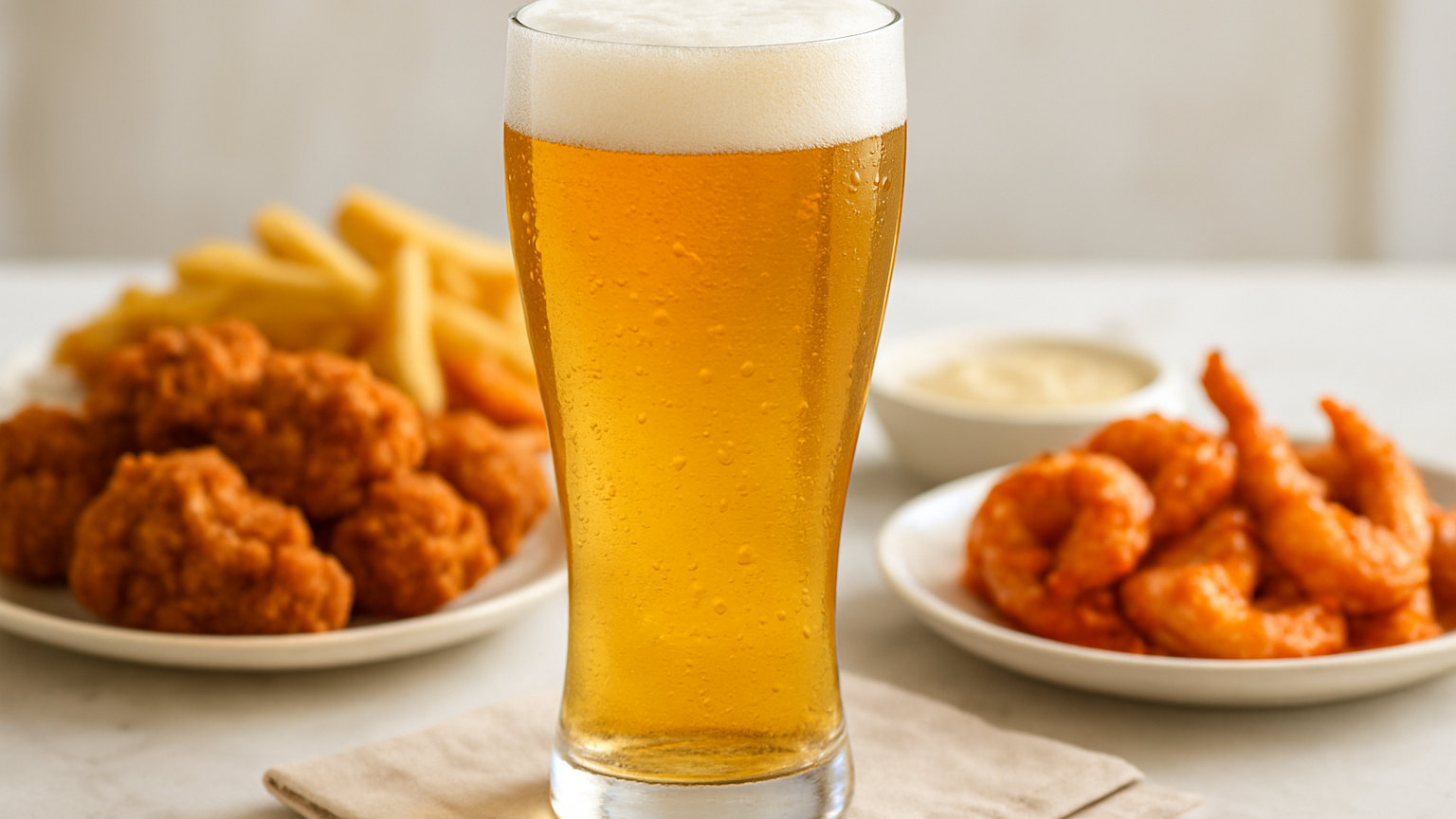
Fried food of every kind. Fish and chips, tempura, fried chicken, croquettes, spring rolls and crisps all pair naturally, and a crisp pilsner does the job better than almost any wine.
Spicy food is the other clear case. Alcohol amplifies capsaicin heat, so a lower-strength beer is already at an advantage, and the carbonation and slight sweetness of a helles or a mass market lager temper chilli effectively. This is why lager accompanies Indian, Thai and Mexican food across the world, and it is a genuinely sound pairing rather than merely a habit.
Salty and cured things, from ham and sausages to olives and pretzels, suit lager for the same reason they suit fino sherry: salt makes bitterness read as rounder and fuller.
Matching the style to the dish
Pilsner, with its bitterness and crispness, suits seafood, shellfish, sushi, fried food, salads and anything light and salty. The bitterness cuts through richness and the delicate hop aroma does not overwhelm delicate food.
Helles, softer and maltier, is the beer for sausages, roast chicken, pork and simple hearty cooking. It has enough malt sweetness to meet caramelised flavours and enough restraint not to compete.
Dunkel and schwarzbier work with roasted and grilled meat, mushrooms, root vegetables and anything with browning and char, where the toasted malt echoes what the cooking produced.
Märzen suits autumn food, roast pork and hard cheese. Bock and doppelbock have the weight for game, rich stews, strong cheese and, in the doppelbock case, chocolate desserts.
Rauchbier with anything smoked or barbecued is one of the most direct pairings in drinking, since both sides of the match were made over wood.
Cheese, and why beer usually wins
The received pairing of red wine with cheese fails more often than it succeeds, and beer generally does better. Carbonation cuts through fat, hop bitterness meets salt without turning harsh, and malt sweetness suits nutty aged cheeses.
A helles or märzen with a hard alpine cheese is excellent. A dunkel with a mature cheddar works. A doppelbock with a blue cheese is unexpected and successful.
The limits
Very delicate dishes can be flattened by a strongly hopped beer, so a bitter German pils alongside a subtle steamed fish is a mismatch in the same way an oaked chardonnay would be.
Sweet desserts need a beer with enough malt sweetness to match, which for lager means doppelbock or nothing.
And extremely hot food will beat any drink eventually, though a cold lower-strength lager gets further than most.
The general principle is worth remembering across the whole subject: match weight to weight, use carbonation and bitterness against fat and salt, and use sweetness against heat. Those three ideas cover more ground than any list of specific pairings.