Real ale is not a marketing phrase or a general term of approval. It has a specific definition, coined deliberately in the early 1970s to name something that was vanishing from British pubs, and the campaign built around it is one of the more successful consumer movements of the twentieth century.
What was happening at the time
Post-war consolidation had reduced British brewing to a small number of large companies, and those companies were moving decisively towards filtered, pasteurised keg beer dispensed under pressure.
The commercial logic was sound. Keg beer keeps for months rather than days, travels reliably, requires no cellar skill, and tastes the same everywhere. Cask ale is perishable, demanding and inconsistent.
The consequence was that traditional cask-conditioned beer was disappearing, along with hundreds of regional breweries and the styles they made. A group of drinkers founded a campaign in 1971 to resist it, and they needed a term for what they were defending.
The definition
The formulation that emerged has three parts. Real ale is brewed from traditional ingredients, it matures by secondary fermentation in the container from which it is dispensed, and it is served without the use of extraneous carbon dioxide.
The second clause is the crucial one. The beer must still be alive and fermenting when it reaches the pub, finishing its conditioning in the cask or bottle it is served from. A beer filtered and carbonated at the brewery, however good, falls outside the definition.
The third clause is what generates the arguments.
The cask breather question
A cask breather is a valve that admits carbon dioxide at atmospheric pressure to replace beer as it is drawn off, preventing air from reaching the beer and extending its drinkable life from three days to perhaps a week or more.
The purist objection is that this introduces gas from outside the cask, breaching the third clause. The practical argument is that it allows pubs with slower turnover to serve cask ale in good condition rather than not serving it at all, or serving it stale.
The debate has run for decades, has been voted on repeatedly, and reflects a genuine tension between defending a definition and encouraging the survival of the product it describes.
Bottle-conditioned beer
The definition extends beyond cask. A bottle-conditioned beer contains live yeast and completes its conditioning in the bottle, which makes it real ale in a bottle.
These beers carry a sediment, so they should be poured carefully, leaving the last inch in the bottle unless you want the yeast, and they benefit from being stored upright for a day beforehand. Some develop over months or years, which almost no filtered beer does.
What the campaign achieved, and where it sits now
Cask ale did not disappear. Regional breweries survived, hundreds of new small breweries opened, and Britain retained a dispense tradition that exists nowhere else.
The movement has since had to accommodate a craft beer scene producing excellent beer that is not real ale by the definition, including keg beers of a quality the 1970s campaigners never encountered. That has caused internal argument and a broadening of position, with quality now recognised across dispense methods while the specific term retains its original meaning.
For a drinker, the useful takeaway is narrow and practical. Real ale describes how a beer was conditioned and dispensed rather than how good it is. A poorly kept cask ale is real ale and undrinkable; an excellent craft keg beer is not real ale and may be superb.
The term identifies a tradition worth having and does not settle what is in your glass tonight, which depends far more on the pub than on the label.
How to spot it in a pub
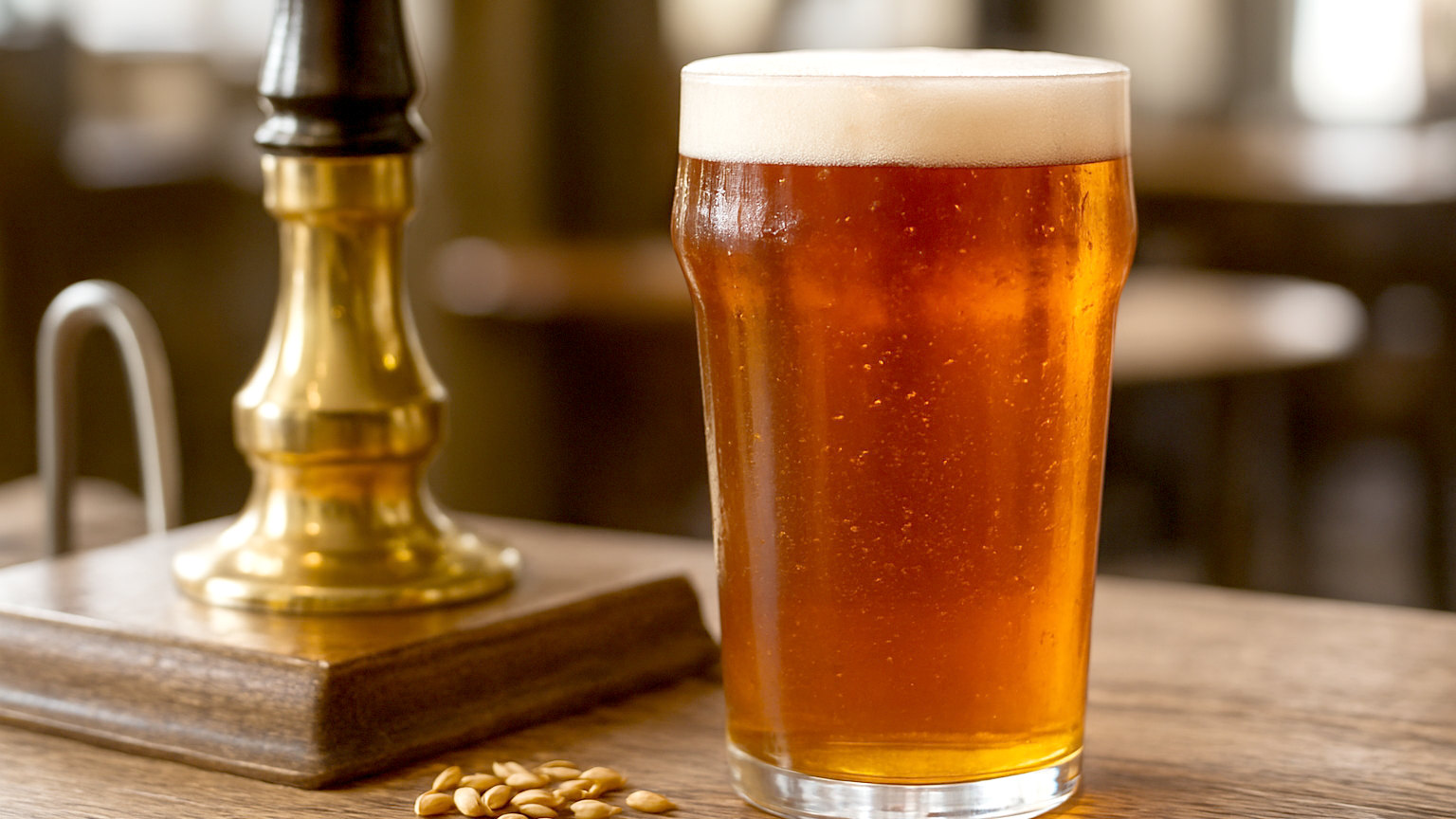
Cask ale is dispensed by handpump, the tall lever on the bar, or served by gravity directly from a cask behind it. Keg beer comes from a tap connected to a pressurised container and usually has an illuminated font.
The distinction is visible rather than a matter of trust, which is unusual and useful. A pub with several handpumps is committing cellar space and staff attention to a perishable product, and that is generally a reasonable signal about how seriously it takes what it sells.