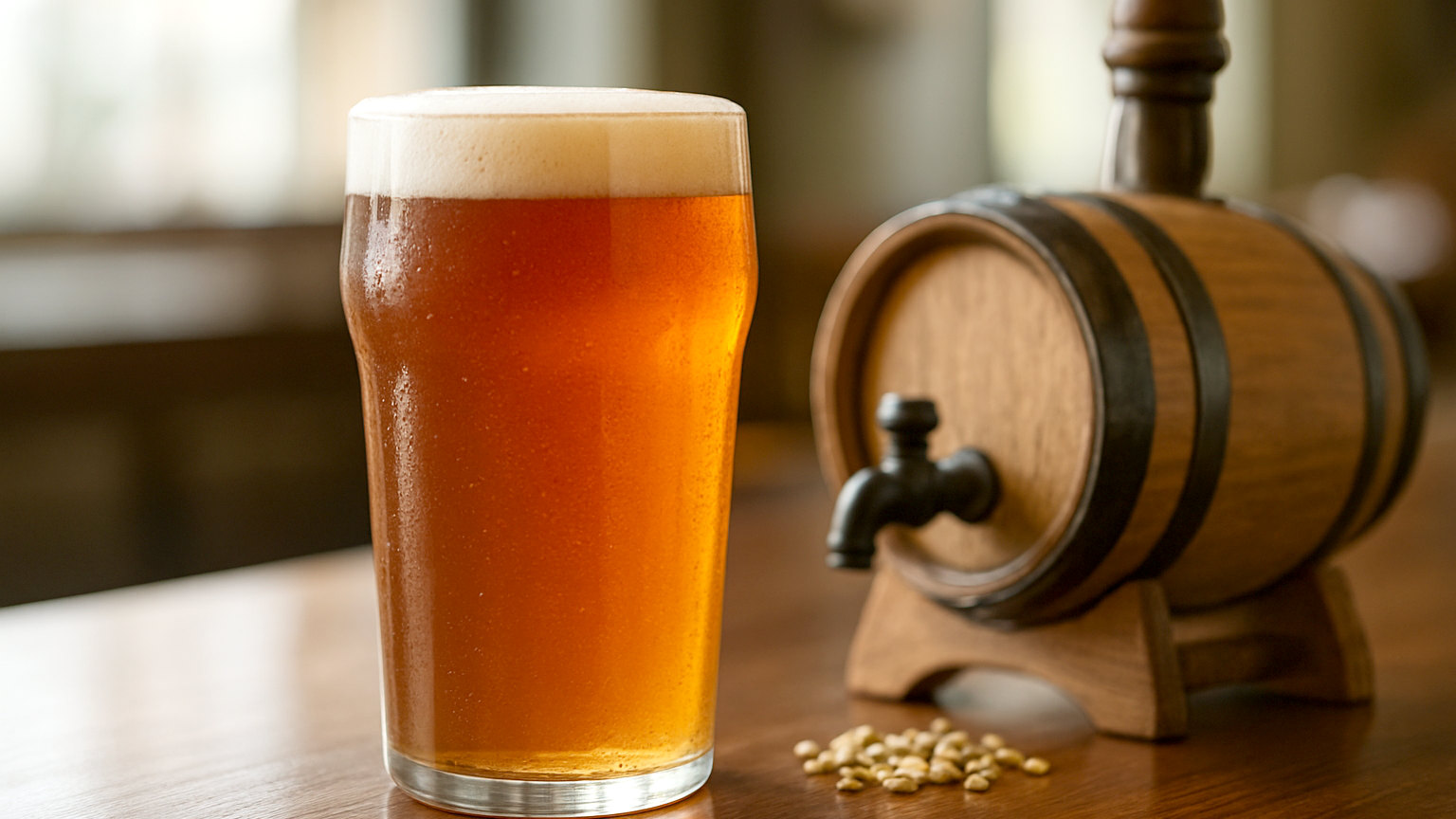
Cask ale is a British peculiarity and, in the view of a good many people who have looked at brewing worldwide, the country's most distinctive contribution to it. What makes it unusual is that the beer is not finished when it leaves the brewery.
How it works
Beer is transferred into the cask while a small amount of fermentable sugar and live yeast remain. Sealed in, the yeast continues working, producing carbon dioxide that dissolves into the beer and provides its gentle natural carbonation.
Finings are often added to clear the beer, drawing yeast into a compact sediment at the bottom of the cask. The cask is then delivered to a pub, where it must be stillaged, left to settle for a day or more, and vented by driving a soft peg into the shive to release excess gas.
The publican tests it, decides when it is ready, and taps it. From that point the beer is exposed to air every time a pint is drawn, and it has roughly three to five days before it deteriorates.
Dispense is by handpump, the tall lever on a pub bar, which is a manual pump drawing beer up from the cellar. Some pubs serve directly from the cask by gravity.
How it differs from keg
Keg beer is filtered, usually pasteurised, and finished at the brewery. It is sealed under pressure and dispensed using applied carbon dioxide or a nitrogen mix, which means no air reaches the beer and it keeps for months.
The practical differences in the glass are carbonation and temperature. Cask ale is lightly carbonated at around one and a half volumes of gas, against two and a half or more for keg, so it feels softer and less gassy. It is served at cellar temperature, around eleven to thirteen degrees, where keg is served cold.
Neither is inherently superior. Keg offers consistency, longevity and precise control; cask offers a softer texture and a freshness that filtration and pasteurisation remove. Modern craft keg at its best is excellent, and the old opposition between the two has softened considerably.
Why it is so demanding
Cask ale asks more of a pub than any other product on the bar. The cellar must be held at the right temperature, the casks must be settled and vented correctly, the timing of tapping is a judgement call, and the beer must sell through within days.
A pub that turns over a cask in two days will serve it in excellent condition. One that takes a week will serve the last third stale, vinegary or flat.
This is why cask ale quality varies so much more than any other draught product, and why a beer that is superb in one pub can be undrinkable in another down the road. The brewery is only responsible for half of it.
The equipment arguments
Two pieces of cellar equipment generate long-running debate. The cask breather is a valve that admits carbon dioxide at atmospheric pressure to replace beer drawn off, preventing air ingress and extending the beer's life. Purists object that it introduces external gas; pragmatists point out that it keeps beer drinkable in pubs with slower turnover.
The sparkler, a nozzle fitted to the handpump spout, forces beer through small holes and knocks carbon dioxide out of solution, producing a tight creamy head. It is standard in the north of England and largely rejected in the south, and it changes the beer noticeably.
Why it is worth the trouble
At its best, cask ale offers something no other dispense method produces: a soft, gently carbonated, unfiltered beer at a temperature that lets malt and hop character show fully, drunk within days of being ready.
It is also genuinely fragile, expensive to manage and easy to serve badly, which is why the number of pubs offering it has declined. When you find one that handles it properly, the difference from a mediocre pint is not subtle, and it is worth becoming a regular.