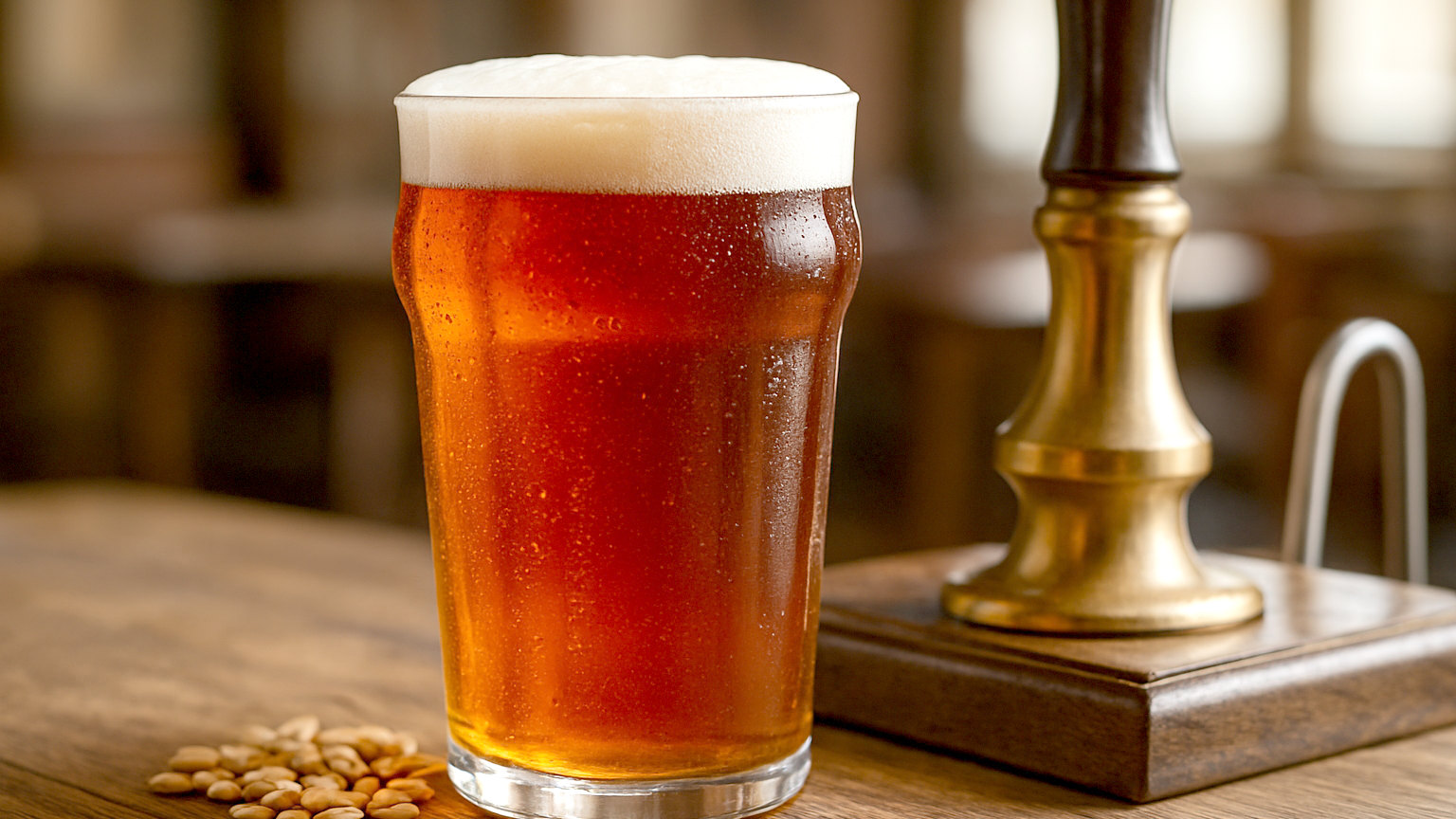
British bitter is sold in tiers with names that sound like quality judgements and are actually strength categories. Ordinary, best and premium describe how much alcohol is in the glass, and a brewery's cheapest, weakest bitter may well be the beer its reputation rests on.
The three tiers
Ordinary bitter, sometimes called standard or simply bitter, sits at roughly three and a half to four per cent. This is the classic session beer, brewed to be drunk in quantity over an evening, and it is the hardest of the three to make well because there is so little alcohol and body to carry the flavour.
Best bitter runs from about four to four and a half per cent, with more malt body and generally a fuller flavour. It is the middle of the range and the most commonly encountered tier.
Strong or premium bitter sits above that, from roughly four and a half to five and a half. Extra Special Bitter, usually abbreviated to ESB, sits at the top and derives from a specific London brewery's beer whose name became a style description, particularly in America.
None of these boundaries is legally defined, and breweries apply them loosely.
Why the naming misleads
Best implies superiority and means stronger. The convention arose because higher-gravity beer cost more to produce and sold at a higher price, so it was the brewery's premium offering in a commercial sense.
It does not follow that it tastes better. A well made three point eight per cent bitter is a considerable achievement precisely because there is nowhere to hide, and many drinkers who work through a brewery's range end up preferring the ordinary.
The higher-strength versions have more malt sweetness and body, which some people find richer and others find heavier. It is a matter of style rather than of grade.
The session beer argument
The British attachment to beers under about four per cent is not an accident of taste. It reflects a pub culture built around drinking pints over a long evening in company, where a beer at six per cent would end the evening prematurely.
Brewing at that strength while retaining flavour is genuinely difficult. There is little alcohol to give body, so the malt bill, the water chemistry and the yeast character have to do all the work, and any thinness is immediately apparent.
This is why brewers from countries with no session tradition often find low-strength British bitter the most technically impressive thing they encounter here, while drinkers used to stronger beer find it underwhelming on first acquaintance.
What changes between the tiers
Moving up the range generally brings more crystal malt, giving deeper colour and more toffee and biscuit character, along with a fuller mouthfeel and a longer finish.
Hopping usually rises in proportion, so the balance stays similar rather than the beer simply becoming sweeter. A good premium bitter should be bigger rather than merely heavier.
Some breweries brew all three from the same base recipe at different gravities, which makes tasting them side by side an unusually clean demonstration of what strength alone does to a beer.
What to order
For a session, the ordinary. For a single considered pint, the best or premium. For a first encounter with a brewery, the ordinary, since it shows the house character with nothing added to conceal it.
The one thing worth ignoring is the implication in the name. Pump clips describing a beer as best, premium or extra special are telling you about the gravity, not about the brewer's opinion, and the assumption that stronger means better is exactly the assumption those words were designed to encourage.
What the price tells you
Duty rises with alcohol content, so a stronger beer costs a pub more per pint before any question of quality arises. Part of the price difference between an ordinary and a premium bitter is therefore tax rather than ingredients.
Reduced duty rates apply to lower-strength beer, which is one reason session-strength brewing remains commercially attractive and why breweries continue to produce beers at three point four per cent that would otherwise make little economic sense.