Bitter and British food grew up together, and the pairings that work are less a matter of discovery than of recognising what was already happening in pubs for two centuries. The beer suits the food because both developed in the same place at the same time.
The mechanisms
Three properties do the work. Hop bitterness cuts through fat and richness, resetting the palate between mouthfuls in the way acidity does in wine.
Carbonation, even at cask ale's modest level, physically lifts fat off the tongue, which is why beer handles fried and fatty food better than still wine does.
And crystal malt sweetness echoes caramelisation. Roasting, browning and searing all produce the same family of flavour compounds that malt kilning does, so a malt-driven beer alongside roasted food is matching like with like rather than contrasting.
The absence of tannin removes the main source of pairing failures, which is why beer copes with salt, chilli and oily fish where red wine struggles.
The obvious matches
A roast dinner is the clearest case. Roast beef with a best bitter works because the malt meets the browned meat and the gravy, the hops cut through the fat, and neither side overwhelms the other. Roast pork, lamb and chicken all follow the same logic.
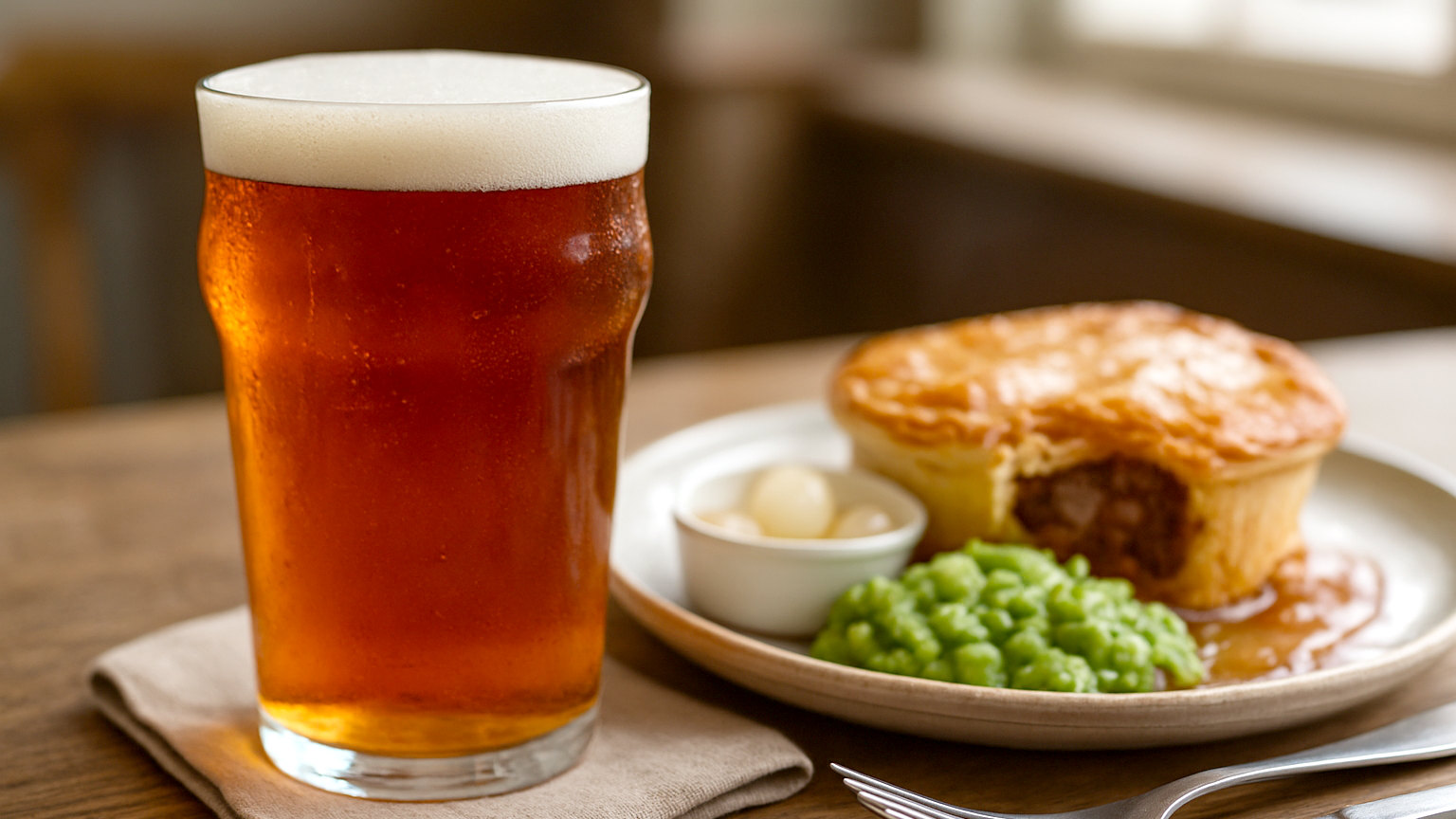
Pies and steamed puddings, particularly steak and ale, are made for it, and using the same beer in the dish and in the glass is a genuinely effective approach.
Sausages, bangers and mash, toad in the hole and anything involving onion gravy suit a malty bitter or a mild.
Fish and chips is a beer dish rather than a wine one. The bitterness and carbonation cut through batter and oil, and vinegar, which destroys most wine, is handled comfortably.
Cheese, where beer generally beats wine
The convention of red wine with cheese fails more often than it succeeds, and beer does better across most of a cheeseboard.
Mature cheddar with a best bitter is the classic and works because the beer's caramel malt meets the cheese's nuttiness while the hops handle the salt. The ploughman's lunch exists for a reason.
Hard alpine and Lancashire-style cheeses suit lighter bitters. Blue cheese needs something stronger and sweeter, which is where barley wine or old ale comes in.
Soft and washed-rind cheeses that would clash with tannin are fine with beer, since there is none to clash.
Matching strength to weight
An ordinary bitter at three and a half per cent suits lighter food: sandwiches, ploughman's, fish, pub snacks. A best bitter has the body for roasts and pies. A strong bitter or ESB handles game, strong cheese and richer stews.
Mild, with its malt sweetness and low bitterness, is unexpectedly good with mildly spiced food and with anything involving caramelised onions.
Old ale and barley wine belong with the cheeseboard, with fruit cake and with Christmas pudding, and they are among the few beers that work with dessert.
Where it struggles
Very delicate food can be overwhelmed by hop bitterness, so a strongly hopped bitter alongside subtle steamed fish is a mismatch.
Sweet desserts need a beer at least as sweet, which for this family means the strong ales rather than anything at session strength.
And extremely hot food will eventually beat any drink, though a low-strength bitter with malt sweetness gets further than most, since alcohol amplifies chilli heat and there is comparatively little of it.
The broader point is that the pub food most people regard as unsophisticated is often the most successfully paired eating in British culture, having been developed over generations alongside the beer sold next to it.
Cooking with it
Bitter works in the pot as well as the glass. Steak and ale pie, beef in ale and onion gravy all use the malt sweetness and hop bitterness to build depth in a way stock alone does not.
One caution applies. Hop bitterness concentrates when a liquid is reduced, so a heavily hopped beer can turn a sauce unpleasantly bitter. A malt-driven bitter or a mild is a safer choice for long cooking than a strongly hopped pale ale.