British brewing is associated with beers of three or four per cent, which makes the existence of a domestic tradition of ten and twelve per cent ales surprising to a good many drinkers. Old ale and barley wine sit at the top of the strength range and have a history considerably longer than most modern strong beer.
The distinction between them
The two terms overlap and are used inconsistently, which is worth acknowledging before trying to separate them.
Old ale traditionally means a beer aged for an extended period, often in wood, developing oxidative and sometimes mildly sour characteristics from the long maturation. Strengths vary widely, from around six per cent upwards, and the defining quality is age rather than power.
Barley wine means a beer of wine-like strength, typically eight to twelve per cent, malt-driven and intense. It may or may not be aged, though the strongest examples almost always benefit from it.
In practice, many beers labelled one could reasonably be labelled the other, and breweries choose according to tradition and marketing.
The stock ale system
The historical function of these beers is the part most people do not know. Breweries maintained stocks of strong aged beer, held in large wooden vats for a year or more, which developed complex flavours through slow oxidation and the action of wild organisms present in the wood.
That aged beer was then blended in small quantities into fresh young beer before sale. The result was a drink with more depth and complexity than the young beer alone possessed, delivered at ordinary strength and price.
The technique disappeared as brewing became more industrial and as vats gave way to metal vessels, but it explains why strong ageing beers existed in a culture built on session drinking. They were an ingredient as much as a product.
What they taste like
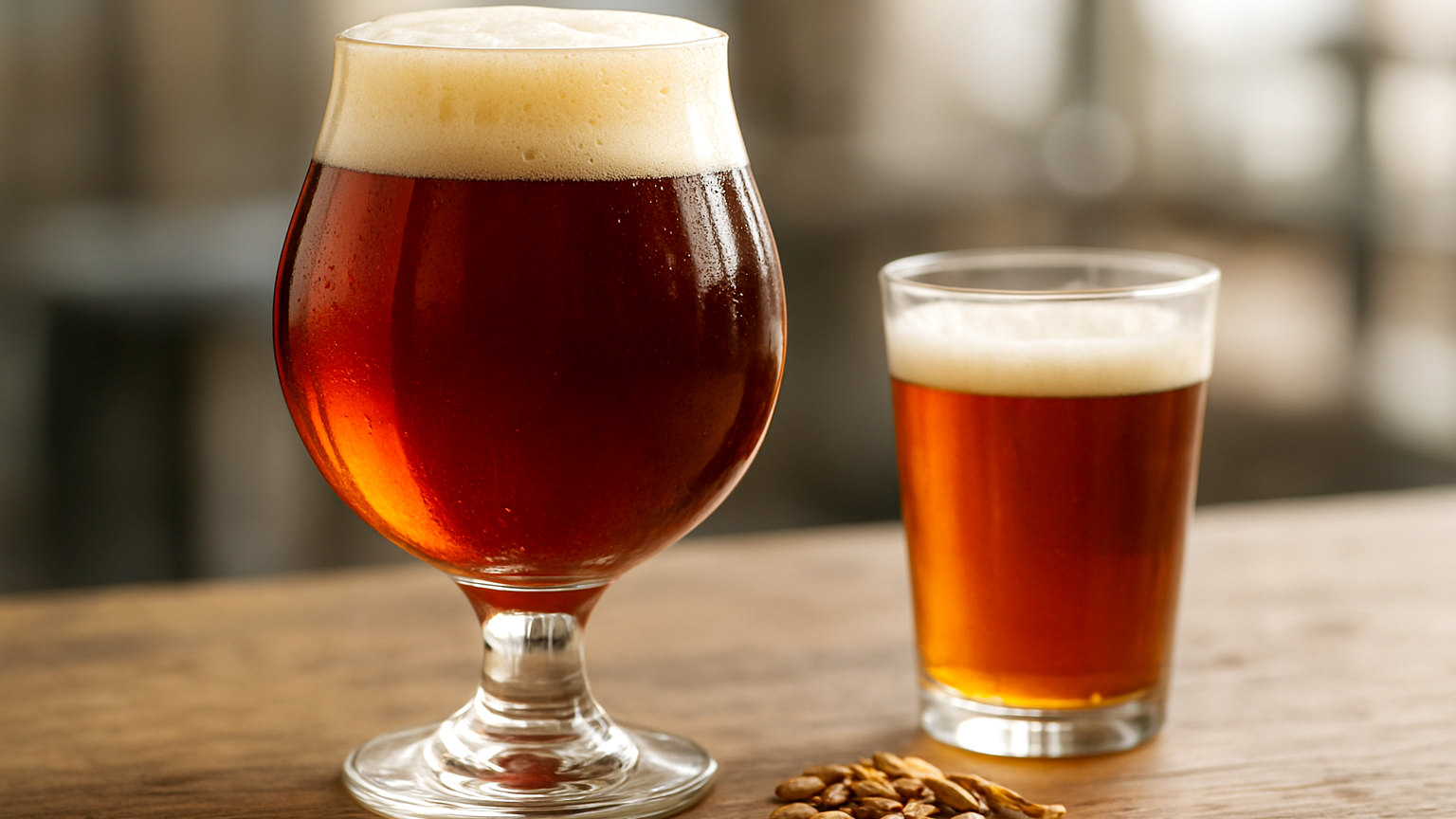
Dark amber to deep brown, with dried fruit, treacle, toffee, marmalade and often a sherry-like oxidative note in older examples. Alcohol is present as warmth rather than heat in a well made one.
Barley wine at the stronger end develops considerable sweetness, balanced by substantial hopping in some versions, particularly American interpretations which use citrus-forward varieties against the malt.
Old ale can show a faint tartness from long maturation, which is a feature rather than a fault and derives from the same organisms that produce the sourness in Belgian aged beers.
Ageing them at home
These are among the very few beers that genuinely improve in a bottle. High alcohol and substantial malt give them the substance to survive, and the oxidation that ruins a pale beer instead adds sherry, dried fruit and leather notes here.
Bottle-conditioned examples with live yeast develop most interestingly, since the yeast continues to work slowly and consumes oxygen.
Store them upright, cool and dark, and buy two so you can open one immediately and another several years later. Some vintage-dated British strong ales are released specifically for this purpose and can develop over a decade or more.
How to drink them
Serve warmer than most beer, around twelve to fourteen degrees, in a small glass. A third of a pint is a reasonable measure and a full pint of a ten per cent barley wine is not an evening most people intend to have.
At the table they suit strong cheese, particularly blue and hard aged varieties, rich desserts, fruit cake and Christmas pudding. A barley wine with a wedge of stilton is a straightforward match that works better than most wine equivalents.
These are also winter beers in the plainest sense. They are warming, slow to drink and entirely unsuited to a hot afternoon, which is why breweries release them in autumn and why the term winter warmer attaches to the category.
The American connection
American craft brewers adopted barley wine early and developed their own interpretation, using large quantities of citrus-forward hops against the malt to produce a beer far more bitter and aromatic than the English original.
The two are now recognised as separate styles, with English barley wine malt-driven and restrained and the American version hop-forward and assertive. Both age well, though the American style loses its hop aroma over time and moves towards the English profile, which is an argument for drinking those fresh and keeping the English ones.